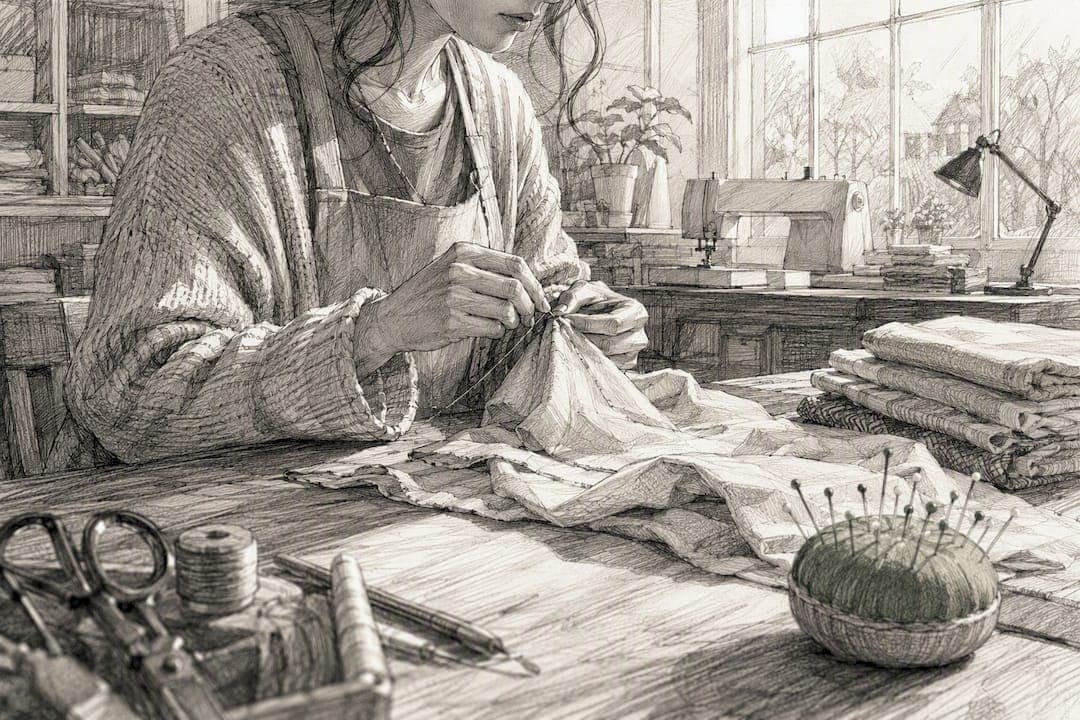
For cozy crafting outfits that actually hold up through a full session, layer a breathable cotton or linen base under a soft midlayer, then finish with closed-toe, cushioned shoes. Natural fibers matter most near heat sources like glue guns or kilns, since synthetics can melt or spark. If you want pieces built specifically for this, Sincerely Skye designs cozy, maker-themed apparel around exactly this formula.
TL;DR:
- Choosing breathable cotton or linen for base layers prevents sweating and discomfort during long crafting sessions.
- Incorporating darker colors and vintage pieces makes stains less visible and enhances outfit longevity in messy work.
- Natural fibers are essential for hot crafts to resist melting or catching sparks, and tight-fitting sleeves support precision work.
- The 3-3-3 capsule wardrobe simplifies decision-making and ensures versatility with only three tops, three bottoms, and three pairs of shoes.
- Combining function-focused pieces with minimal accessories creates a cozy, stylish look that supports both movement and craft safety.
Table of Contents
- What Should You Wear While Crafting? The Core Wardrobe Kit
- How Do You Build a Capsule Wardrobe for Crafting?
- How Should You Dress for Different Types of Crafts?
- How Do You Make Cozy Crafting Outfits Look Intentional?
- Why Sincerely Skye Designs With Makers in Mind
- What Actually Matters More Than Trends
- Shop Picks Built for the Crafting Formula Above
- Sources
What Should You Wear While Crafting? The Core Wardrobe Kit
Every long crafting session comes down to three layers doing three different jobs. Get the base layer wrong and you're sweaty by hour two. Skip the midlayer and your studio feels like a walk-in fridge every time the heater cycles off. Ignore your feet, and a four-hour vendor setup turns into a slow limp to the car.
Base layers should be breathable cotton or linen tees. These fabrics wick moisture and don't cling the way polyester blends do when you're hunched over a workbench for hours. A slightly oversized cotton tee also gives your arms room to move through repetitive motions like sanding, painting, or hand stitching without pulling at the seams.
Midlayers are where comfort meets warmth. Hoodies, flannels, and lightweight sweatshirts work because they layer easily over a tee and come off just as fast when your studio warms up midafternoon. Studio artist Maayan Zilberman has described choosing fabrics that move with your body rather than fighting it, which is exactly the test a good midlayer needs to pass. If it restricts your reach when you lift your arms overhead to grab supplies, it's the wrong midlayer.
Outer protection covers your investment pieces. Aprons, overshirts, and removable jackets act as a barrier between your good clothes and whatever craft you're doing that day. This is the layer you sacrifice to paint splatter, not your favorite hoodie.
Footwear gets overlooked constantly. Closed-toe, cushioned shoes or clogs protect your feet from dropped tools and support you through standing sessions. Workshop guides consistently point to closed-toe shoes and durable fabrics as near-universal rules across craft disciplines, from pottery to woodworking.
A few things to skip entirely:
- Noisy zippers or metal hardware that clank against tables and distract during focused work
- Long, flowing sleeves that drag through paint, glue, or open flames
- Synthetic fabrics anywhere near hot tools, since they melt rather than singe
Pro Tip: Keep one dedicated "crafting hoodie" that never leaves the studio. You stop worrying about stains the moment you designate a piece as work-only.
How Do You Build a Capsule Wardrobe for Crafting?
Decision fatigue is real when you're standing in front of a closet at 7 AM trying to figure out what won't get ruined by resin. The 3-3-3 capsule rule solves this by narrowing your choices down to three tops, three bottoms, and three pairs of shoes that all mix and match. Adapted for makers, that means picking pieces based on function first: one tee for messy work, one hoodie for cold mornings, one overshirt for anything involving heat.
Three outfit recipes to start with:
- At-home cozy: oversized graphic tee, joggers, slide sandals or thick socks with clogs
- Workshop-ready: fitted cotton tee, dark-wash jeans, closed-toe sneakers or work clogs
- Market or vendor-ready: vintage-style tee, layered flannel, comfortable boots you can stand in for six hours
Color choices matter more than most makers realize. Muted palettes and darker washes hide stains from clay, ink, and paint far better than white or pastel. Save your bold vintage tees and personality pieces for the top layer, where they show even under an apron.
How Should You Dress for Different Types of Crafts?
Not every craft demands the same outfit, even within the same cozy foundation. A few tweaks by activity type keep you comfortable and safe.
- Messy media (clay, paint, resin): Choose darker midweight fabrics that hide stains, wear an apron, and roll or secure your sleeves before you start.
- Precision work (beading, fine sewing, embroidery): Skip dangling jewelry that catches thread, wear fitted sleeves so cuffs don't drag across your workspace, and stick to quiet fabrics that don't rustle while you concentrate.
- Hot processes (glue guns, soldering, kiln work): Natural fibers are the priority here. Cotton and wool resist melting in ways synthetics don't, and you should avoid long scarves, loose ties, or anything that could catch a spark. Studio professionals favor what's sometimes called "studio-silent" clothing, meaning minimal hardware and nothing that could brush against an open flame.
- Vendor and table setup: You need an outfit that transitions from hauling boxes to greeting customers. Layer a removable overshirt on top of a market-day tee, and carry a crossbody bag or apron with pockets so cash and cards stay on your body instead of buried in a tote.
The through line across all four is the same: your outfit should support the motion your craft requires, not fight it.
How Do You Make Cozy Crafting Outfits Look Intentional?
Cozy doesn't have to mean sloppy. The trick most makers miss is proportion. An oversized hoodie reads as styled the moment you tuck the front half into your waistband or add a belt over it. Rolling your sleeves once, rather than pushing them up haphazardly, does the same thing for a flannel.
A single standout piece does more work than five. One vintage graphic tee or one cottagecore-style knit becomes the anchor of the outfit, and everything else stays quiet around it. This is the same logic behind the 3-3-3 rule: fewer, better pieces reduce the mental load of getting dressed, which matters when you'd rather spend that energy on your craft.
Accessories should earn their spot. A canvas tote that actually holds your supplies, a hair tie on your wrist for when you need it, minimal jewelry that won't catch on thread, and an apron with real pockets, not decorative ones. Each should function first and look good second.
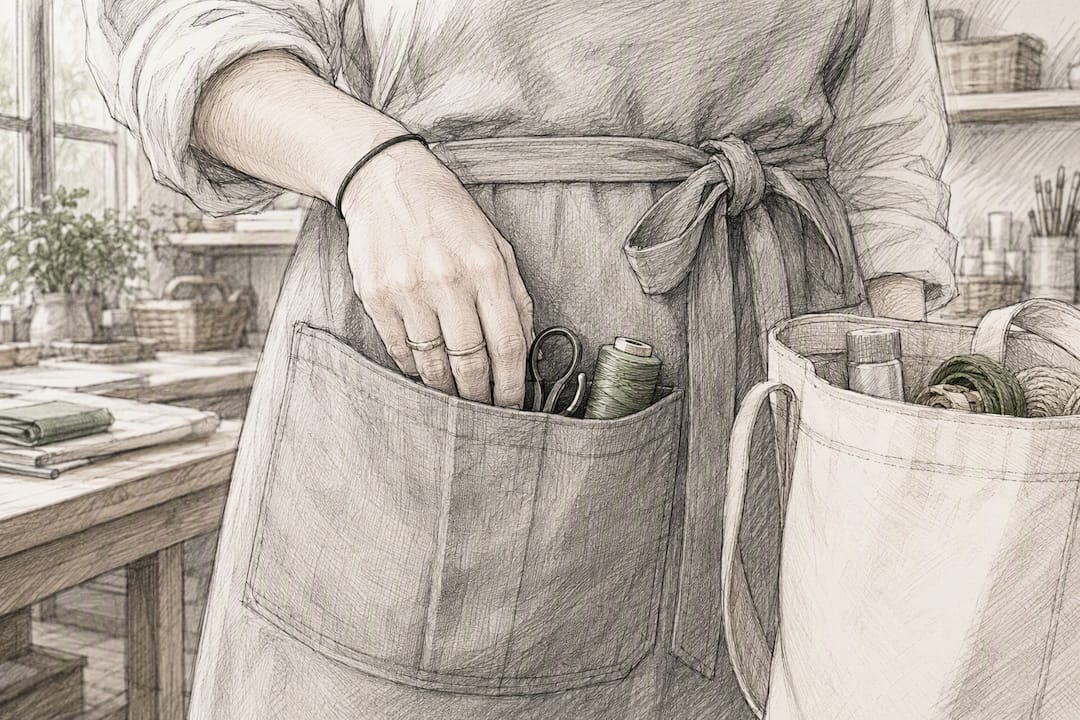
Statistic callout: Capsule wardrobes built on the 3-3-3 model cut down decision fatigue enough that Trendalytics has tracked it as a rising trend among people who dress with intention rather than impulse, makers included.
Why Sincerely Skye Designs With Makers in Mind
Skye runs Sincerely Skye and designs cozy apparel specifically for the crafting community, not as an afterthought to a general clothing line. That distinction shows up in the details: breathable cotton bases, midlayers cut for movement, and graphics that speak directly to maker culture rather than generic slogans.
The brand's blog extends a lot of what's covered here. The cottagecore craft outfit guide walks through practical builds for at-home sessions, while the retro crafting aesthetic roundup covers vintage-inspired styling for makers who want their outfit to say something about who they are, not just what they're making.
What Actually Matters More Than Trends
Most advice about crafting outfits leans too hard into aesthetics and skips function entirely, or it goes the opposite direction and treats comfort like it has to look shapeless. Neither extreme holds up once you've actually spent four hours at a workbench.
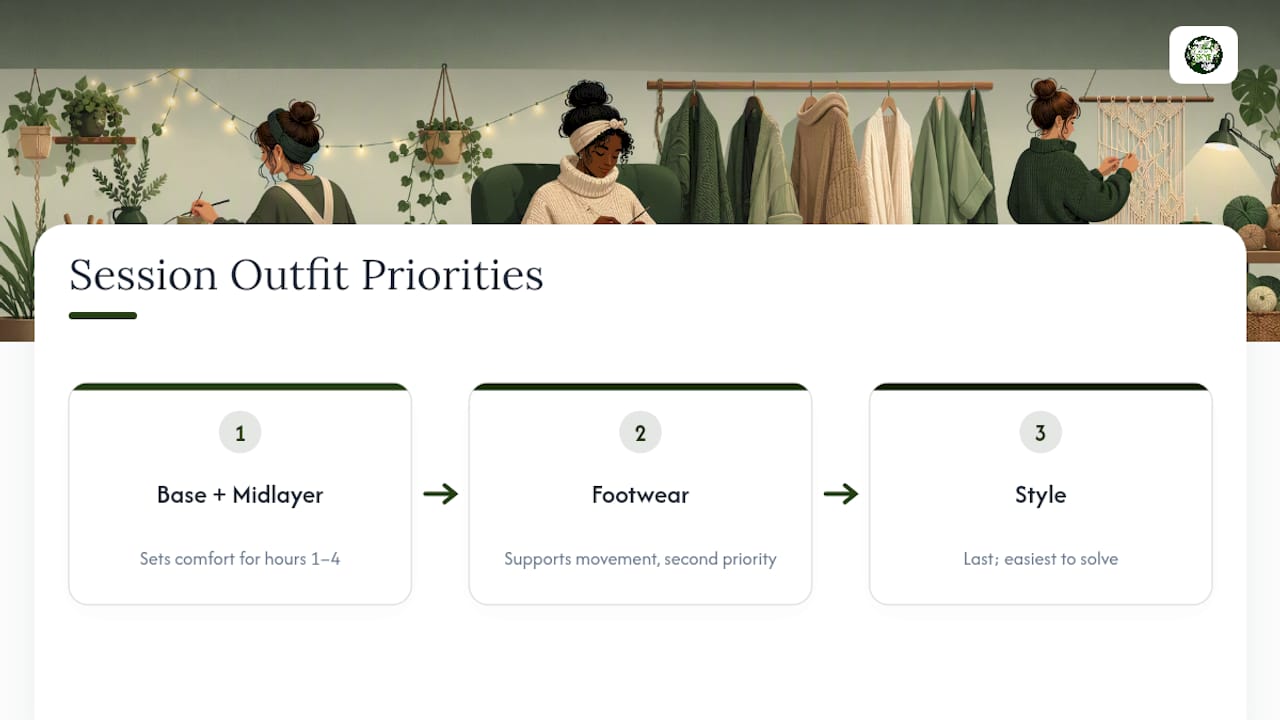
What the research and practitioner advice both point to is simpler: prioritize the base and midlayer combination first, because that's what determines whether you're comfortable at hour one and still comfortable at hour four. Footwear comes second. Style comes last, and it's the easiest problem to solve once the function is handled. A vintage tee under a well-fitted hoodie looks intentional almost by accident when the fit and fabric are already right.
Where I'd push back on conventional wisdom is the idea that cozy and put-together are somehow in tension. They're not. The oversized silhouettes trending right now are actually easier to make look styled than fitted clothes are, because a tuck or a belt does most of the work. Makers don't need to choose between looking good and moving freely. They need clothes designed by someone who understands both demands at once.
— Skye
Shop Picks Built for the Crafting Formula Above
If the layering formula above sounds right but your closet doesn't quite match it, a few pieces solve the gap fast. The Craft Now, Clean Later V-Neck Tee is a breathable cotton base layer built for exactly the messy-media scenarios covered earlier, stains and all. For midlayers, the Sincerely Skye Gear collection carries hoodies and sweatshirts cut roomy enough to move through hands-on work without fighting your sleeves.
For a full outfit foundation rather than a single piece, the Crafters Collection is curated around the same 3-3-3 capsule logic detailed above: fewer pieces, more mixing, less decision fatigue on a Tuesday morning when you just want to get to your workbench. Browse the collection, pick your base and midlayer, and build the rest of your rotation from there.
Sources
- 3-3-3 fashion rule: trend taking over wardrobes — Trendalytics
- What I Wear to Work as a Studio Artist — M.M.LaFleur (Substack)
- 30 workshop outfit ideas to inspire your look — Sew Mama Sew