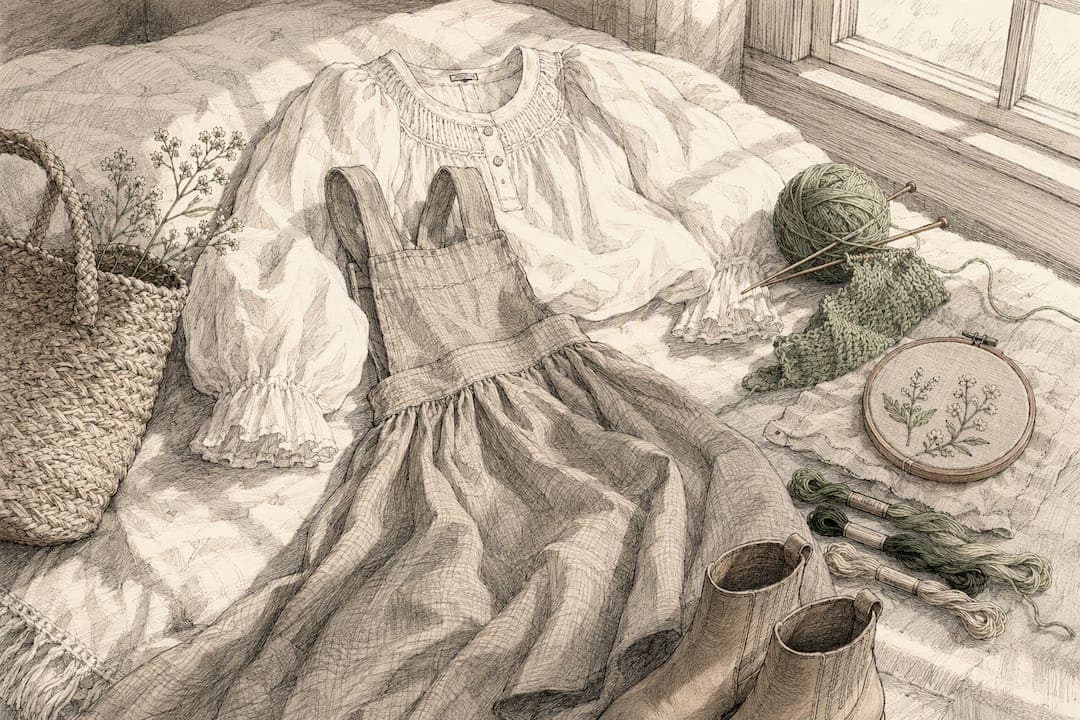
The fastest way into a craft-forward cottagecore look is a pinafore or puff-sleeve dress, a woven bag, and boots or Mary Janes. That's the whole formula. Everything else is seasoning.
Here are three ready-to-copy looks:
- Market day: Linen pinafore over a white puff-sleeve blouse, woven basket bag, lace-up boots.
- Picnic afternoon: Prairie dress with eyelet trim, straw tote, ankle-strap Mary Janes.
- Garden work: Denim pinafore, cotton tee underneath, canvas sneakers, hair scarf.
For the layer underneath any of these, a soft cotton tee from Sincerely Skye does the job without fighting the handmade details on top.
Key Takeaways
A craft-forward cottagecore outfit works when natural fabrics, one visible handmade detail, and a comfortable layering piece combine into a single wearable look.
| Point | Details |
|---|---|
| Start with the base formula | Pair a pinafore or puff-sleeve dress with a woven bag and boots or Mary Janes. |
| Build a small capsule | A small set of mix-and-match pieces in linen, cotton, and eyelet cover most seasons. |
| Add one craft detail | Embroidered trim, a lace hem, or a DIY pinafore apron signals handmade in under 90 minutes. |
| Dress for real work | Vendor days need pockets, breathable layers, and shoes broken in before market day. |
| Layer with Sincerely Skye | Tees and sweatshirts from Sincerelyskye add comfort under pinafores without competing with handmade details. |
Table of Contents
- Six Cottagecore Craft Outfit Recipes for Every Season
- How Do You Make Store-Bought Clothes Look Handmade?
- Building a Capsule Wardrobe for Craft-Cottagecore Style
- Dressing for a Craft Fair Without Losing the Aesthetic
- Caring for Handmade and Delicate Cottagecore Pieces
- Where Cottagecore Style Inspiration Comes From
- Where to Find Cottagecore Fabric and Craft Supplies
- Sources
Six Cottagecore Craft Outfit Recipes for Every Season
Cottagecore's visual language runs on natural fibers, handmade texture, and slightly romantic silhouettes. Linen, cotton, and eyelet do the heavy lifting, while embroidery, crochet, and puff sleeves supply the craft signal that separates this aesthetic from plain prairie dressing. Below are six full outfits built around that formula, each suited to a different season or setting.
-
Spring picnic set. Ivory eyelet blouse, sage green midi skirt, woven straw bag, tan ankle boots. It reads cottagecore because the eyelet catches light like lace without the fuss of actual lace. Budget swap: thrift a plain cotton skirt and dye it with tea for a soft antique tint. Craft accessory: a hand-embroidered handkerchief tucked in the bag strap.
-
Fall craft-fair outfit. Corduroy pinafore, chunky knit sweater, thick tights, lace-up boots. The corduroy adds structure that holds up through a full day standing at a booth, a detail market-tested cottagecore guides call out specifically for vendor comfort. Budget swap: a men's thrifted corduroy jacket cut down into a vest-pinafore. Craft accessory: crochet flower pins on the strap.
-
Summer garden outfit. Linen jumpsuit, wide-brim hat, leather sandals, canvas tote. Breathable linen keeps you cool during actual outdoor work, not just outdoor photos. Budget swap: an oversized linen shirt belted as a dress. Craft accessory: a woven friendship bracelet stack.
-
Winter layered look. Puff-sleeve dress over a turtleneck, wool cardigan, knee-high boots, plaid scarf. Layering keeps the silhouette without freezing you out. Budget swap: any thrifted floral dress works as the base layer. Craft accessory: hand-knit fingerless gloves.
-
Vendor stall outfit. Denim pinafore with deep pockets, graphic tee underneath, canvas sneakers, apron. Pockets matter more than people expect when you're making change and wrangling tissue paper all day. Budget swap: sew pockets into an old pinafore using scrap fabric. Craft accessory: a fabric badge with your shop name.
-
Evening market outfit. Velvet pinafore, cream blouse, Mary Janes, small woven purse. Velvet gives the look weight and warmth once the sun drops. Budget swap: a velvet skirt from a formalwear thrift rack, restyled as a pinafore front. Craft accessory: embroidered initials on the blouse cuff.
Pro Tip: Carry a small sewing kit in your bag on market days. A popped seam or loose button is common after hours of walking, bending, and reaching for tissue paper.
How Do You Make Store-Bought Clothes Look Handmade?
You don't need a sewing machine to fake decades of hand-stitched charm. These three tweaks take an hour or less and work on plain pieces you already own.
-
Embroidered collar trim. Grab cotton embroidery floss and a needle. Use backstitch to outline a simple vine or flower motif along the collar edge, then fill small shapes with satin stitch. Three-strand floss gives visible texture without adding bulk to the fabric. Time: 30 to 90 minutes depending on the pattern size.
-
Eyelet or lace hem addition. Measure your hemline, pin a strip of eyelet or lace trim right-side up along the edge, and either machine-stitch a straight line close to the trim's bound edge or hand-sew with a simple running stitch. Press flat when done.
-
Detachable pinafore apron. Take a thrifted dress one size too big, remove or shorten the straps, and reinforce the bib front with iron-on interfacing for structure. Skip a full pattern entirely. This apron-front trick turns a $5 thrift find into a layering piece that goes over almost anything in your closet.
Not a sewer?
Pro Tip: Wash and dry any thrifted fabric before you cut or stitch it. Shrinkage after the fact will ruin hours of careful embroidery.
Building a Capsule Wardrobe for Craft-Cottagecore Style
A small, intentional closet beats a packed one when every piece actually mixes with every other piece. That's the whole logic behind a cottagecore capsule wardrobe: a handful of versatile items instead of constant fast-fashion turnover.
Starter capsule (5 pieces): cotton puff-sleeve blouse, neutral pinafore, woven bag, ankle boots, knit cardigan. This covers the basics for someone new to the aesthetic without overbuying.
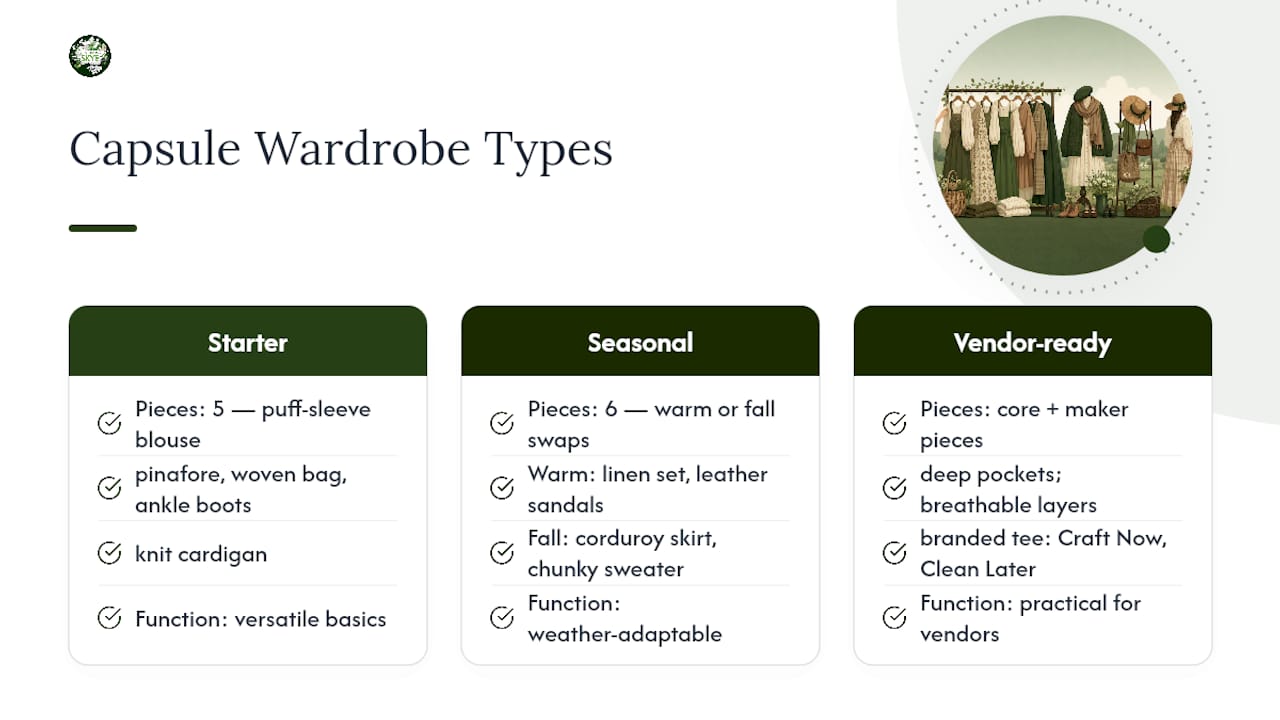
Seasonal capsule (6 pieces): add a linen set and leather sandals for warm months, or swap in a corduroy skirt and chunky knit sweater once fall hits. Same core pieces, different weather.
Vendor-ready capsule: prioritize deep pockets, breathable layers, and a branded tee like the Craft Now, Clean Later Tee that signals your maker identity without extra accessories.
Across all three, stick to natural fabrics: linen, cotton, eyelet. They photograph better, breathe better, and age better than synthetic blends, and secondhand shops are full of them if you know what to look for.
Dressing for a Craft Fair Without Losing the Aesthetic
Selling at a market for eight hours is a different challenge than posing for a photo. Comfort has to win, but that doesn't mean abandoning the look.
- Comfortable, broken-in shoes. Boots or sneakers, never new Mary Janes on their first outing.
- Pockets everywhere possible for cash, tape, and business cards.
- Breathable layers you can shed as the tent heats up.
- A branded tee as a subtle identifier customers remember later.
- Weather protection: an apron for spills, a light coat for wind.
A Sincerely Skye tee or sweatshirt slides easily under a pinafore or over a prairie dress, giving you a comfortable base layer that still reads handmade-adjacent rather than corporate. Sincerelyskye grew out of exactly this kind of long market day, standing behind a folding table trying to look put-together while restocking stickers with cold hands.
Craft fair dressing is really two jobs stacked on top of each other: look the part and survive a ten-hour shift on your feet. The outfits that do both usually succeed.
Caring for Handmade and Delicate Cottagecore Pieces
Embroidered, crocheted, and eyelet-trimmed clothing needs gentler treatment than a basic cotton tee. Hand-wash anything with visible embroidery or lace in cold water, since machine agitation pulls at stitches and loosens thread tension over time. Lay knits flat to dry rather than hanging them, since wet knit fabric stretches under its own weight and loses its shape permanently.
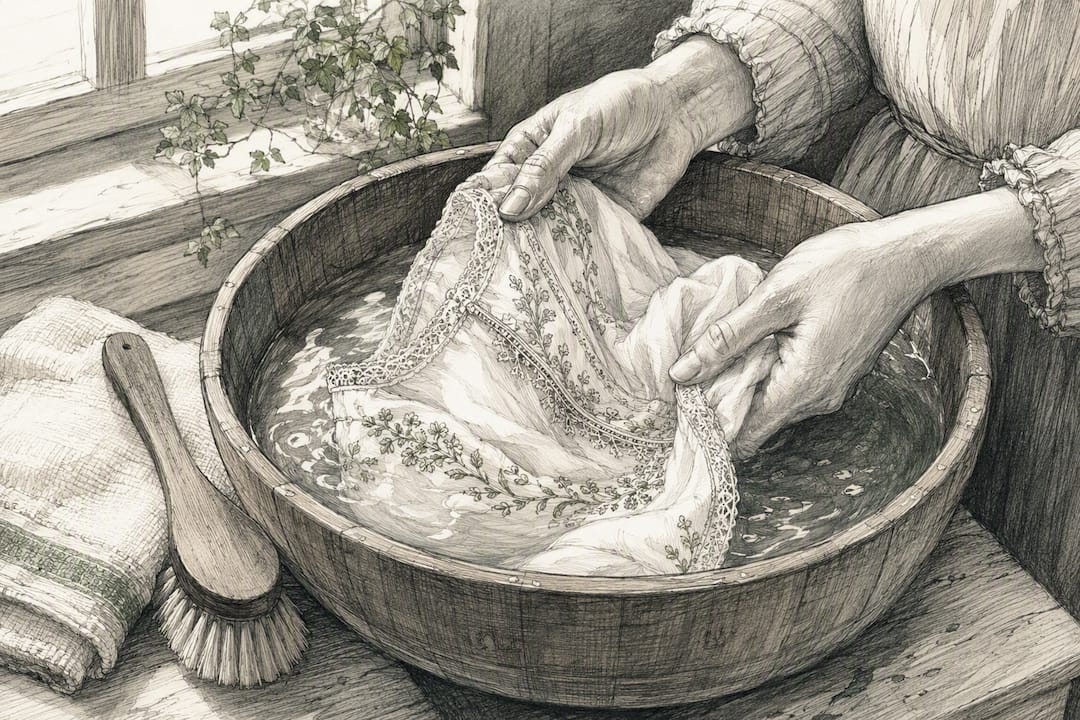
Store delicate pieces folded, not on hangers, especially anything with a bib front or reinforced structure like a DIY pinafore apron. Hanging puts strain on seams that weren't built for it. For embroidered patches or iron-on trims, turn the garment inside out before washing to protect the stitching from friction against other clothes.
Spot-clean instead of full washing whenever possible. A small stain on a linen dress rarely needs a full wash cycle, and repeated washing is what fades embroidery floss and weakens lace fastest. Keep a soft-bristled brush on hand for gentle spot treatment on textured fabric.
Cedar blocks or lavender sachets in storage keep moths away from wool cardigans and knits over the off season. Check embroidered and crocheted pieces once a season for loose threads, and catch small snags with a quick stitch before they unravel further.
Where Cottagecore Style Inspiration Comes From
Cottagecore's visual grammar didn't come from a single influencer. It came from decades of prairie dressing, Victorian workwear, and rural craft traditions filtered through social media. The aesthetic has evolved rather than faded since its early viral moment, with craft-forward and utility-leaning variants showing up consistently in current trend coverage.
Look to period costume dramas for silhouette reference: puff sleeves, high necklines, and voluminous skirts all trace back there. Folk art and quilting traditions supply the embroidery motifs. Farmers market vendors and small-batch makers on social platforms tend to show the most wearable, real-world version of the look, since they're dressing for actual outdoor work rather than a styled photo shoot.
The most useful inspiration source isn't a single icon at all. It's the overlap between historical workwear and modern craft culture, where a pinafore exists because it protects clothes during actual work, not because it looks good in a feed grid. Following crafters who post their booth setups and daily outfits tends to give more usable ideas than following pure fashion accounts, since you see how the look survives a real day of standing, reaching, and carrying.
Where to Find Cottagecore Fabric and Craft Supplies
Thrift stores remain the best first stop for both finished garments and raw fabric. Old bedsheets, tablecloths, and curtains are frequently linen or cotton blends perfect for a DIY pinafore, and they cost a fraction of yardage bought new. Secondhand and small artisan sources consistently produce more authentic-looking results than fast-fashion cottagecore lines, which tend to use synthetic blends that don't drape or age the same way.
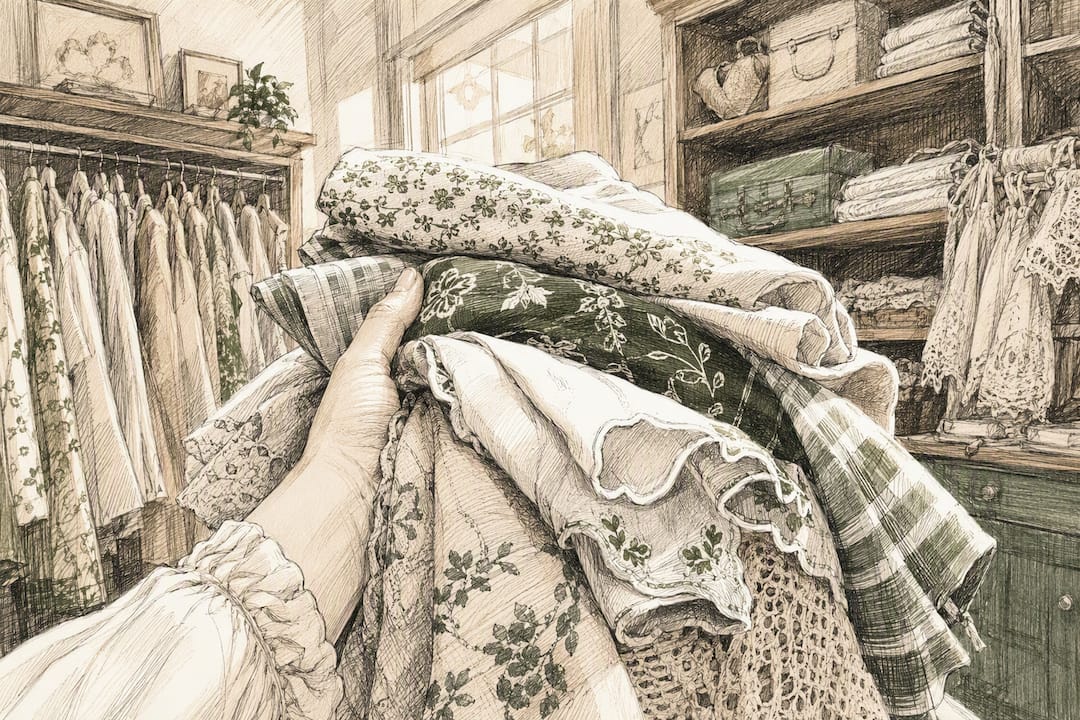
Estate sales are underrated for embroidery floss, lace trim, and buttons, since older sewing collections often get sold in bulk for almost nothing. Local fabric stores' clearance bins are worth a regular check for linen and cotton remnants too small for big projects but perfect for trim work or a collar.
For a finished accessory rather than raw materials, a woven tote bag from CaliCuration gives you the market-basket look without a weaving project. Online craft marketplaces work well for embroidery floss and small trims, though buying in person lets you check texture and weight before committing.
Author perspective: why craft details matter in cottagecore dressing
Cottagecore isn't really about looking rural. It's about clothes that show a hand was involved somewhere in the process, even if that hand only added a patch or hemmed a sleeve. That's why a plain linen dress reads flat until you add one visible stitch of effort. When you're ready to layer something comfortable underneath your next handmade piece, the shop has options built for exactly that.
Layer Sincerely Skye Pieces Into Your Craft-Cottagecore Wardrobe
Handmade details do the visual work in a cottagecore outfit, but they need a comfortable, breathable base underneath to actually survive a full day of wear. That's where a few specific Sincerely Skye pieces earn their spot in the closet.
The Craft Now, Clean Later V-Neck Tee sits well under a pinafore without adding bulk at the neckline, and the graphic tee version works the same way under an open cardigan. The In My Cozy Craft Era V-neck leans slightly dressier for a market day where you want the branding subtle rather than bold. For cold mornings at an outdoor stall, The Sweatshirt layers over a prairie dress or under a corduroy pinafore without swallowing the silhouette underneath. Reach for a tee on warm vendor days and the sweatshirt once temperatures drop. Browse the full crafters collection to see how the pieces mix into outfits you're already planning.
Sources
- The secret to building a beautiful cottagecore fashion style — GirlSpring
- 35 Dreamy Cottagecore Outfit Ideas for a Whimsical Look — Who What Wear
- 35 Dreamy Cottagecore Outfit Ideas for a Whimsical Look - Sew Mama Sew