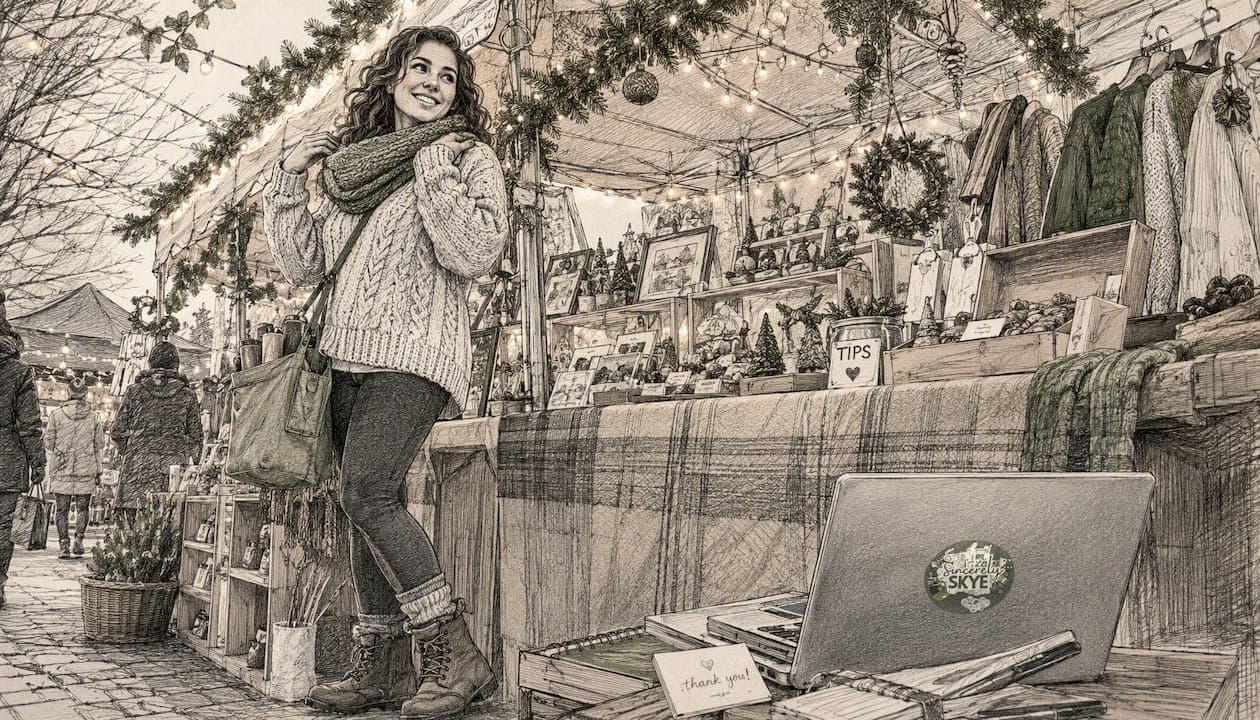
The best holiday craft fair outfit is a layered, brand-coordinated uniform with supportive shoes, accessible pockets, and weather-ready outerwear. Full stop. Everything else is refinement.
Before you dig into the details, here's your 30-second packing checklist:
- Base layer: moisture-wicking tee or thermal top
- Mid layer: fleece, cardigan, or branded hoodie
- Outer layer: packable insulated shell or waterproof jacket
- Shoes: broken-in, closed-toe, cushioned (never new on show day)
- Pockets: apron or fanny pack for tools, cash, and your phone
- Branding: one cohesive color or a logo tee that matches your booth
- Backup: spare top, extra socks, and a stain stick in the car
A vendor-ready outfit comes down to three things: comfort that lasts 8–12 hours, brand clarity that shoppers read in seconds, and weather resilience that keeps you selling no matter what the parking lot looks like at 7 AM.
Table of Contents
- How your outfit should match your booth and brand
- Comfort and function for long show days
- What shoes actually work for vendor days
- The three-layer system for outdoor and cold holiday markets
- What not to wear at a holiday craft fair
- Your seasonal vendor outfit checklist
- Concrete outfit templates you can copy
- Key Takeaways
- The outfit detail most vendors overlook
- Sincerelyskye vendor pieces worth wearing to your next show
- Useful sources for vendors
How your outfit should match your booth and brand
Shoppers form first impressions fast, and your clothing is part of that pitch. A disheveled or visually mismatched vendor creates a cognitive disconnect that can quietly undercut even the best signage. Consistency between what you wear and what you sell signals professionalism before a single word is spoken.
A simple decision framework helps here. Start with your event tone: is this a polished holiday boutique market or a casual neighborhood bazaar? Then consider your customer. Someone shopping for $80 hand-poured candles expects a different vendor presentation than someone browsing $12 ornaments. Finally, look at your display. If your booth is light, airy, and white-washed, a heavy dark outfit creates a jarring contrast. If your display is rustic and warm-toned, flannel and earthy layers fit right in.
Practical micro-rules to apply:
- Pull one color from your booth palette and repeat it in your outfit (a scarf, a tee, an apron).
- A subtle logo tee or embroidered apron does more for brand recognition than a full branded uniform.
- Avoid visual noise: busy prints, clashing patterns, or colors that fight your product photography backdrop.
- When in doubt, slightly overdress rather than underdress — holiday markets often skew more polished than a spring sidewalk sale.
Pro Tip: Photograph yourself standing in front of your booth setup before the show. If your outfit disappears into the background or clashes with your display colors, you'll catch it at home instead of at the venue.
Comfort and function for long show days
Shoes first. Everything else is secondary. Standing on hard surfaces for 8–12 hours causes real physical strain, and no amount of festive style compensates for aching feet by noon. Prioritize anti-fatigue mats behind your table and footwear you've already broken in.
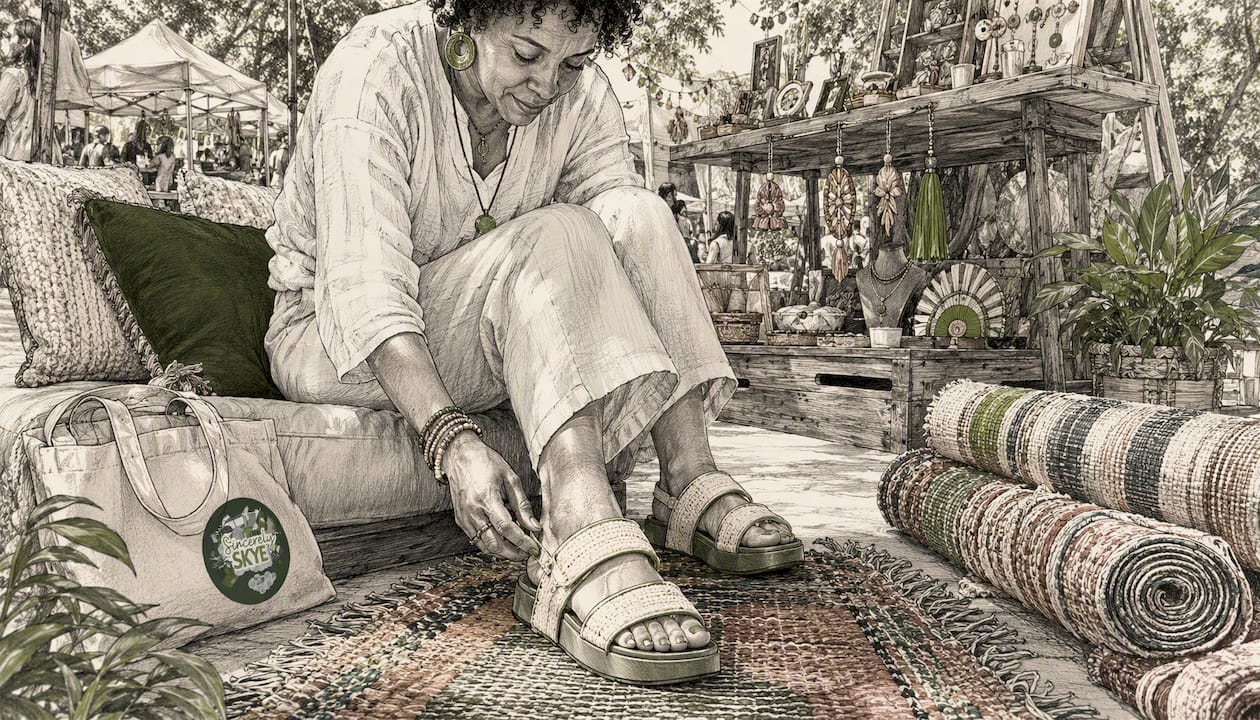
Beyond shoes, fabric choice matters more than most vendors realize. Breathable, stretch-friendly materials let you bend to restock lower shelves, reach across a table to hand a customer their bag, and stay comfortable through temperature swings. Avoid stiff denim that restricts movement and synthetic fabrics that trap heat in a crowded indoor hall.
Key garment features to look for:
- Stretch panels or jersey fabric in pants and tops for unrestricted movement
- Moisture-wicking or breathable fibers to manage warmth during busy selling periods
- Easy-adjust layers that you can add or remove without fussing (zip-front, not pullover-only)
- Apron or fanny pack for keeping tools, receipts, and a card reader within reach
Pro Tip: Wear your planned show outfit for a full Saturday at home before the event. Walk, bend, and stand for a few hours. Any fit issue, scratchy seam, or waistband problem will surface before it costs you a sale.
What shoes actually work for vendor days
Shoe construction matters more than brand. For concrete floors (most convention centers and gyms), a cushioned running-style shoe with a firm midsole outperforms fashion sneakers or flat-soled boots. For outdoor markets on grass or gravel, a waterproof boot with ankle support and a grippy tread is the practical call. Supportive clogs work well for vendors who stay mostly stationary behind a table.
The evaluation framework experienced vendors use:
- Break-in period: wear the shoes at least two weeks before the show, not two days.
- Arch support: if the shoe lacks it, add a quality insole (Superfeet and Dr. Scholl's are widely available at most US pharmacies and sporting goods stores).
- Tread: outdoor markets on wet grass or packed dirt demand real grip.
- Waterproofing: a light waterproof spray on leather or suede adds protection without bulk.
- Backup pair: keep a second broken-in pair in your vehicle. Feet swell over a long day, and swapping shoes mid-afternoon resets your comfort level.
An anti-fatigue mat behind your table is not optional for shows longer than four hours. Foam or gel mats absorb the impact that hard floors transfer straight to your lower back.
| Venue type | Best shoe choice | Key feature |
|---|---|---|
| Convention center / gym | Cushioned running shoe | Firm midsole, breathable upper |
| Outdoor grass / gravel | Waterproof ankle boot | Grip tread, ankle support |
| Mixed indoor/outdoor | Supportive waterproof clog | Easy on/off, slip-resistant |
| Cold outdoor market | Insulated waterproof boot | Thermal lining, waterproof shell |
The three-layer system for outdoor and cold holiday markets
The short answer for any outdoor or cold-weather show: moisture-wicking base, insulating mid-layer, wind and waterproof outer. That sequence is the same one outdoor athletes use, and it works for the same reason: you generate heat when you're active (setting up, restocking) and lose it fast when you're standing still.
| Layer | Purpose | Best materials | When to use |
|---|---|---|---|
| Base | Wick sweat away from skin | Merino wool, polyester blend | Always; the foundation |
| Mid | Trap body heat | Fleece, knit cardigan, half-zip | Temps below 55°F or cold halls |
| Outer | Block wind and rain | Insulated shell, packable rain jacket | Outdoor markets, cold mornings |
Indoor venues present a different challenge. Temperature swings of 15–20 degrees between morning setup and afternoon peak hours are common in convention halls. A lightweight cardigan or half-zip over your base layer handles that range without bulk.
Accessory checklist for cold outdoor markets:
- Touchscreen-compatible gloves (so you can run your card reader without removing them)
- Thermal socks, not just thick ones
- A beanie or ear warmer that doesn't interfere with your hair or headset
- Hand warmers tucked into your apron pocket
- A packable insulated shell that compresses into its own pocket
Pro Tip: Test your gloves with your specific POS device before show day. Some touchscreen gloves work on phones but not on tablet screens. A failed card transaction because of gloves is an avoidable problem.
What not to wear at a holiday craft fair
Some outfit choices actively hurt your sales or your body. Avoid these:
- New shoes or untested clothing. Show day is not a debut. Blisters and surprise fit problems cost you focus and energy.
- Fussy costume pieces or heavy holiday accessories. A full Santa suit or jingle bell jewelry sounds fun until hour three. Anything that requires constant adjustment pulls your attention away from customers.
- Tight or restrictive garments. Pencil skirts, stiff skinny jeans, or anything that limits bending and reaching will wear you down fast.
- Strong perfume or cologne. Scent lingers in small booth spaces and can genuinely drive customers away, especially those with sensitivities.
- Noisy jewelry. Bangles and charm bracelets that clank every time you hand someone a bag are distracting for both you and the shopper.
- Clothing that stains easily. Light-colored fabrics and delicate materials are a liability when you're handling products, setting up displays, and working through a full day.
- Outfits that visually contradict your booth. Athletic shorts at a premium artisan market, or an overly formal blazer at a casual neighborhood fair, both send the wrong signal.
- Overly casual choices at polished events. Check the event's marketing materials and past vendor photos. Some holiday markets skew boutique-level, and showing up underdressed reads as unprepared.
Your seasonal vendor outfit checklist
Pack this list once, keep it in a dedicated show kit tote, and you'll never scramble the morning of a market again. A permanent show kit that stays stocked between events saves real time and prevents last-minute omissions.
Clothing and layers:
- Base layer tee or thermal top (moisture-wicking)
- Mid layer: cardigan, fleece, or hoodie
- Outer layer: packable shell or insulated jacket
- Comfortable, broken-in closed-toe shoes
- Extra pair of socks (feet swell; a fresh pair mid-day helps)
- Apron with pockets or fanny pack
- Backup top (stash in the car, not the booth)
Hygiene and freshness:
- Travel deodorant or a deodorant wipe
- Stain stick or Tide-to-Go pen
- Breath mints or gum
- Small sewing kit or safety pins for wardrobe emergencies
- Blotting papers or a small powder compact for long indoor shows
Vehicle emergency kit:
- Spare top and extra shoes in the car
- Hand warmers (two pairs minimum for cold outdoor markets)
- Plastic poncho or compact rain shell
- A roll of gaffer tape (fixes hems, straps, and booth problems simultaneously)
Pro Tip: Label your show kit tote clearly and restock it the day after each event, not the day before the next one. That way it's always ready, even when a last-minute show opportunity comes up.
Concrete outfit templates you can copy
These are short, copyable looks organized by booth aesthetic. Each one is built around the comfort and brand-alignment principles above.
Rustic wood signs or farmhouse décor: Flannel shirt (open, over a solid tee) + dark straight-leg jeans + leather apron + waterproof lace-up boots. The flannel echoes the warm wood tones in your display without trying too hard. Keep jewelry minimal and earthy.
Modern-minimal or monochrome booth: Fitted black turtleneck (base) + tailored charcoal cardigan (mid) + slim dark trousers + clean white sneakers or black leather clogs. No logo on the clothing itself; let your booth signage do the talking. This reads polished at premium-priced markets.
Playful, colorful, or whimsical products: The Tis the Season Vintage Santa 3/4 Sleeve Raglan from Sincerelyskye works perfectly here. The raglan sleeve adds visual interest, the vintage graphic signals handmade culture, and the 3/4 sleeve keeps you comfortable when the hall warms up. Pair with dark jeans and festive sneakers.
Outdoor winter market (full 3-layer build): Merino wool base tee + Ribbon Hoarders Hoodie as the mid layer + packable insulated shell on top + waterproof ankle boots + touchscreen gloves. The hoodie keeps you warm during slow periods and comes off easily when setup gets physical. The craft-themed graphic is a natural conversation starter with shoppers.
Early-season fall or indoor holiday market: The Pumpkin Season is my Craft Season Tee as your base, layered under a warm cardigan for morning setup. The graphic does double duty: it's comfortable enough to sell in all day and specific enough that shoppers immediately know they're talking to a fellow maker. Pair with stretch jeans and cushioned sneakers.
Vendor team or duo booth: Matching Sincerelyskye tees in coordinating colors (sage green and cream read well together and align with the brand's palette) plus matching aprons. Cohesion between two vendors signals intentionality and makes your booth look like a real business, not a hobby table.
Polished indoor boutique market: Dark ponte pants + a fitted knit top in your booth's accent color + a structured blazer you can remove mid-day + low-heeled ankle boots with cushioned insoles. This is the "slightly overdressed" approach that works at upscale holiday markets. Avoid anything that wrinkles badly when you sit.
For vendors who want their apparel to function as part of the merchandising system, Sincerelyskye's holiday collection includes seasonal pieces designed specifically around crafting culture. These aren't costume pieces; they're comfortable enough to wear for a full show day and specific enough to start conversations.
Key Takeaways
A layered, brand-coordinated outfit with broken-in supportive shoes and accessible pockets is the single most effective vendor uniform for any holiday craft show.
| Point | Details |
|---|---|
| Layer for every venue | Use a moisture-wicking base, insulating mid, and wind/waterproof outer for outdoor or cold shows. |
| Shoes are the priority | Break in footwear at least two weeks before the show; keep a backup pair in the vehicle. |
| Match outfit to booth | Pull one color from your display palette and repeat it in your clothing or apron for brand cohesion. |
| Pack a permanent show kit | Keep a stocked tote with backup clothing, hygiene items, and emergency gear ready between events. |
| Sincerelyskye seasonal pieces | The Ribbon Hoarders Hoodie, Tis the Season Raglan, and Pumpkin Season Tee work as real vendor layers with craft-culture graphics that connect with shoppers. |
The outfit detail most vendors overlook
Here's a perspective that doesn't get enough attention: most vendor outfit advice focuses on what you look like to shoppers. The more useful frame is what you feel like at hour seven.
The vendors who consistently sell well at holiday markets aren't the ones in the most festive outfits. They're the ones who aren't distracted by their feet, aren't tugging at their waistband, and aren't cold enough to want the day to end early. Comfort is a selling tool. When you feel good physically, you make eye contact, you engage, you stay present. When you're exhausted and uncomfortable, you go quiet, and quiet vendors lose sales.
The habit worth building: treat your show outfit like a uniform, not a fashion decision. Pick a formula that works for your booth aesthetic, test it at home, and repeat it with minor seasonal adjustments. The mental energy you save by not rethinking your outfit the night before every show goes directly into your selling game.
My show kit lives in the car year-round. That single habit has saved me more times than any specific outfit choice ever has.
Sincerelyskye vendor pieces worth wearing to your next show
Sincerelyskye designs apparel specifically for the crafting community, which means the pieces are built around the same priorities this article covers: comfort for long days, graphics that start conversations with shoppers, and fabrics that layer well. The Craft Now, Clean Later V-Neck Tee works as a breathable base layer under a cardigan or hoodie, and the graphic lands with exactly the kind of shopper who stops at a handmade booth. The Ribbon Hoarders Hoodie pulls double duty as a mid layer for chilly morning load-ins and a standalone top when the hall warms up. Browse the full Sincerely Christmas collection for seasonal pieces that fit naturally into a vendor wardrobe without looking like a costume.
Useful sources for vendors
- What to Wear as a Craft Fair Vendor (TheCraftMap) — Practical layering guidance and accessory recommendations for long show days, including the three-layer system and touchscreen glove advice.
- What to Wear to a Craft Fair to Boost Sales (Made Urban) — Covers the brand-alignment angle in depth: how outfit choices affect shopper perception and when to overdress versus underdress.
- Craft Fair Vendor Packing List (TheCraftMap) — A complete packing checklist that pairs outfit prep with logistics; useful for building your permanent show kit.
- How to Sell at a Craft Fair: A 10-Step Checklist (Shopify) — Broader vendor prep guide that connects POS readiness, signage, and outfit choices into a single pre-show workflow.
- Why Crafters Start Thinking About Fall in the Middle of Summer (Sincerelyskye) — On the value of planning seasonal inventory and vendor wardrobes earlier than feels necessary.
Recommended
- Why Crafters Start Thinking About Fall in the Middle of Summer — Sincerely, Skye
- Craft Now, Clean Later - V-Neck Tee — Sincerely, Skye
- Why Store Owners Start the Holiday Season So Early — Sincerely, Skye
- Warning: May Discuss Ribbon, Pumpkins & Craft Supplies for Hours Long Sleeve Tee — Sincerely, Skye