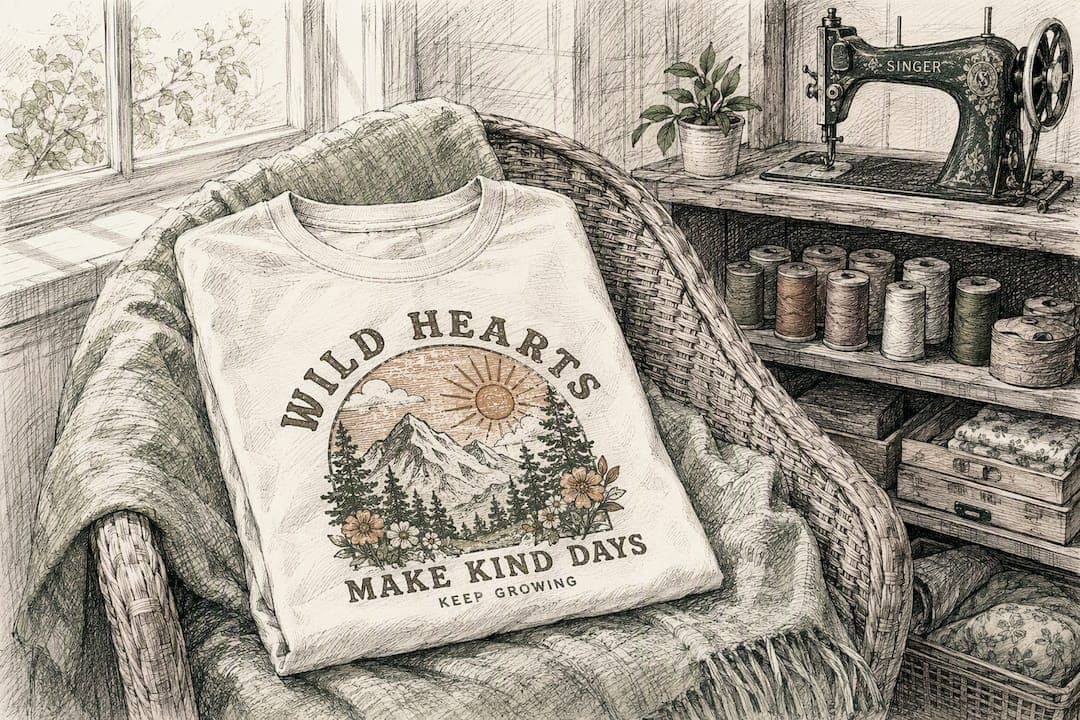
The best vintage inspired craft tees share four traits: midweight combed cotton around 180 GSM (roughly 4.2 oz/yd²), clean tubular knit construction, a tear-away label, and graphics with a worn-in, muted look instead of glossy factory print. If a product page lists those four details, you're looking at a tee built to survive real craft sessions, not just a cute mockup photo.
Start your search with phrases like "combed cotton craft graphic tee," "tubular knit vintage tee," or "tear-away label crafting shirt." Those phrases filter out mass-produced novelty shirts and surface makers who actually publish fabric specs.
- Fabric: combed or ringspun cotton, 180 GSM / ~4.2 oz/yd²
- Construction: tubular knit, no side seams
- Label: tear-away, not woven or printed-on-neck
- Graphics: distressed ink, muted palette, retro type
Sincerely Skye's craft tee collection is worth a look if you want all four checked off in one place.
Key Takeaways
A vintage-inspired craft tee earns its "vintage" label through construction and fabric choices as much as through the graphic printed on it.
| Point | Details |
|---|---|
| Prioritize fabric weight | Look for around 180 GSM (~4.2 oz/yd²) for a balance of softness and durability. |
| Check the construction | Tubular knit avoids side seams and resists twisting after repeated washes. |
| Confirm the label type | Tear-away labels reduce irritation during long crafting sessions compared to woven tags. |
| Measure before you buy | Use a favorite tee's chest, shoulder, and sleeve measurements against the size chart. |
| Wash cold, dry low | Protects prints and limits shrinkage on water-based and discharge inks. |
| Shop with the right terms | Sincerely Skye's craft tee collection lists fabric feel, label type, and vintage graphic details on each product page. |
Table of Contents
- What Makes Vintage Craft T-Shirt Designs Feel Right
- Which Vintage Graphic Styles Actually Read As "Craft"?
- How Do You Pick the Right Size Without Trying It On?
- Where to Find Vintage-Inspired Craft Tees Online
- How Do You Wash a Craft Tee Without Ruining the Print?
- What Actually Matters When You're Buying a Craft Tee
- Sincerely Skye: Built for Makers, Not Just Photographed for Them
- Frequently Asked Questions
- Sources
What Makes Vintage Craft T-Shirt Designs Feel Right
Fabric feel drives more purchase decisions than the graphic itself. Shoppers treat a tee as a daily wearable first and a novelty item second, which means fabric quality has to hold up before the artwork even gets a fair look. That's why fabric weight, knit style, and label choice matter more than most shoppers realize when they're scrolling product photos.
Weight is measured in GSM (grams per square meter) or ounces per square yard, and it tells you almost everything about how a shirt will wear. Anything under 150 GSM tends to feel thin and see-through after a wash or two. Anything over 220 GSM gets heavy fast, especially layered under a flannel while you're gluing, sewing, or painting.
Fast fact: Fabric around 180 GSM (about 4.2 oz/yd²) hits the sweet spot between drape and durability, soft enough for all-day wear, sturdy enough to survive repeated washing without going sheer.
Construction matters just as much as weight. Tubular knit shirts are knitted in a continuous tube, so there's no side seam to twist or pucker after drying. Side-seamed shirts can shift off-center over time, which is exactly the kind of thing you notice mid-project when your sleeve suddenly feels wrong.
- Look for "tubular knit" or "no side seam" in the product description
- Confirm the label is tear-away, not sewn-in woven tag
- Check for "combed cotton" or "ringspun cotton" callouts
- Avoid vague listings that skip fabric weight entirely
Tear-away labels deserve their own mention. Makers spend hours hunched over a table, and a scratchy woven tag digging into your neck for that long is genuinely miserable. Tear-away labels reduce that irritation without sacrificing anything on the design side, since brand info can print directly inside the collar instead.
Which Vintage Graphic Styles Actually Read As "Craft"?
Not every distressed font counts as vintage. The style relies on specific visual choices, and once you know them, spotting a lazy imitation gets easy.
- Distressed or cracked ink texture instead of a flat, glossy print
- Muted palettes: faded reds, dusty sage, off-white rather than stark white
- Retro typography: script fonts, stacked block letters, or badge-style layouts
- Off-white or heather base fabric instead of bright white
Subject matter matters too. The strongest retro craft t-shirts lean into tools of the trade (sewing machines, paintbrushes, crochet hooks) or witty slogans that only another maker would fully get. A nostalgic floral print or a phrase like "Craft Now, Clean Later" hits harder than a generic "crafting is my therapy" line because it feels specific to the culture rather than pulled from a stock graphic library.
Placement counts as much as the artwork itself. A centered chest graphic sized to about 10 to 12 inches wide reads as intentional and vintage. Oversized prints that stretch shoulder to shoulder tend to look like a costume shirt rather than something you'd actually wear to a craft fair.
How Do You Pick the Right Size Without Trying It On?
Sizing charts vary wildly between brands, so treat every new maker shop as its own system rather than assuming your usual size carries over.
- Check whether the cut is unisex or fitted. Unisex sizing generally runs looser through the body, so many people size down one from their usual women's fit.
- Grab a tee you already own and love. Lay it flat and measure chest width (armpit to armpit, doubled), shoulder seam to shoulder seam, and sleeve length.
- Compare those numbers against the brand's size chart instead of guessing from the S/M/L label alone.
- Scan reviews for phrases like "runs small" or "true to size." Real buyer feedback catches inconsistencies that a size chart won't.
Pro Tip: Shirts labeled "preshrunk" still lose a small percentage of length in the first hot wash. Buy true to your measured size and wash cold to keep that shrinkage minimal.
Where to Find Vintage-Inspired Craft Tees Online
Searching "vintage craft tee" alone returns a flood of unrelated results. Get specific instead: try "180 GSM vintage tee," "crafting graphic tee tear-away label," or "tubular knit craft shirt" to filter toward shops that actually publish construction details.
Three channels consistently deliver better options than a generic marketplace search:
- Independent maker shops that design in-house and control print quality directly
- Curated craft-lifestyle collections, including brand stores like Sincerely Skye, that build entire lines around maker culture rather than treating crafting as one tag among hundreds
- Boutique apparel sites that list fabric weight, fiber content, and construction method on every product page
Once you land on a shop, filter by fabric weight, print technique (screen print versus DTG), and fit before you filter by color. Made-to-order listings often mean better print detail since they're produced per order rather than mass-run, but they also mean a longer wait. Stocked items ship faster, which matters if you're buying for a craft fair happening next weekend.
How Do You Wash a Craft Tee Without Ruining the Print?
Vintage-style prints, especially water-based or discharge inks, fade faster under harsh washing. A few consistent habits keep them looking good for years instead of months.
- Wash cold and turn the shirt inside out before it goes in the machine.
- Use a gentle detergent without added bleach or optical brighteners.
- Skip the dryer's high-heat setting. Tumble on low or air dry to protect both the fabric and the print.
- Iron only if needed, and never directly on the graphic. Iron inside out or use a pressing cloth.
- Repair small seam splits early with a needle and thread rather than letting them widen.
Some fading over time is normal, and honestly, part of the appeal. A tee that softens and mellows a little after two years of wear reads as more authentically vintage than one that stays stiff and glossy forever.
What Actually Matters When You're Buying a Craft Tee
Most buying guides treat vintage design and physical comfort as two separate categories, one for the graphic, one for the fabric. That split doesn't hold up once you actually wear the shirt for six hours at a craft table. A worn-in graphic on a scratchy, boxy tee still feels wrong to wear, no matter how good the print looks in a product photo.
Here's what conventional advice tends to skip: label type. A woven tag might seem like a minor detail, but ask anyone who's spent an afternoon hunched over a sewing machine how much that scratchy label at the back of the neck matters after hour three. Tear-away labels solve a real, specific problem, not a cosmetic one.
If you take one thing from this guide, prioritize fabric weight and construction before you fall for a graphic. A gorgeous print on thin, see-through cotton is a shirt you'll stop wearing within a month. A well-built 180 GSM tubular knit tee with a decent graphic earns years of actual use, which is the whole point of buying one in the first place.
Sincerely Skye: Built for Makers, Not Just Photographed for Them
If you want a tee that checks every box in this guide without digging through ten different boutique sites, Sincerely Skye's craft collection is designed specifically for that gap. The Craft Now, Clean Later Tee pairs a soft, combed cotton feel with a muted, retro-style graphic that reads as vintage instead of novelty, and it's built with the comfort details makers actually notice, including a tear-away label so you're not fighting an itchy tag during a long project.
Prefer a different neckline? The Craft Now, Clean Later V-Neck offers the same fabric and label approach in a v-neck cut, and the Stop MESH-in Around tee leans further into slogan-driven maker humor if that's more your style. Every piece in the crafters collection is designed around the same maker-first thinking: comfort during long sessions, graphics that reference real craft culture instead of generic hobby clichés, and honest product descriptions that tell you what you're actually buying. Browse the collection and pick the tee that matches how you actually spend your Saturdays.
Frequently Asked Questions
What GSM is best for a vintage-inspired craft tee? Around 180 GSM, or about 4.2 oz/yd², balances softness with enough structure to hold up under repeated washing and active wear.
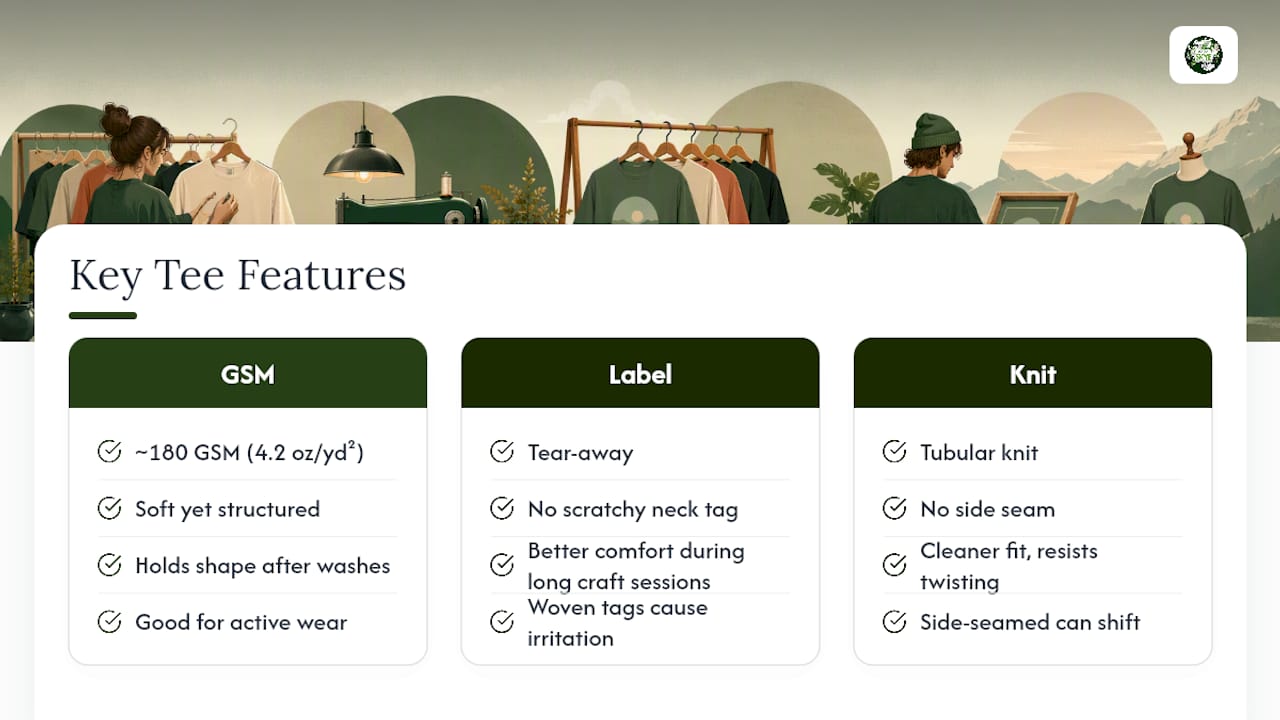
What's the difference between tubular knit and side-seamed shirts? Tubular knit shirts are made without a side seam, which keeps the fit cleaner and resists twisting after washing. Side-seamed shirts can shift slightly out of shape over time.
Why do tear-away labels matter for craft t-shirts? They eliminate the scratchy irritation of a woven neck tag, which matters most during long crafting sessions when you're hunched over a project for hours.
How do I know if a design counts as "vintage-inspired"? Look for distressed or cracked ink texture, muted color palettes, off-white fabric bases, and retro typography rather than bright, glossy factory prints.
Where should I buy vintage inspired craft tees? Independent maker shops and curated craft-lifestyle stores like Sincerely Skye typically publish fabric weight and construction details on product pages, which makes it easier to judge quality before buying.
Sources
- Why fabric matters: the foundation of great fashion design
- T-shirt construction: spinning, stitching and everything in between