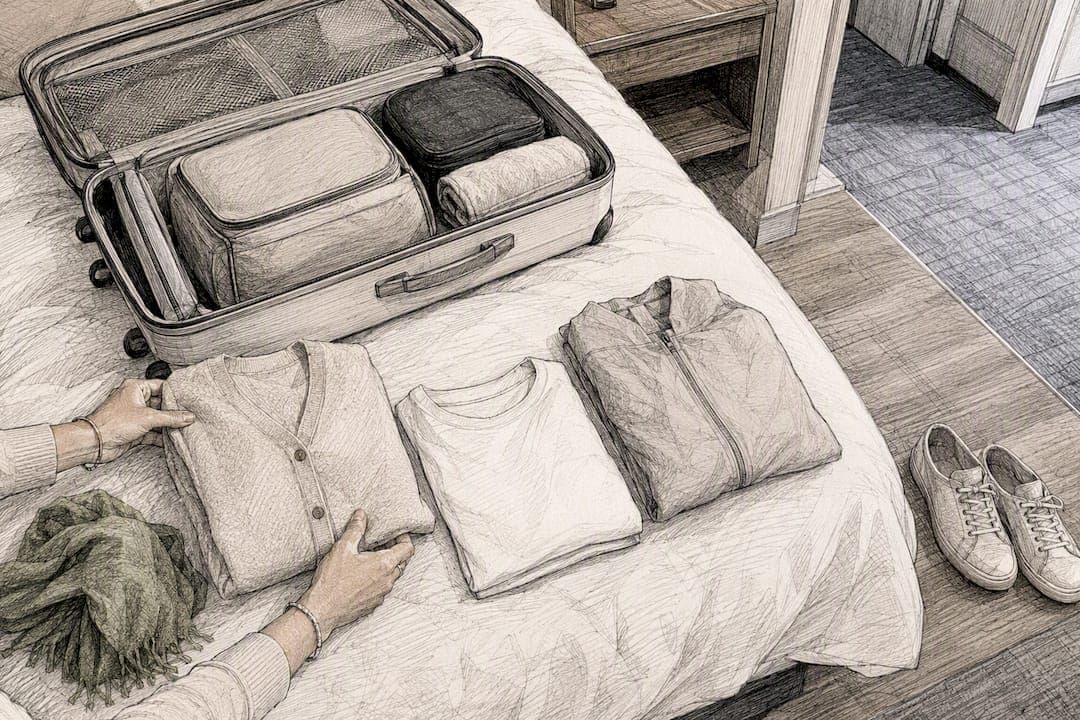
Pack a small capsule of neutral basics, add one smart accent layer, and stick to merino or technical fabrics, and you have maker travel outfits that survive a craft fair setup, a flight delay, and a dinner out without a wardrobe change. This works because it's easy to care for, photographs well for social content, and leaves room in your suitcase for the ribbon spools and paint samples you're inevitably bringing home. The rest of this guide breaks that approach down into specific outfits, fabric picks, and a packing checklist.
TL;DR:
- Packing only a small capsule of versatile, easy-care pieces, especially merino or technical fabrics, allows for multiple outfits that survive long travel days and craft fair demands.
- Building outfits around a 5-4-3-2-1 rule helps organize capsule wardrobe pieces, with specific formulas for city, warm-weather, and trail trips to maximize outfit versatility.
- Natural fibers like merino wool, Tencel, and ponte knit outperform cotton on durability, odor control, and wrinkle resistance, especially when hand-washed and air-dried overnight.
- Organizing clothing with packing cubes and including a maker toolkit ensures space for craft supplies, while leaving about 20% extra space accounts for eventual purchases.
- Limiting shoes to two multipurpose pairs and layering with adaptable pieces simplifies travel, while focusing on neutrals and one accent color with textures creates a streamlined, stylish capsule.
Table of Contents
- Three Outfit Formulas That Multiply Your Travel Looks
- Eight Travel Outfits You Can Copy for Any Itinerary
- Which Fabrics Actually Survive a Trip?
- Building a Packing System That Leaves Room for Purchases
- How Makers Turn These Rules Into Craft-Friendly Wardrobes
- How Should You Adapt This Capsule for Trip Length?
- What Shoes Actually Work for Travel?
- What's the Right Way to Layer for Travel?
- How Do You Mix Colors and Patterns Without Overpacking?
- Author Perspective: Why Makers Deserve Travel Outfits That Balance Comfort and Craft Identity
- Shop Sincerely Skye Travel-Friendly Pieces and Quick Outfit Bundles
- Sources
- FAQ
Three Outfit Formulas That Multiply Your Travel Looks
Most overpacking comes from choosing pieces in isolation instead of planning outfits as a system. Stylist Nicole Russo puts it plainly: build the capsule and plan the outfits before anything goes in the suitcase, so you never hit the "I have nothing to wear" wall during your trip, according to Travel + Leisure. A tightly mixed capsule with coordinated tops and bottoms can cover a week or more of outfits.
The classic packing shorthand for this is the 5-4-3-2-1 rule: a handful of tops, bottoms, layers, shoes, and an accessory anchor appropriate for week-long trips. It's not a rigid law, but it's a useful ceiling to check yourself against before you zip the bag.
Here are three formulas built around that structure, each suited to a different kind of trip:
- The city carry-on capsule. Two pairs of pants (one dark, one lighter neutral), a midi skirt, four tops in coordinating colors, one packable jacket, and one cardigan. This is the formula REI leans on for general travel because it stretches a handful of pieces across a full week of travel clothing without repeats looking obvious.
- The warm-weather dress-forward capsule. Two or three midi or maxi dresses in easy-care fabric, one lightweight cardigan, one denim jacket for cooler evenings, and sandals plus one sturdier walking shoe. Dresses solve the "what goes with what" problem entirely since there's no matching required.
- The adventure or trail-ready capsule. Convertible pants, moisture-wicking tops, a fleece or light puffer, and one rain shell. This is the formula for retreats, farmers market road trips, or any itinerary with dirt, weather, or long walks involved.
For all three, stick to a palette of two or three neutrals (black, olive, camel, or gray) plus one accent color that shows up in at least two pieces. That single accent, whether it's a rust cardigan or a mustard scarf, is what keeps four outfits from looking like the same outfit photographed twice.
Fabric choice should follow the formula. The city capsule wants ponte knits and Tencel blends that resist wrinkling in a folded stack. The dress-forward capsule wants jersey or linen blends that breathe in heat. The trail capsule wants actual technical fabric, since cotton holds sweat and dries slowly on a hike.
Eight Travel Outfits You Can Copy for Any Itinerary
Planning gets easier once you see it applied to specific days instead of abstract rules. Vogue's approach to itinerary-based dressing is to build around versatile basics like wide-leg pants and clean sneakers, then swap one accessory or layer to shift the mood, according to Vogue's travel outfit roundup. Here's how that plays out across a typical maker trip:
- Airport and long flight: Wide-leg pants or leggings, a soft graphic tee, an oversized cardigan or zip hoodie, and slip-on sneakers. Skip the belt and heavy jewelry; airport security moves faster with low metal, and a crossbody bag keeps your hands free for coffee and a boarding pass.
- City sightseeing: Comfortable straight-leg pants, a breathable top, a crossbody bag, and your most broken-in walking shoe. Add a hat or sunglasses for sun coverage since you're likely on your feet for hours.
- Dinner out: Reuse the sightseeing base and swap two things: shoes and jewelry. A pair of flats becomes a low heel or a dressier sandal, and simple stud earrings become statement ones. Same outfit, entirely different energy.
- Market day or vendor browsing: A relaxed dress or tee-and-pants combo with a tote instead of a crossbody, since you'll want room for whatever you buy.
- Beach or waterfront day: A swimsuit under a linen cover or breezy dress, sandals, and one packable layer for when the wind picks up.
- Hiking or trail day: Technical leggings or convertible pants, a moisture-wicking top, and a lightweight rain shell tied at the waist when not needed.
- Creative event or vendor table day: A structured top with actual pockets, comfortable flats or supportive sneakers since you'll be standing for hours, and minimal jewelry that won't catch on ribbon or wire.
- Craft retreat evening: A cozy sweatshirt or oversized knit paired with leggings, worn with the same day shoes, for the part of the trip where comfort wins outright.
Current travel style favors relaxed tailoring, packable jackets, and coordinated sets over the leggings-and-hoodie default, per Who What Wear's 2026 travel wardrobe guide. None of these eight outfits requires more than a scarf swap or shoe change from the last, which is the entire point of building from a capsule instead of packing outfit by outfit.
Which Fabrics Actually Survive a Trip?
Cotton feels comfortable off the hanger and awful three days into a trip. It wrinkles hard, dries slowly, and holds odor, which is exactly why merino wool, linen blends, and technical synthetics consistently outperform it for long travel days. Here's how the main options actually compare:
- Merino wool: Naturally odor-resistant, regulates temperature, and can go two or three wears before it needs washing. Great for tops and light layers.
- Ponte knit: Structured enough to look polished, stretchy enough to sit on a plane in, and barely wrinkles when folded.
- Tencel or Lyocell: Soft, breathable, and more wrinkle-resistant than straight cotton, with a similar drape.
- Technical blends: Best for anything active, since they wick moisture and dry fast, but they run warmer in humid climates than natural fibers.
- Linen: Breathes beautifully in heat but wrinkles the moment you sit down. Accept the wrinkles as part of the look, or skip linen for anything you need to wear straight out of a suitcase.
REI's travel clothing guidance backs this up directly, recommending performance knit shirts and technical blends over cotton basics for exactly this reason, per REI's expert advice on travel clothing. Makers who sew their own pieces have an advantage here: merino jersey and ponte knits can be hand-washed and dry overnight, which cuts the number of pieces you need to pack in the first place.
The hotel sink method is simple: fill the basin, add a drop of shampoo or a travel packet of detergent, swirl the garment for a minute, rinse until the water runs clear, then roll it in a towel and press out the excess water before hanging. A fabric that dries by morning means one top can cover three wear days on a week-long trip.
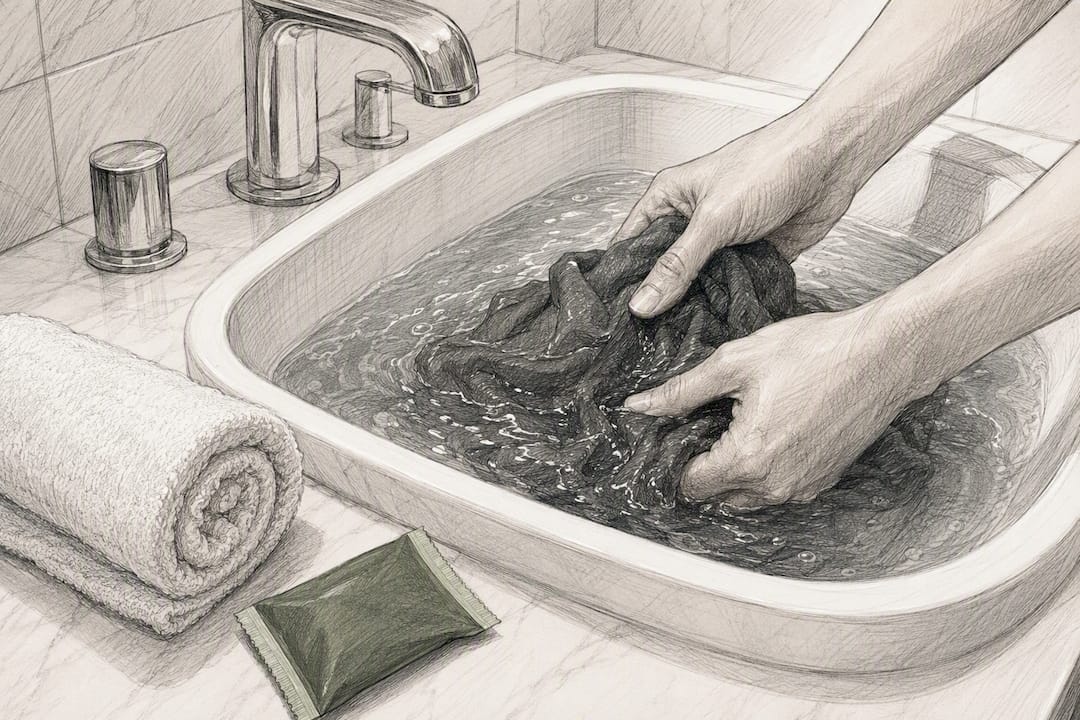
Pro Tip: Hang damp merino or ponte pieces near the bathroom fan or a cracked window overnight. Airflow cuts drying time nearly in half compared to a closed, humid bathroom.
Building a Packing System That Leaves Room for Purchases
A capsule only works if the packing itself is organized. Packing cubes and compression bags keep the 5-4-3-2-1 structure from collapsing into a duffel bag of loose fabric, and REI notes that good folding and cube systems are what actually keep wrinkles down over a multi-day trip, according to REI's packing guidance.
For makers, the standard checklist needs one addition: a small toolkit or cleaning pouch for whatever craft supplies you're bringing or bringing home. Here's the adapted system:
- Clothing cube: 5 tops, 4 bottoms, 3 layers, 2 shoes, 1 accessory anchor, folded flat or rolled.
- Shoe bags: Keep shoes separate from clothing, and pack your bulkiest pair worn on travel days to save suitcase space.
- Jewelry case: A small zip case or pill organizer prevents necklaces from tangling into a knot.
- Maker kit pouch: Scissors, glue, small tools, or samples, packed in a hard-sided pouch so nothing gets crushed.
- Empty buffer space: Leave roughly 20 percent of your bag empty going out, since you're likely coming home with more than you left with.
Tools like the Stylebook closet app let you photograph and lay out full outfits digitally before you ever open a suitcase, which is a fast way to confirm every piece actually earns its spot. If you're flying carry-on only, pack layers you can shed at security (no belts, minimal metal) and keep your toolkit pouch accessible in case it needs a separate screening.
How Makers Turn These Rules Into Craft-Friendly Wardrobes
A capsule formula means nothing until it's applied to actual pieces, and this is where Sincerely Skye's own catalog does double duty. A graphic vintage-inspired tee paired with a lightweight cardigan and a canvas tote covers a flight day and a market day with zero changes beyond footwear. A cozy sweatshirt built for long crafting sessions doubles as a retreat-evening layer once you're off the plane. And a tote built for hauling yarn or ribbon becomes the exact bag you want for a vendor day, since it already has room for extra stock.
- Graphic tee + packable cardigan + tote = flight day and city day, same outfit
- Cozy sweatshirt + leggings + sneakers = retreat evening comfort
- Structured tee + apron-friendly layer + flats = full day at a vendor table
Craft fair outfit logic and travel outfit logic overlap more than most guides admit. Both need pockets, both need pieces that survive hours of standing, and vendor-day dressing already solves half the travel packing problem.
How Should You Adapt This Capsule for Trip Length?
A weekend trip needs almost no adaptation. Pack the 5-4-3-2-1 formula as written, wear your bulkiest shoes and layer on travel days, and skip the maker toolkit pouch unless you're heading straight to an event.
A week-long trip is where the capsule earns its keep. Stick to the same core piece count and lean on quick-dry fabrics so two or three tops can cover seven days through a mid-trip hand wash. This is the sweet spot the 10-to-14-piece capsule structure was built for, and it's the trip length where visual outfit planning tools pay off most, since you can confirm every combination works before you pack a single bag.
Extended trips, anything past two weeks, call for one adjustment: plan for one full laundry cycle at the halfway point instead of trying to stretch a carry-on capsule the entire time. Add one or two extra base layers for climate shifts if you're moving between regions, but resist the urge to double the whole capsule. The formula holds because it's built on versatility, not volume. A trip that starts in a warm city and ends at a cooler retreat just needs one added packable layer, not a second suitcase.
What Shoes Actually Work for Travel?
Two pairs, maximum, and each one needs to do multiple jobs. A supportive sneaker or walking flat handles flights, sightseeing, and long standing days at a vendor table without wrecking your feet by hour three. A second pair, something slightly dressier like a low block heel or a structured sandal, covers dinners and evening events without taking up real suitcase space.
Suede sneakers and clean, minimal silhouettes are having a real moment in travel style right now, trading the athletic-shoe look for something that still reads polished at dinner, per Who What Wear's current travel wardrobe picks. Wear your bulkiest pair on the plane. It saves cube space and gets the least comfortable shoe out of your bag entirely.
Skip brand-new shoes for any trip involving real walking. Break them in around the house first, or you'll spend day two of a craft retreat nursing blisters instead of setting up your table.
What's the Right Way to Layer for Travel?
Travel layering solves two problems at once: unpredictable temperatures and limited suitcase space. The trick is building layers that each work alone and in combination, not packing separate outfits for every possible weather scenario.
Start with a breathable base layer, a tee or lightweight top in merino or a soft blend. Add a mid layer, a cardigan or light sweater, that can be tied around a bag or worn open over the base. Finish with one outer layer, a packable jacket or denim jacket, that handles wind, air conditioning, or an unexpected cold front. Three layers, worn in any combination, cover a temperature range that would otherwise take five separate outfits to handle.
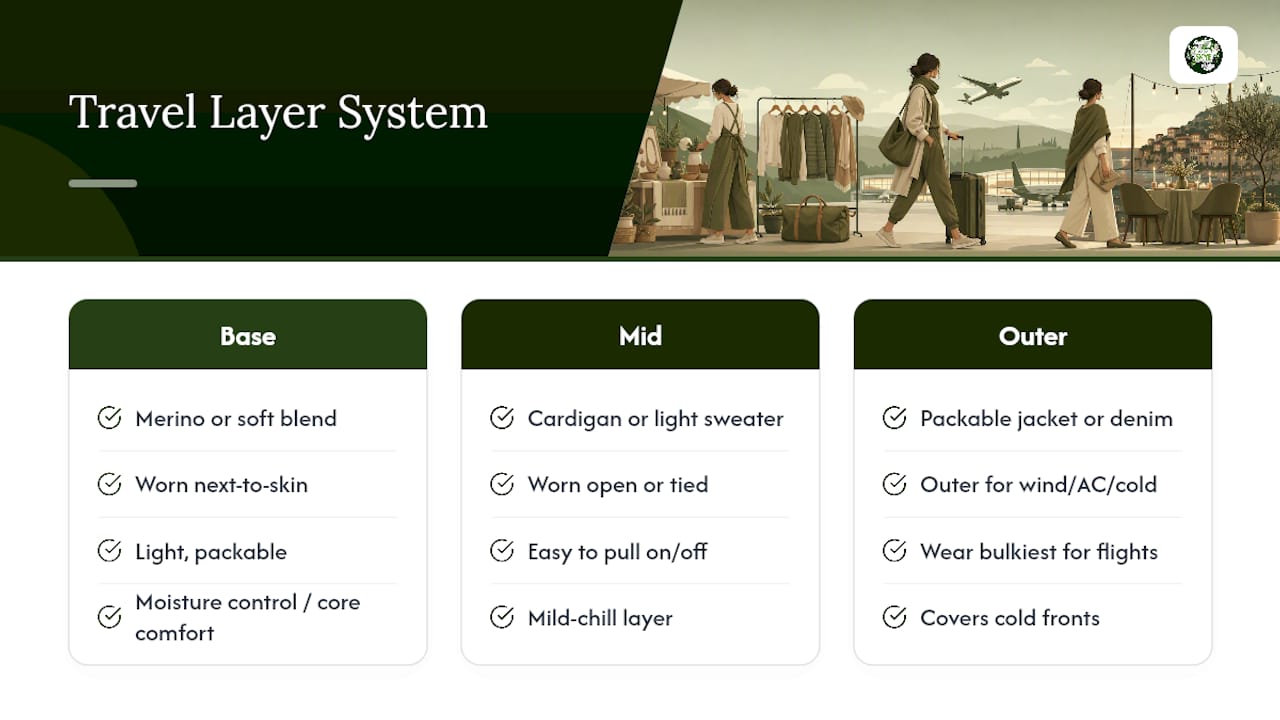
The layering order also matters for airport security and plane comfort. Wear your bulkiest layer, since planes run cold and it saves suitcase room, and keep it easy to shed at the security line. A cardigan that's simple to pull on and off beats a fitted blazer every time you're moving through a checkpoint.
How Do You Mix Colors and Patterns Without Overpacking?
Stick to two or three neutrals as your base, then add exactly one accent color that repeats across at least two pieces. This is the single trick that makes a small capsule look like a much bigger wardrobe. If your accent is rust, it shows up in a cardigan and a scarf. If it's mustard, it's a top and a bag strap. The repetition reads as intentional styling instead of random color chaos.
Patterns work the same way, but with a stricter rule: pack one patterned piece per trip, maximum, and let it be the outfit's focal point. A patterned scarf or one printed top paired against solid neutrals reads polished. Two patterns fighting for attention in the same outfit reads like you packed in a hurry.
Texture is the quiet variety trick most guides skip. A ribbed knit next to a smooth ponte pant, or a textured cardigan over a flat jersey dress, creates visual interest without adding a single new color to track. This is especially useful for makers who already gravitate toward busy, textural pieces. Let one texture stand out per outfit and keep everything else simple.
Author Perspective: Why Makers Deserve Travel Outfits That Balance Comfort and Craft Identity
Most travel style guides are written for people who aren't hauling a tackle box of beads through airport security. Makers pack differently, and their outfits need to work standing at a table for six hours, not just sitting in a plane seat. I've noticed the best-dressed vendors at any craft fair are the ones who clearly planned their outfit with the same intention they bring to their booth display. Treat outfit planning as part of your creative prep, not an afterthought squeezed in the night before.
— Skye
Shop Sincerely Skye Travel-Friendly Pieces and Quick Outfit Bundles
Some apparel collections focus on easy-care basics with enough personality to skip the boring plane-outfit trap. The Craft Now, Clean Later V-Neck Tee is a soft, breathable base layer that pairs equally well with joggers on a flight or a skirt at dinner, and its graphic keeps a plain travel outfit from looking like an afterthought.
Round out your capsule with a cozy pullover from the Sincerely Skye Gear collection for chilly cabins and cooler evenings, and grab a tote from the Sincerely Crafters collection that doubles as your market-day bag and your carry-on organizer. For fit, sizing up slightly on tees can help when layering under cardigans; sticking to two colorways ensures cross-matching, and limiting graphic pieces to one per outfit day maintains visual cohesion. Browse the full Sincerely Skye shop to build your own bundle before your next trip.
Sources
- Choosing the best clothes for travel | REI Expert Advice
- How to create a travel capsule wardrobe | Travel + Leisure
- The Ideal 10-Piece Fall Travel Wardrobe for 2026 | Who What Wear
- 8 travel outfits for every itinerary, trip, and style | Vogue
FAQ
What Is the 3-3-3 Rule for Outfits?
The 3-3-3 rule suggests packing 3 tops, 3 bottoms, and 3 pairs of shoes, though many travelers adapt it loosely to fit their own trip length and climate needs.
What Is the Best Outfit to Wear for Airplane Travel?
Wide-leg pants or leggings, a soft breathable top, an easy layer like a cardigan or hoodie, and slip-on shoes work best, since they're comfortable seated and quick through security.
What Is the 3-3-3 Rule for Travel Packing?
Some travelers use it as a packing shorthand for 3 tops, 3 bottoms, and 3 pairs of shoes, similar in spirit to the more detailed 5-4-3-2-1 capsule structure covered above.
How Many Outfits Should I Pack for a Week-Long Trip?
A 10-to-14-piece capsule, mixed and matched using neutral pants and tops with one accent color, typically covers a full week without repeating an identical outfit.
Can Sincerely Skye Pieces Work as Travel Capsule Staples?
Yes. Graphic tees and lightweight layers from Sincerely Skye's collections are designed to mix with neutral basics, making them easy to slot into a maker's travel capsule.