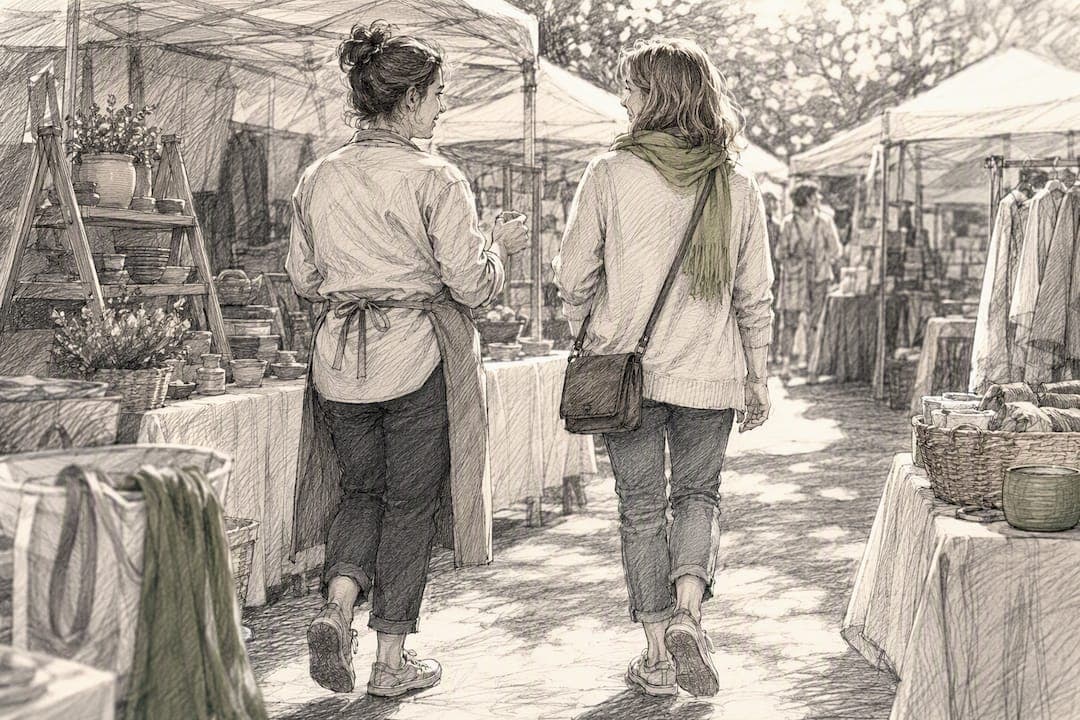
The easiest craft-fair outfit prioritizes three things: comfortable shoes, a hands-free secure bag, and layerable pieces. Everything else is a detail. Whether you're vending or browsing, TheCraftMap's vendor guidance and Sincerelyskye's own booth-tested experience point to the same rule: dress for an 8-hour shift on your feet, not a photo shoot. Grab a base outfit you can layer, add pockets or a crossbody, and you're set.
TL;DR:
- Wear shoes with cushioned insoles, arch support, and slip-resistant soles, and avoid debuting new footwear on show days to prevent discomfort.
- Pack layered outfits with breathable fabrics like cotton or linen, and keep spare layers handy for weather changes or sudden rain.
- Use hands-free, secure bags such as crossbodies or structured totes to keep valuables safe and hands free for browsing or sales.
- Choose a simple, repeatable vendor uniform in neutral tones with one colorful accent piece to look professionally cohesive and brand-consistent.
- Prepare a survival kit with water, snacks, a fully charged phone, a compact stool, and sun protection to handle long hours outdoors comfortably.
Table of Contents
- 7 Easy Craft Fair Outfit Formulas You Can Copy Today
- Shopper Vs. Vendor: Adjust One Outfit for Your Role
- Season and Weather Swaps That Keep One Outfit Working All Day
- Shoes and Bags That Actually Get You Through the Day
- How Vendors Can Build a Simple, Comfortable Uniform
- Craft Fair Survival Checklist for Long Show Days
- Accessories That Finish a Craft Fair Look
- Color Coordination Tips for a Booth That Stands Out
- Fabric Choices That Hold Up All Day
- Why Comfort and Craft Identity Go Together
- Dress the Part With Sincerely Skye's Craft-Inspired Pieces
- Sources
7 Easy Craft Fair Outfit Formulas You Can Copy Today
You don't need a new wardrobe for this. You need a formula you can repeat with whatever's clean in your closet. Market styling guides tend to agree on the same skeleton: pick a base, add one layer, choose a hands-free bag, and finish with a single style cue that makes it feel like you instead of a uniform, a structure. Daviera's market outfit guide lays out well.
Here are seven versions of that formula, built for different roles and weather.
- Graphic tee, straight-leg jeans, canvas sneakers. A soft cotton tee (try a vintage-inspired graphic style) tucked loosely into medium-wash jeans reads casual but put-together. Sneakers with real cushioning make the difference after hour three.
- Linen button-down over a tank, wide-leg pants, low block-heel sandals. Linen breathes and hides sweat better than most synthetics, and wide-leg pants give you room to crouch and reach without pulling at the seams.
- Oversized crewneck, leggings, slip-on clogs. This is the cold-morning, warm-afternoon combo. The crewneck comes off when the sun hits; the clogs slide on and off at the car without a fight.
- Midi dress with pockets, denim jacket, ankle boots. One-and-done dressing at its best. Look for a dress with actual pockets so you're not juggling a bag every time you pull out cash.
- Cropped puffer vest, thermal henley, straight jeans, waterproof low boots. Built for a cold, damp outdoor fair. The vest traps heat in your core while your arms stay free to move product or dig through a bag.
- Chambray shirt, overalls, broken-in sneakers. A vendor favorite. Overalls give you built-in storage and hide stains far better than light-colored pants.
- Rain-ready: packable anorak, moisture-wicking base layer, wool socks, waterproof boots. When the forecast turns, this is the formula that saves the day rather than ruining it.
Pro Tip: Pack every "one-and-done" look in a way that survives a folding table. Roll instead of fold, and keep one spare top in your bag in case a candle wax spill or a sudden downpour changes your plans.
Shopper Vs. Vendor: Adjust One Outfit for Your Role
The base formula above works for anyone. The tweaks depend on whether you're selling or browsing.
- If you're vending: add an apron with pockets, lean toward darker or patterned bottoms that hide dust and glue residue, and pick a top color that echoes your booth without competing with your products.
- If you're shopping: prioritize a bag with real capacity for purchases, skip anything too precious to brush against wet paint or fresh-baked goods, and keep layers packable since you'll be carrying more by noon.
- Quick swap: vendors trade the crossbody for an apron with a card-reader pocket; shoppers trade the apron for a foldable tote that clips onto a belt bag strap.
Season and Weather Swaps That Keep One Outfit Working All Day
One outfit formula can survive a swing in weather if you think in layers: a breathable base (cotton or linen), a mid layer (a light sweater or flannel), and an outer layer you can stuff in a bag (a packable shell or vest).
- Hot weather: breathable fabrics, a wide-brim hat for shade, and a cooling towel around your neck during peak sun hours.
- Cold or rainy days: a packable waterproof shell, wool socks instead of cotton, and hand warmers tucked into pockets for standing outdoors.
- Shoulder season: merino base layers regulate temperature better than cotton and don't hold onto sweat the way synthetics can.
Guides on fall market dressing consistently point back to the same fix: pack a spare layer even when the morning forecast looks mild, since outdoor fairs can swing 15 degrees between 9 a.m. and 3 p.m.
Shoes and Bags That Actually Get You Through the Day
Your feet and your hands take the real punishment at a craft fair, so this is where comfort should never get sacrificed for style.
Footwear checklist: cushioned midsoles, closed toes, slip-resistant tread, and shoes you've already broken in. Cushioned trainers, clogs, and low boots all check these boxes. Vendors especially benefit from thick midsoles and arch support since they're on concrete or grass for 8+ hour show days.
Bag checklist: a crossbody or belt bag with a secure zipper closure, or a structured tote with real capacity for what you buy along the way.
Hands-free bags keep your hands open for browsing, paying, and carrying coffee while their secure closures cut down the risk of losing valuables in a crowd, a point Today's roundup on belt bags makes clear.
Pro Tip: Never debut a brand-new pair of shoes on show day. Break them in around the house for at least a week, and drop in a cushioned insole if you know you'll be standing more than six hours straight.
How Vendors Can Build a Simple, Comfortable Uniform
A repeatable vendor uniform saves decision-making energy on show mornings and makes your booth look intentional. Build it around your booth's palette, not a full costume: a neutral top, a bottom in a color that hides dust, and one accent piece (an apron, a scarf, a pin) that nods to your brand.
- Half apron: lightest option, good for warm days, limited pocket space.
- Bib apron: more coverage and pocket real estate, slightly warmer to wear.
- Crossback apron: distributes weight across both shoulders instead of the neck, the better pick for long standing shifts.
A divided-pocket apron that separates your card reader from small tools and business cards shaves real time off every transaction. For seasonal inspiration, Sincerelyskye's holiday vendor outfit guide shows how one core uniform adapts across markets without a full wardrobe rebuild.
Craft Fair Survival Checklist for Long Show Days
An 8-hour fair punishes anyone who shows up unprepared. Keep this list near your car keys the night before.
- Water bottle and easy snacks that don't need refrigeration.
- A charged phone plus a portable battery, and a backup card reader if you're vending.
- Cash float for change, packed separately from your main earnings.
- A spare layer and a packable rain shell, regardless of the forecast.
- A compact folding stool. Standing all day without a break is a fast route to sore feet.
- Sunscreen, a hat, and a small repair kit (safety pins, tape, stain wipes).
- A folding tote for shoppers, or extra bags for vendors bagging up sales.
Accessories That Finish a Craft Fair Look
Accessories do double duty at a craft fair. They pull an outfit together and they solve a practical problem, which is exactly why they're worth the extra five minutes of thought.
A wide-brim hat blocks sun during a midday outdoor fair and keeps your face out of glare in every booth photo. A baseball cap works just as well for a more casual, vendor-friendly look, especially paired with a ponytail on a hot day.
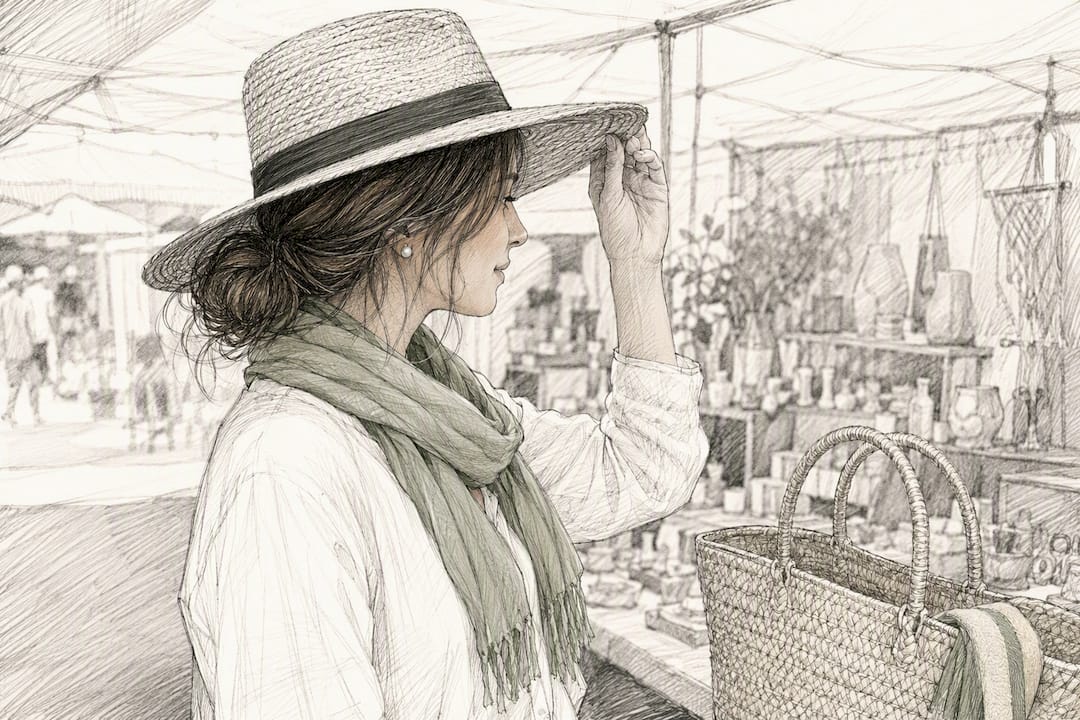
Jewelry should stay simple. Long dangling earrings or stacked bracelets snag on merchandise, tablecloths, and tissue paper faster than you'd expect. Stud earrings, a single stacked ring, or a thin layered necklace add personality without getting in your way while you wrap purchases or hand over change.
A scarf earns its spot in cooler months. A lightweight cotton or linen scarf adds a pop of color to a neutral outfit and doubles as an extra layer if the temperature drops. Vendors can even tie one in a color that matches their booth signage for a subtle branding touch.
Skip anything that requires constant readjusting: floppy hats that blow off in wind, statement necklaces that catch on aprons, or scarves so long they trail into your product displays. The best craft fair accessory is one you forget you're wearing.
Color Coordination Tips for a Booth That Stands Out
Your outfit is part of your booth's first impression before a single shopper reads your sign. Vendors who pick one or two colors and repeat them across their apron, table linens, and clothing look more intentional, and shoppers tend to read that consistency as a sign of professionalism.
Start with your product's dominant color, not your favorite color. If your pottery leans warm and earthy, a rust or olive top does more for your booth than a bright pink one that fights your display for attention. Neutral bases (cream, charcoal, denim) work as a backdrop for almost any product line, which is why so many vendors default to them and save color for one accent piece, like an apron or scarf.
Shoppers benefit from a lighter version of the same logic. A neutral outfit photographs well against colorful booths and doesn't clash with whatever you end up carrying home. Save bold prints for a scarf or bag rather than a full outfit if you're planning to buy things that need to coordinate with what you're already wearing in photos.
One caution: avoid matching your outfit so closely to your competitor's neighboring booth that shoppers can't tell where one stops and the other starts. A quick walk of the market before setup, if you arrive early enough, tells you what colors are already saturated in your row.
Fabric Choices That Hold Up All Day
Fabric choice affects comfort more than most people expect walking into their first fair. Breathability matters when you're standing under a tent for hours, and durability matters when you're brushing against tables, glue guns, or wet paint all day.
Linen and cotton top the list for breathability. Both let air move, which matters under a vendor tent with no cross breeze. The tradeoff is wrinkling, so look for cotton blends with a touch of stretch if you want to look fresh by hour six.
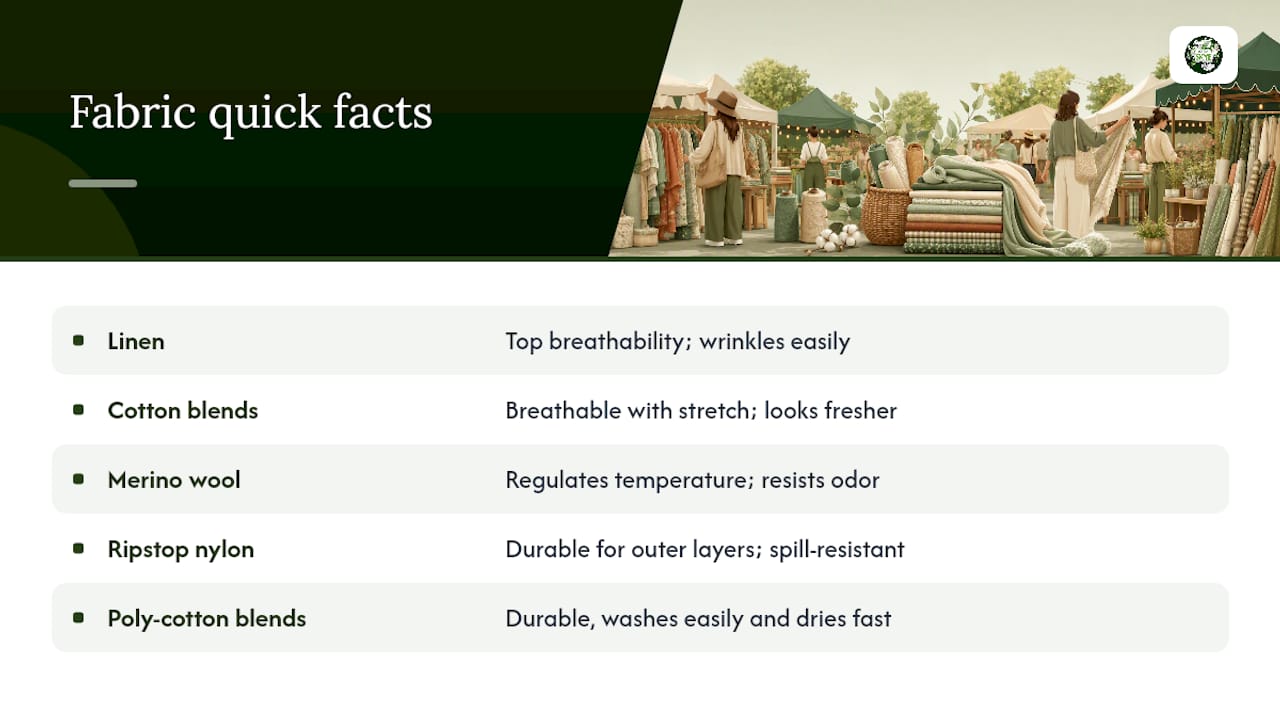
Merino wool is the shoulder-season standout. It regulates temperature better than synthetics, resists odor over a long day, and layers thin enough not to bulk up under a jacket.
Durable synthetics like ripstop nylon or poly-cotton blends make sense for outer layers and aprons, where spills and snags are a real risk. They wash easily and dry fast, which matters if a stain appears at 10 a.m. and you're still working at 4 p.m.
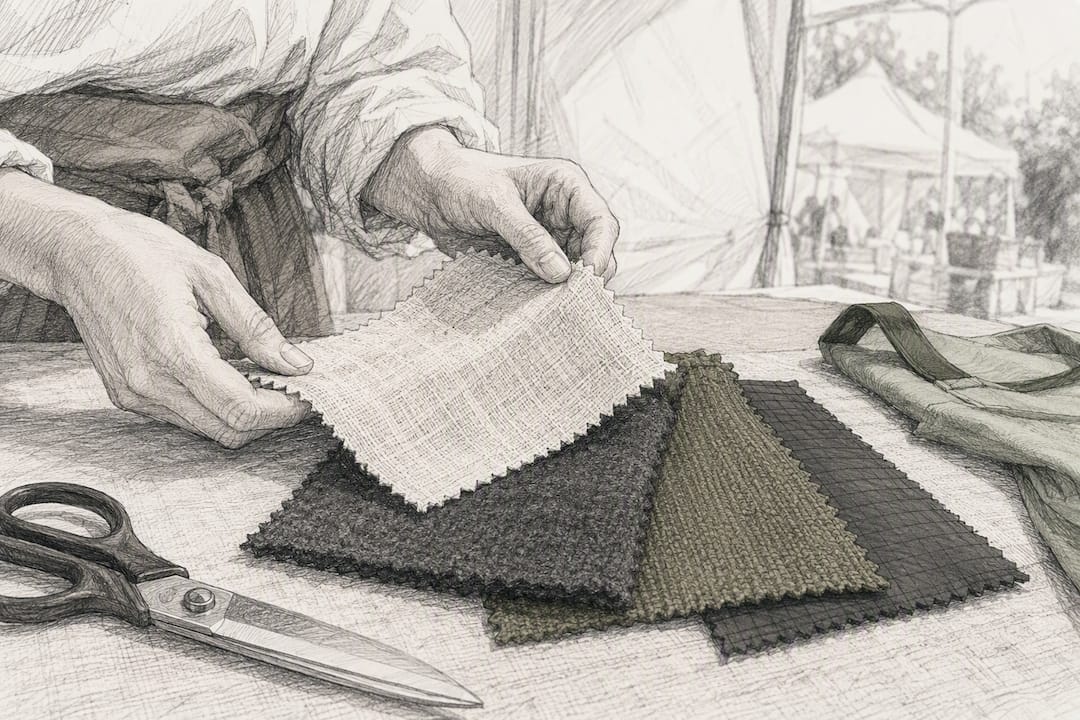
Whatever you choose, prioritize washable materials over dry-clean-only pieces. Market days involve dust, food, glue, and the occasional spilled drink, and easy-care fabrics hold up far better across a full season of weekend fairs than anything delicate.
Why Comfort and Craft Identity Go Together
Sincerelyskye designs pieces for people who spend their weekends behind a booth or hunting for one, so comfort isn't an afterthought here. It's the whole point. Every outfit tip in this guide traces back to that same belief: you should look like yourself while doing the thing you love, layers and all. Adapt every formula above to your own taste and your own booth.
— Skye
Dress the Part With Sincerely Skye's Craft-Inspired Pieces
Craft-themed graphic tees, cozy layers, totes, and accessories are designed for long hours on your feet, dressed comfortably, still looking like you belong at the booth. Instead of hunting through generic retail racks for something "craft-adjacent," look for pieces designed around maker culture, from whimsical vintage-style tees to totes with room for a day's worth of purchases.
The Sincerely Crafters collection is the fastest starting point if you want a base outfit and a few branded accents in one browse. If you're building a themed look for the whole family or booth crew, matching craft shirt ideas show how to coordinate without looking like a costume. Browse the full Sincerely Skye shop to build your next market-day outfit from the ground up.
Sources
For deeper research behind this guide's shoe, bag, and vendor recommendations, see TheCraftMap's vendor outfit breakdown, Today's guide to hands-free bags, and Sew Mama Sew's retail outfit ideas. For more from Sincerelyskye, check the holiday vendor outfit guide and cottagecore craft outfit inspiration.