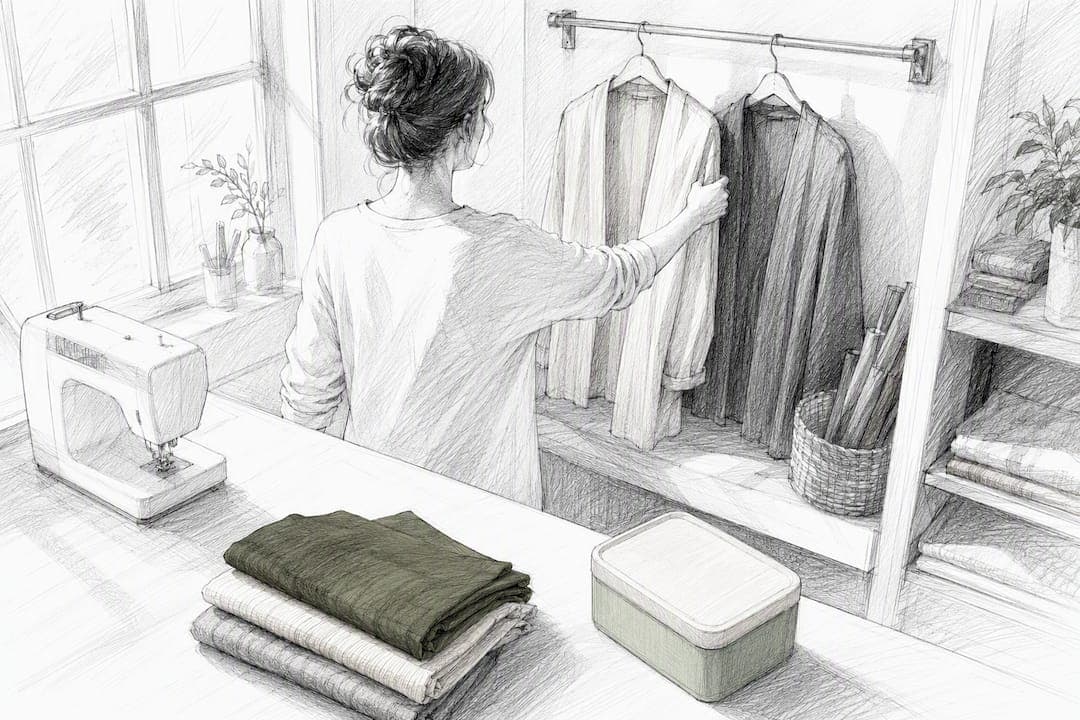
The fastest way to fix maker mornings is a repeatable work uniform plus three quick outfit formulas sorted by effort level. Pick a durable top, easy bottoms, and closed-toe shoes you can wear on repeat, then build two or three backup looks for the days you have five extra minutes. A brand specializing in maker-friendly tees and sweatshirts can make this easier by offering clothing designed for exactly this kind of wear. The sections below cover the formulas, safety notes, and a night-before checklist to make it stick.
TL;DR:
- Wearing a pre-selected, durable work uniform can significantly reduce morning decision fatigue and streamline your start to the day.
- A capsule wardrobe with versatile, multi-purpose pieces that can pair with at least three other items simplifies outfit choices and saves time.
- Outfit formulas categorized by effort level—2, 10, or 30 minutes—allow quick upgrades based on available time without sacrificing practicality or style.
- Adjusting your outfit for specific activities, like studio work or vendor days, ensures functionality and comfort without compromising appearance.
- Pre-planning outfits and packing essentials the night before cuts morning delays and frees creative energy for maker tasks.
Table of Contents
- Build a Maker Work Uniform to End Decision Fatigue
- How to Build a Maker Capsule Wardrobe That Actually Works
- Outfit Formulas by Effort: What to Wear in 2, 10, or 30 Minutes
- Activity-Specific Outfits for Studio, Craft Fair, and Content Days
- Night-Before Prep That Actually Speeds Up Your Mornings
- Skye's Perspective: What Makers Actually Reach For
- Shop the Pieces That Fit a Maker's Work Uniform
- Sources
- FAQ
Build a Maker Work Uniform to End Decision Fatigue
A work uniform is the single most effective fix for maker morning routine outfits, and it's not a new idea. Mainstream coverage has pointed to the work uniform strategy for years as a legitimate way to cut morning decision-making down to almost nothing. The logic is simple: if you already know what you're wearing, your brain gets to skip straight to coffee and creative work.
A solid maker uniform has four parts. Start with a durable top that can survive glue, paint, or fabric dust. Add bottoms that move with you, not against you. Closed-toe shoes protect your feet around tools and dropped supplies. An apron or a utility tote rounds it out by giving you pocket space without ruining your top.
Fabric choice matters more than people think. Washable natural fibers like cotton hold up better than clingy synthetics, which can trap static, snag on rough materials, or cling in ways that get in your way mid-project.
Three uniform styles that work well for different maker personalities:
- The cozy uniform: oversized graphic sweatshirt, leggings, slip-on sneakers.
- The utility uniform: fitted tee, canvas work pants with deep pockets, lace-up boots.
- The tidy uniform: structured v-neck tee, straight-leg pants, clean white sneakers.
Pro Tip: Buy your work uniform top in two or three colors so laundry day never derails your morning.
How to Build a Maker Capsule Wardrobe That Actually Works
The rule that makes a capsule wardrobe function is simple: every piece has to pair with at least three other things you own. If a top only works with one specific pair of pants, it's not earning its space in your closet. This one rule does more to cut morning decision fatigue than any organizing system.
Stylists also recommend anchoring your capsule to a personal aesthetic you already gravitate toward, whether that's minimal, boho, or something louder, so the wardrobe still feels like you rather than a costume.
A workable maker capsule includes:
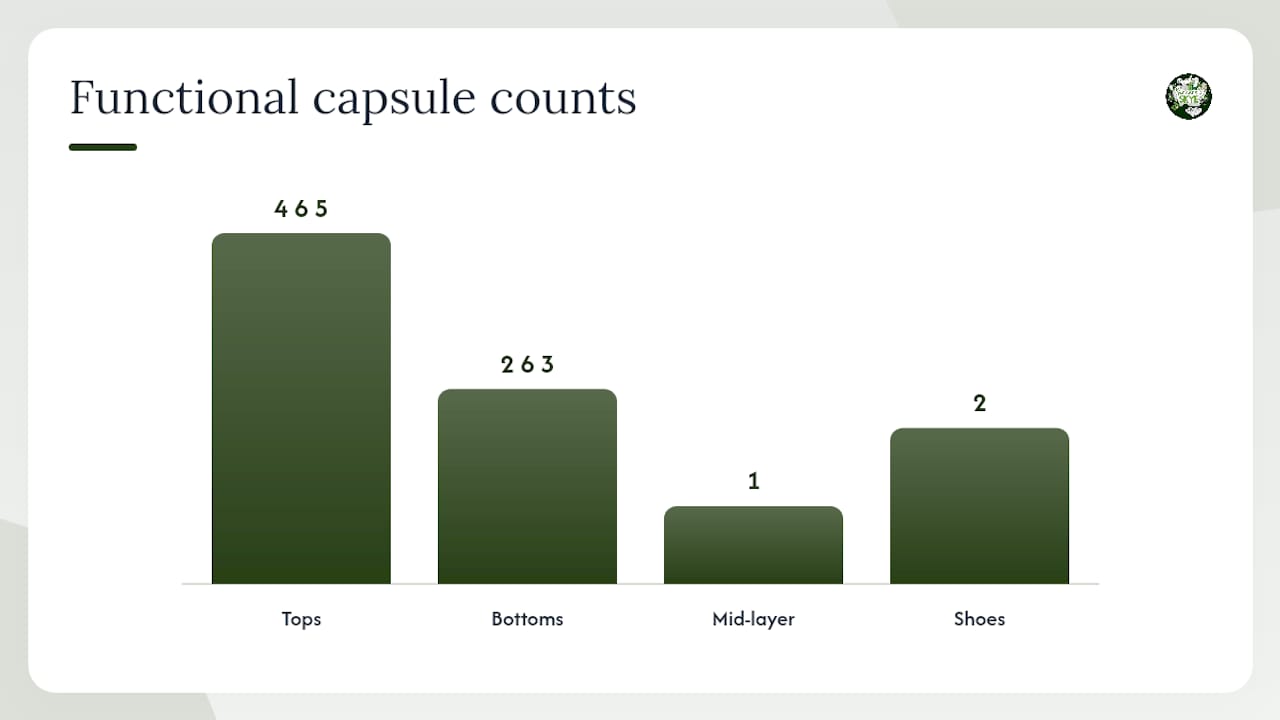
- Four to five durable tops (graphic tees, sweatshirts, basic long sleeves).
- Two to three bottoms that go with everything (leggings, straight jeans, canvas pants).
- One mid-layer for temperature swings (cardigan, flannel, zip hoodie).
- Two pairs of shoes: one closed-toe work shoe, one casual option.
- Seasonal swaps only, not a full wardrobe overhaul every few months.
A quick example: a gray graphic tee pairs with jeans for studio time, leggings for a lazy production day, and canvas pants for a messier project. That's three outfits from one shirt, which is exactly the point.
Outfit Formulas by Effort: What to Wear in 2, 10, or 30 Minutes
Not every morning gives you the same amount of time, so your outfit system shouldn't assume you do. Building formulas around effort level, rather than trying to plan a single "perfect" outfit, matches what research on morning outfit habits actually shows works.
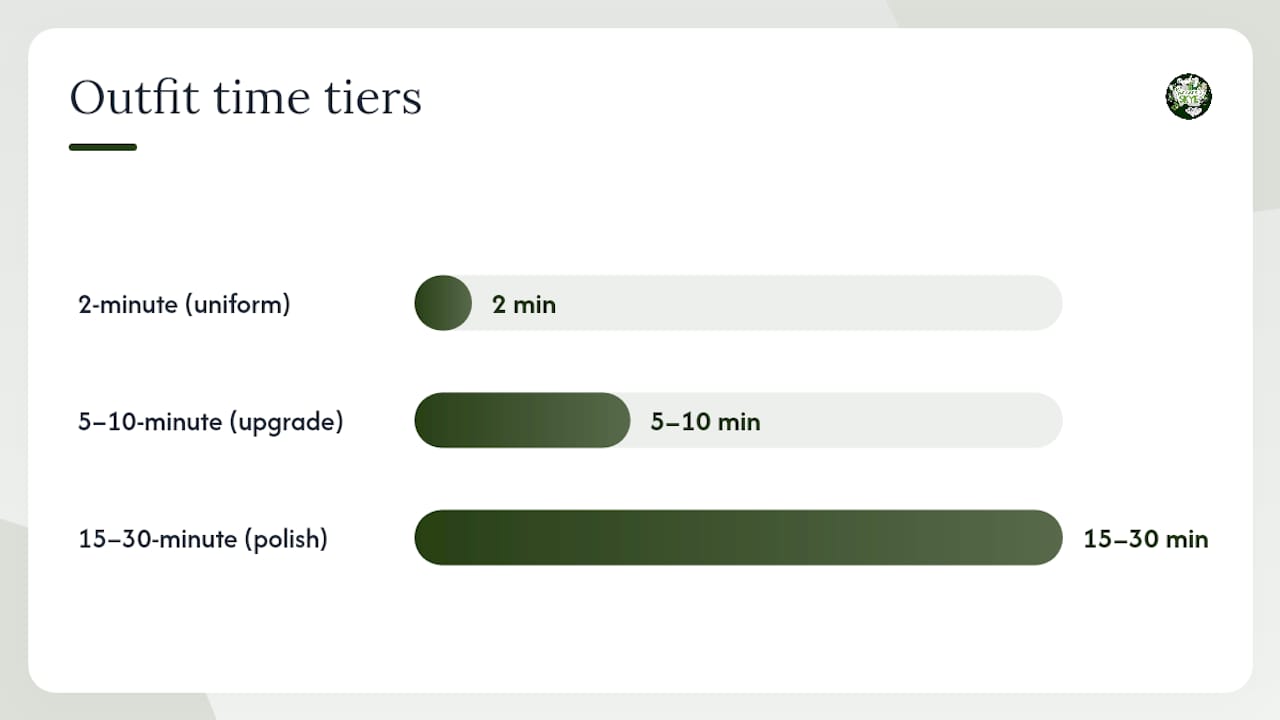
2-minute looks (your uniform, no thinking required):
- Graphic tee, leggings, slip-on sneakers, no accessory needed.
- Cozy sweatshirt, joggers, house slippers if you're not leaving the studio.
5 to 10-minute looks (uniform plus one upgrade):
- Fitted tee, jeans, sneakers, and a baseball cap to hide unwashed hair.
- Matching set (sweatshirt plus jogger in the same color), added because matching sets and tonal dressing function as an instant "put together" cheat code with almost no extra effort.
15 to 30-minute looks (for vendor days or filming):
- Structured tee or blouse, tailored pants, clean sneakers or boots, layered necklace.
- Cardigan over a graphic tee, straight-leg jeans, ankle boots, small crossbody bag.
Small swaps move a look up or down a tier fast. Swap slippers for sneakers and you've gone from 2-minute to 5-minute. Add a cardigan and a necklace and that same base jumps to the 15-minute tier.
A protected morning creative window depends partly on how little time you spend deciding what to wear before you sit down to work, which is why a digital-first maker routine treats outfit choice as a solved problem rather than a daily decision.
Activity-Specific Outfits for Studio, Craft Fair, and Content Days
Your maker uniform needs small adjustments depending on what the day actually involves. A studio session, a vending day, and a content shoot all put different demands on the same base wardrobe.
Studio and hands-on work:
- Natural fibers over synthetics, since cotton and wool resist heat and static better around tools.
- Short sleeves or adjustable cuffs so nothing dangles near equipment.
- Closed-toe shoes, always, and deep pockets or an apron for quick access to supplies.
Workshop-specific guidance backs this up directly. Practical outfit details like adjustable cuffs and closed-toe shoes aren't a style compromise. They're functional choices you can still style to look intentional.
Craft fair vending:
- A branded or graphic tee that doubles as a conversation starter with customers.
- A mid-layer for outdoor temperature swings between morning setup and afternoon sun, similar to the layering approach recommended for outdoor market and day-party dressing.
- Comfortable shoes for standing all day, plus a bag with dedicated pockets for cash and merch tags.
Content and photo days:
- One elevated piece (a structured tee or a clean sweatshirt) paired with comfortable basics underneath.
- A small touchup kit: lip balm, a hair tie, blotting sheets.
Night-Before Prep That Actually Speeds Up Your Mornings
Laying out tomorrow's outfit tonight cuts your morning decision time down to almost nothing and protects whatever creative energy you'd otherwise burn on wardrobe choices, a habit backed by routine research focused specifically on makers.
- Lay out the full outfit, including accessories, the night before.
- Charge small tech (camera battery, phone) and pack a spare top in case of spills.
- Keep a grab-and-go kit by the door: stain pen, lint brush, bandages.
- Split your closet into a "2-minute zone" (uniform pieces) and a "15-minute zone" (elevated pieces) so you're never digging.
Pro Tip: Hang your next-day outfit on the outside of your closet door, not inside it. You'll see it the second you wake up, before your brain starts negotiating with you.
Skye's Perspective: What Makers Actually Reach For
Talking with makers in our own community, a pattern shows up constantly: comfort wins over trend every time. Graphic tees and cozy sweatshirts get worn on repeat, and customers consistently mention how well certain pieces hold up through long craft-fair days without losing shape or comfort. Nothing here is aspirational. It's what makers already put on.
— Skye
Shop the Pieces That Fit a Maker's Work Uniform
If you're building your own version of the uniform system above, start with pieces that were made with hands-on work in mind. A washable, craft-friendly v-neck tee works as a durable studio base layer, easy to pair with leggings for a 2-minute morning or dressed up with a cardigan for a vendor day. For colder mornings or content shoots that need one elevated piece, browse the Sincerely Skye Gear collection for sweatshirts and graphic tees built to move between studio, fair, and camera days without a wardrobe change.
Every piece is designed to survive glue, paint, and glitter, then still look good in a photo. Start with one tee and one sweatshirt from the full Sincerely Skye shop, build your effort-based formulas around them, and see how much faster your mornings move.
Sources
- 'Work Uniform' can help simplify your morning routine — TODAY
- 30 Stylish Workshop Outfit Ideas to Inspire Your Look — Sew Mama Sew
- Digital-First Morning for Makers: 2026 Routine Guide — FuzzyPoint
FAQ
What is the 3-3-3 rule for clothes?
It's a capsule wardrobe guideline where each piece should mix and match with at least three other items you own, which keeps your closet functional instead of full of one-outfit pieces.
What does a top 1% morning routine actually look like for makers?
It's less about waking up at 5 a.m. and more about removing friction: a pre-decided outfit, laid-out supplies, and a protected creative block before emails or customer messages start.
How can I look put together without spending extra time?
Matching sets and tonal dressing are the fastest way to look intentional with almost no effort, since the coordinated color does the styling work for you.
What is the 20/20/20 rule for a morning routine?
Definitions vary across sources, so treat any specific version cautiously. The consistent theme across maker routine advice is short, timed blocks for movement, focus work, and admin, rather than one long unstructured morning.