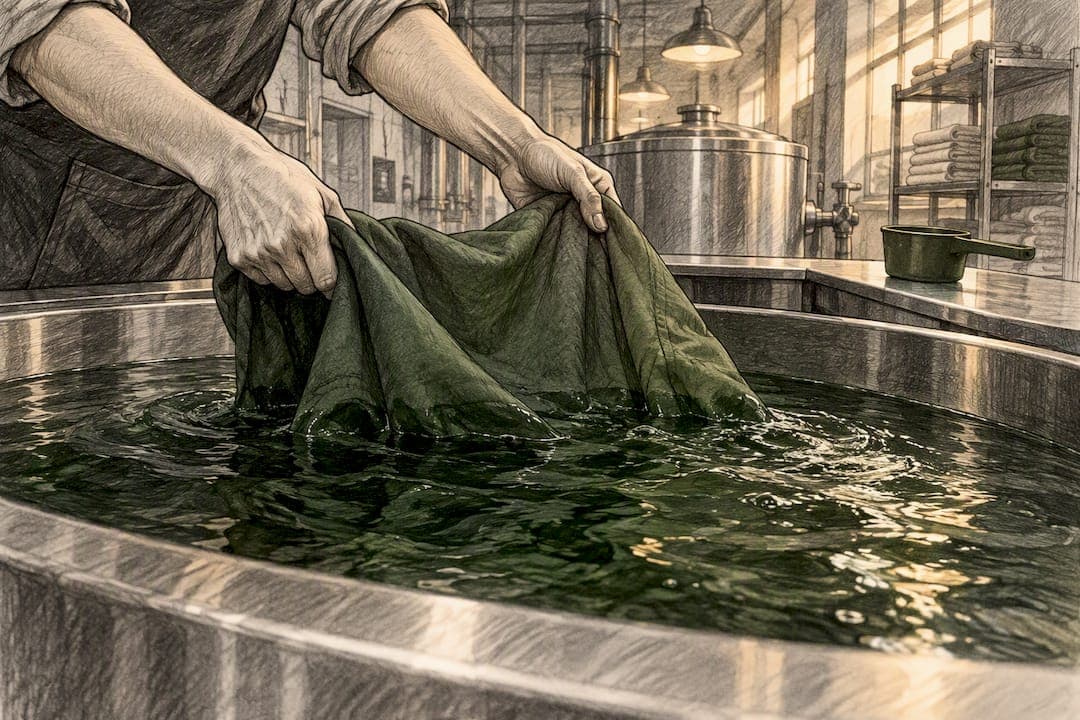
A garment-dyed tee is dyed after it's already sewn together, not before, which gives it that soft, worn-in color and slight shade variation you can't get from a shirt dyed as flat fabric. The bottom line for shoppers: no two garment-dyed tees are identical, and that's the point, not a flaw. If you need exact color matching across a bulk order, check the dye method and fabric before you buy.
TL;DR:
- Garment-dyed T-shirts are sewn first, then dyed, resulting in unique, slightly shade-varied finishes at seams and collars that mimic vintage wear.
- Reactive dyes offer better long-term color retention and washfastness, while pigment dyes provide the weathered look but wash down faster over time.
- Expect some shade variation in each batch and potential shrinkage, so pre-washed or pre-shrunk labels indicate lower home-shrink risk.
- Proper care involves washing inside out in cold water with gentle detergent, avoiding bleach and high heat to preserve color and fabric integrity.
- For consistent color matching in bulk orders, verify dye method with the manufacturer and request test swatches before completing large purchases.
Table of Contents
- What Is Garment Dyeing, and Why Do Brands Use It?
- Pigment, Reactive, and Other Dye Methods: What's the Real Difference?
- The Real Pros, Cons, and Care Rules for Garment-Dyed Tees
- What to Check Before You Buy a Garment-Dyed Tee
- Styling and Print Care, the Sincerelyskye Way
- Why This Look Fits the Maker Mindset
- Find Your Next Garment-Dyed Tee at Sincerely Skye
- Sources
- FAQ
What Is Garment Dyeing, and Why Do Brands Use It?
Most t-shirts are piece-dyed. The fabric gets colored on giant rolls before anyone cuts a pattern or sews a seam. Garment dyeing reverses that order. The shirt is cut, sewn, and fully assembled first, then dropped into a dye bath as a finished piece.
That sequencing is what creates the effect people love. Seams, collars, and ribbed cuffs are denser, tighter weaves than the body of the shirt, so they soak up dye differently. You end up with a shirt that's a shade darker at the seams and collar than across the chest, a subtle contrast that mimics decades of wear and washing on day one.
Here's why brands lean into it:
- The aesthetic sells itself, much like the weathered performance fabrics used in the APEX Classic Tank Top – Tencel™ Performance Fabric from SVBFLOR. Vintage, lived-in colors are trending across streetwear and casual apparel, and garment dyeing produces that look without artificial fading treatments.
- It solves an inventory problem. Brands can hold undyed "greige" garments in stock and dye to order in small batches, instead of committing to fabric color months in advance.
- It softens the fabric's hand-feel, since the garment goes through a wash cycle as part of the dyeing process.
That production wash matters for another reason: garment-dyed shirts are less likely to shrink further once you get them home, because a lot of the shrinking already happened on the factory floor.
Pigment, Reactive, and Other Dye Methods: What's the Real Difference?
The dye chemistry behind a garment-dyed tee determines how it looks, feels, and holds up in the wash. Two methods dominate.
Pigment dye doesn't bond chemically with cotton fibers the way a true dye does. It requires a cationic polymer pretreatment and a binder to fix the color onto the fabric surface, which is exactly why pigment-dyed shirts have that chalky, muted, weathered look. Because the pigment sits on top of the fiber rather than inside it, these shirts wash down over time. Colors mellow with each cycle, which is a feature for anyone chasing that broken-in look, and a drawback if you want a shirt that looks identical after 30 washes.
Reactive dye works differently. It forms an actual covalent bond with the cotton fiber, and that molecular-level bond gives reactive dyes meaningfully better washfastness under normal home laundering compared to pigment, direct, or vat dyes. Colors stay saturated longer.
A 2026 review in Coloration Technology confirms this trade-off at an industry level: reactive dyeing leads for cellulosic garments when washfastness is the priority, while pigment coloration wins on substrate flexibility and that intentionally weathered finish. The same review flags recipe optimization and process monitoring as the industry's ongoing challenge, since reproducing an exact shade across batches is genuinely difficult with either method.
Other finishing approaches worth knowing:
- Over-dyeing adds a new color over an existing dyed or printed garment for depth.
- Tie-dye and stonewash/tinting are more decorative, deliberately uneven treatments rather than standard garment-dye processes.
- Fabric choice changes everything. A 100% ring-spun cotton knit takes dye more evenly and feels softer than a coarser open-end cotton or a poly blend, which resists dye absorption altogether.
The Real Pros, Cons, and Care Rules for Garment-Dyed Tees
Garment dyeing isn't automatically better than piece-dyeing. It's a different set of trade-offs, and knowing them upfront saves you a return.
What you gain:
- A softer hand-feel straight out of the package, thanks to the production wash cycle.
- A vintage, tonal look that's genuinely hard to fake with printing or bleaching.
- Lower shrinkage risk at home in many cases, since the garment already went through washing before it reached you.
What you give up:
- Shade consistency. Garment-dyed shirts vary lot to lot and sometimes within the same order, which makes exact Pantone matching close to impossible.
- Some pigment-dyed pieces wash down faster than reactive-dyed ones, so the color you buy isn't always the color you'll have in six months.
- Custom orders take longer to test, since dye recipes need adjusting for each fabric batch.
Pro Tip: Wash garment-dyed tees inside out in cold water with a gentle detergent, skip the bleach entirely, and either air dry or tumble on low. Bleach and high heat are the two fastest ways to strip color and crack a print.
Softener choice matters more than most people realize. Cotton finishing research shows that softener type, enzyme treatment, and resin finishing directly affect how well color holds up after repeated washing, so a harsh detergent with optical brighteners will fade a garment-dyed shirt faster than a gentle one. Crocking, that light dye transfer you sometimes see on lighter fabrics rubbed against a dyed shirt, shows up most with pigment dye and fades with the first few washes. Chlorinated pool water and strong disinfectants are the other quiet color killers worth avoiding. For prints layered on top of a garment-dyed base, washing cold and turning the shirt inside out does the most to stop cracking.

What to Check Before You Buy a Garment-Dyed Tee
Shopping for garment-dyed tees means reading between the lines of a product description, since most listings won't spell out the dye chemistry unless you know what to look for.
- Fabric and weight. Ring-spun cotton takes dye more evenly than open-end cotton and feels noticeably softer against the skin. Check the GSM or ounce weight; a shirt in the 5 to 6 ounce range strikes a good middle ground between drape and durability. Ring-spun cotton typically shrinks 3 to 7 percent, so factor that into sizing if the listing doesn't mention pre-shrinking.
- Dye system. If washfastness matters to you (frequent washing, long-term color retention), look for reactive dye. If you want that faded, broken-in look immediately, pigment dye is the better fit.
- Pre-wash and shrink claims. A listing that specifically says the garment was pre-washed or pre-shrunk is signaling lower shrinkage risk at home. If it doesn't say, assume some shrinkage is still possible.
- Print compatibility. A garment-dyed and pre-washed base is generally safer for printing than an undyed blank, since most of the shrinkage has already happened before the design goes on.
- Reorder expectations. If you're buying for a group, team, or business and need consistent color, ask about lab dips or small test runs before committing to a full order. Shade inconsistency between lots is a known, expected trait of garment dyeing, not a manufacturing error.
Choose garment-dyed over piece-dyed when you want texture and character in the finished piece. Choose piece-dyed when uniform color across every unit is non-negotiable.
Styling and Print Care, the Sincerelyskye Way
A garment-dyed tee's charm is in the imperfection, so lean into it instead of fighting it. Tuck it loosely into high-waisted jeans, layer a denim jacket over it, or pair a slightly oversized fit with a fitted cardigan for that thrown-together-but-not look. Our vintage graphic tee outfit ideas and ready-to-wear graphic tee looks both build around that same worn-in aesthetic.
For anyone ordering custom garment-dyed pieces for a craft fair, small business, or maker group, ask your manufacturer three things before you commit:
- What dye method are they using, pigment or reactive, and why?
- Can they send a physical test swatch before running the full batch?
- What's their tolerance policy on reorders if the shade shifts?
Manufacturers who make custom garment-dyed items commonly charge more for pigment treatments and specialty washes compared to standard piece-dyed blanks, since the process takes more time and testing to get right.
Why This Look Fits the Maker Mindset
Handmade work is never perfectly uniform, and that's exactly why garment-dyed tees feel right at home in craft culture. A slightly darker collar or a shade that shifts from one shirt to the next mirrors what happens when you dye yarn, glaze pottery, or hand-stamp fabric. Sincerelyskye builds its whimsical, vintage-inspired designs onto that same philosophy: comfort and character over factory-perfect uniformity. If you've ever accepted a little variation in your own craft work as part of its charm, a garment-dyed tee will make sense to you immediately.
— Skye
Find Your Next Garment-Dyed Tee at Sincerely Skye
Sincerely Skye designs vintage-inspired tees the way a fellow crafter would: comfortable fits, whimsical artwork, and colors with real character instead of flat, factory-perfect print jobs. That's the advantage over a mass-market basics brand chasing exact color uniformity. You get pieces made for people who already appreciate a little variation in their handmade goods.
Browse Sincerely Skye Gear for the current lineup of vintage-inspired apparel, or check the Sincerely Crafters collection if you want designs built specifically for makers and DIY lovers. Product pages list fabric and sizing details, and care guidance for prints follows the same cold-wash, inside-out rule covered above. Looking for something custom or personalized instead? The handmade customs shop covers special orders and gift-ready pieces. Pick your size, add it to your cart, and check out; new drops rotate seasonally, so it's worth checking back before your favorite print sells out.
Sources
- GARMENT DYEING (Cotton Incorporated technical bulletin)
- Review article on garment dyeing (Wiley, 2026)
- What Is Garment Dye? What It Means to Your T-Shirt (Moss Bros)
FAQ
What Is a Garment-Dyed T-Shirt?
It's a t-shirt dyed after it's fully sewn together, not before, which produces a softer feel and slight tonal variation at seams and collars. This differs from piece-dyeing, where the fabric is colored while it's still flat, before cutting or sewing.
Is Garment-Dyed Better Than Regular Tees?
Neither is objectively better; they serve different goals. Garment dye wins for a soft, vintage texture and reduced home-shrinkage risk since the garment is already washed during production, while piece-dyed fabric wins when you need exact, uniform color across a large order.
What Are the Disadvantages of Garment Dyeing?
The main drawback is shade inconsistency, both between production lots and sometimes within the same order, which makes exact color matching difficult. Pigment-dyed pieces specifically can wash down and lighten faster over repeated laundering than reactive-dyed ones.
Is Garment Dye Safe to Wear?
Yes. Garment dyeing uses standard textile dye chemistry, pigment binders or reactive dyes, that's regulated and widely used across the apparel industry, and the finished garment goes through washing as part of the process. Following basic care steps like cold washing and skipping bleach protects both your skin comfort and the shirt's color over time.
Does Sincerely Skye Sell Garment-Dyed Style Tees?
Sincerely Skye's collections lean into that same vintage-inspired, worn-in aesthetic that garment dyeing produces, available through the Sincerely Skye Gear shop. For current pricing and available colors, please refer to the product pages on the website.