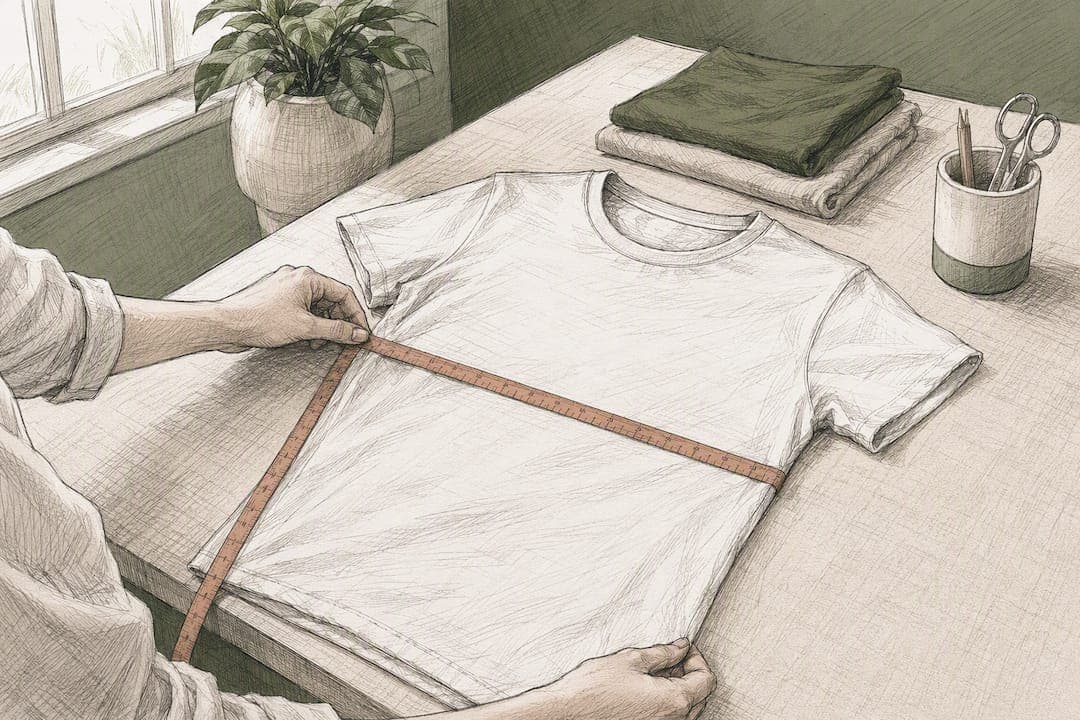
Choose unisex for a relaxed, boxy, oversized look and women's cut for a shaped, fitted silhouette. If you normally wear a women's medium, sizing down one step typically gets you a closer match in body width and length for unisex styles. Check actual garment measurements before you buy, since letter sizes vary wildly between brands.
TL;DR:
- Unisex tees have a neutral, straight cut with wider shoulders and longer sleeves, making them ideal for oversized, layered, or group orders.
- Women's cut shirts are tailored with shaped shoulders, a defined waist, and shorter length for a more fitted, flattering silhouette for smaller or petite frames.
- Sizing should be determined by measuring actual garment dimensions in inches rather than relying on letter sizes, as fit varies significantly between brands.
- Fabric composition and weight influence how a shirt fits and behaves on your body, with cotton shrinks and blends retaining shape better.
- Choosing the right cut depends on your body type and style goal, not on brand labels, emphasizing measurement and fabric over generic sizing conventions.
Table of Contents
- Unisex vs. Womens Tee: What Makes the Unisex Cut Different
- Unisex vs. Womens Tee: How the Women's Cut Shapes the Silhouette
- Shoulder, Chest, Waist, Sleeve, and Length: Where the Fit Actually Changes
- Sizing, Measurement, and Conversion: Skip the Letters, Trust the Inches
- What Fabric Does to Your Perceived Fit
- Choosing By Body Type and Goal: A Quick Decision Checklist
- Sincerely Skye's Fit Advice for Craft Lovers
- How Manufacturing and Branding Shape the Fit You Get
- Myths That Keep People Buying the Wrong Size
- Sustainability Considerations in Unisex and Women's Tees
- Styling Unisex and Women's Tees for Real Occasions
- The Real Lesson Buried in All This Sizing Talk
- Find Your Fit in the Sincerely Skye Shop
- Sources
Unisex vs. Womens Tee: What Makes the Unisex Cut Different
A unisex tee starts from a neutral, straight pattern block. No waist shaping, no bust allowance, just a rectangular body with wider shoulders, a longer torso, and longer sleeves than a fitted style. Sizing runs on alpha labels (S, M, L) tied mainly to chest width and overall garment length rather than curves.
That straightforward construction is exactly why unisex tees dominate group orders, band merch, and craft-fair booth shirts. One size chart covers a much wider range of body types, which is part of why brands often default to unisex blanks for core products.
Good reasons to reach for a unisex tee:
- You want the oversized, boyfriend-style silhouette that's been dominating casual fashion.
- You're ordering shirts for a group, team, or craft group where fit needs vary and simplicity wins.
- You plan to layer it over a tank or under a flannel, where extra room in the shoulders and body helps.
- You like sleeping in it or wearing it as a cover-up, where boxy is the point, not the flaw.
Unisex vs. Womens Tee: How the Women's Cut Shapes the Silhouette
A women's cut tee isn't just a smaller unisex shirt shrunk down. It's built from a completely different pattern. Designers pull in the shoulders, add waist suppression, build in bust allowance, and shorten the body length to create a shirt that follows the shape of a woman's torso instead of hanging straight off it.
Necklines and sleeve styles change the effect further. A scoop neck opens up the collarbone area and reads more casual; a V-neck elongates the neckline and tends to sit better under cardigans or open flannels; cap sleeves hug closer to the shoulder than the dropped sleeves you'll find on most unisex styles. These aren't just cosmetic choices, either, since a different neckline can shift how a printed graphic sits on the chest, so design placement matters when you're comparing cuts side by side.
Here's where a women's cut genuinely outperforms a unisex tee:
- Petite or smaller frames, where a unisex small can still swim through the shoulders and body.
- Tuck-in or half-tuck styling, where the shorter body length keeps the shirt from bunching at the waistband.
- Tailored, put-together looks for work-from-home video calls, brunch, or layering under blazers.
- Anyone who prefers a shirt that shows some shape instead of draping straight down.
Pro Tip: If you love a graphic design but the unisex version feels like a tent, don't assume you're stuck. Many shops, including Sincerelyskye, offer the same print on both cuts, so you can get the shape you actually want without giving up the design you liked in the first place.
Shoulder, Chest, Waist, Sleeve, and Length: Where the Fit Actually Changes
Fit differences show up in five specific spots, and knowing where to look saves you from guessing based on a product photo alone.
- Shoulder seam: Unisex tees drop the seam past your natural shoulder point, which is what creates that dropped-shoulder, oversized look. Women's cuts keep the seam closer to your actual shoulder edge.
- Chest and bust: Unisex chest width is flat and generous across the board. Women's cuts add room specifically at the bust while narrowing again at the ribcage, creating a slight hourglass line instead of a straight tube.
- Waist: Unisex shirts run straight from armpit to hem. Women's cuts taper in at the waist before easing back out toward the hip.
- Sleeve length and width: Unisex sleeves run longer and wider, often hitting mid-bicep or lower. Women's sleeves are shorter and narrower, usually stopping higher on the arm.
- Body length: Unisex tees run longer, often designed to be tucked or left untucked over leggings. Women's cuts run shorter, built to hit at or just below the waistband.
On a curvier frame, a unisex shirt tends to fit the hips fine but balloon at the shoulders and chest. On a straighter frame, the same unisex shirt might look intentionally oversized rather than sloppy. Swap that unisex tee for a women's cut and the same body suddenly gets a defined waistline, shorter hem, and tighter sleeve, even though it's the identical size letter.
Sizing, Measurement, and Conversion: Skip the Letters, Trust the Inches
S, M, and L mean different things at every brand, so the only sizing method that actually works is comparing real numbers to a real shirt.
- Measure the chest or bust. Lay a shirt you already love flat, measure straight across one inch below the armhole, then double it for the full circumference.
- Measure body length. Run the tape from the highest point of the shoulder seam straight down to the hem.
- Measure the shoulder seam. Measure from one shoulder seam to the other, straight across the back.
- Compare those three numbers to the brand's size chart, not to the letter size you normally buy. A "medium" from one brand can run two inches smaller than a "medium" from another.
The most reliable comparison method is holding your own numbers up against a garment chart, not trying to translate "I wear a size 8" across completely different pattern systems. As a rough starting point, women's medium tends to land close to unisex small, and sizing down one step from your women's size usually gets you a more fitted unisex result. Treat that as a starting guess, though. Bella+Canvas and Hanes blanks, for example, don't run identically even within the same labeled size.
What Fabric Does to Your Perceived Fit
The cut on a spec sheet is only half the fit story. Fabric changes how that cut actually behaves on your body.
- 100% cotton has more drape and settles closer to your natural shape over a few wears, but it also shrinks more in the wash, sometimes enough to knock a true-to-size shirt into snug territory.
- Cotton/poly blends hold their shape better, resist shrinkage, and tend to keep a boxy unisex cut looking boxy instead of softening over time.
- Lightweight jersey drapes toward the body and can make an oversized unisex tee look intentionally relaxed rather than shapeless.
- Heavyweight cotton stays structured and holds a straighter, boxier silhouette, which reinforces the oversized look unisex shoppers are usually going for.
Care habits matter here too. Washing in cold water and skipping the dryer's high heat setting preserves both size and print quality, which is worth knowing before you size down to compensate for shrinkage that a gentler wash cycle would have prevented anyway.
Choosing By Body Type and Goal: A Quick Decision Checklist
Before you check out, run through this short list:
- Define your goal first. Oversized and relaxed, or fitted and shaped?
- Measure a shirt you already own and love, using the three key points above.
- Check the fabric weight and composition, since that changes how the size actually wears.
- Match your numbers to the brand's actual garment chart, not the letter size.
- Decide your final size based on the fit you want, not habit.
Quick calls for common goals: group or team orders lean unisex for simpler sizing across a crowd. A polished, tailored look leans women's cut. Petite frames usually do better in women's sizing or a unisex size down. The current oversized trend calls for unisex, sized up if anything.
Pro Tip: Red flag: any product listing that gives you only S/M/L with zero garment measurements. If a brand won't show you the numbers, that's your cue to look elsewhere or size up as insurance.
Sincerely Skye's Fit Advice for Craft Lovers
We size our tees with real garment measurements listed for exactly this reason: letter sizes lie, numbers don't. Our unisex sizing guide walks through converting your usual women's size into the unisex cut so you're not guessing on a whimsical graphic tee you actually want to wear more than once.
A few practical notes for shopping our shop specifically:
- Our V-neck tees follow women's-cut principles: shorter body, narrower shoulder, shaped waist.
- Our graphic unisex tees run true to the oversized, relaxed silhouette described above.
- Measure before you buy, especially if a design is a limited or seasonal release you don't want to return.
If you love a slouchy, cozy fit for weekend crafting, grab the unisex. If you want something that looks pulled together for a craft fair booth or client meeting, the V-neck cut is the better call.
How Manufacturing and Branding Shape the Fit You Get
Not every "unisex" or "women's" label means the same thing once you look at where and how a shirt is actually made. Blank manufacturers each build their own pattern blocks, so a unisex tee from one supplier can run noticeably boxier or slimmer than another brand's unisex tee, even at the identical size label. That's part of why a size chart matters more than a size name.
Branding adds another layer. Some brands market a shirt as "unisex" purely as a styling choice, then quietly cut it closer to a traditional women's block underneath. Others slap "boyfriend fit" or "relaxed fit" on a women's-labeled shirt that's really just a slightly roomier version of their standard cut, not a true unisex pattern. The label tells you the brand's marketing angle. It doesn't always tell you the actual construction.
For small apparel brands and print-on-demand shops especially, the blank supplier behind the scenes does most of the real work in determining fit. Two brands can print the exact same graphic on what they both call a "unisex medium," and the shirts can measure two inches apart in chest width, depending on whether one sourced from Bella+Canvas and the other from Gildan. That's not a labeling error. It's just how fragmented blank manufacturing is across the industry. Always treat the brand's own measurements as gospel over the generic size name, no matter how established or small the label is.
Myths That Keep People Buying the Wrong Size
The biggest myth: unisex just means "men's sizing with a different tag." It doesn't. Unisex is its own neutral pattern block, not a repurposed men's cut, though it does share some construction logic with traditional men's tees, like the straight body and dropped shoulder.
Another common misread: that women's cuts are automatically smaller than unisex. Not true. A women's large can easily measure wider in the bust than a unisex small. Cut and size are two separate variables, and confusing them is the single most common reason people order the wrong shirt online.
Some shoppers also assume unisex is always the "safe" oversized choice and women's cut is always fitted and tight. Brands complicate this constantly with oversized women's styles and slim-fit unisex styles, so a callout like "oversized" or "slim" changes the baseline cut it's applied to. Read the product description in full, not just the category label.
Last one worth killing: that switching cuts ruins a graphic design. In most cases, a well-placed print scales fine across cuts, though a neckline change can shift where a chest graphic sits relative to your collarbone, which is worth a glance at the product photos before you order a design you're excited about.
Sustainability Considerations in Unisex and Women's Tees
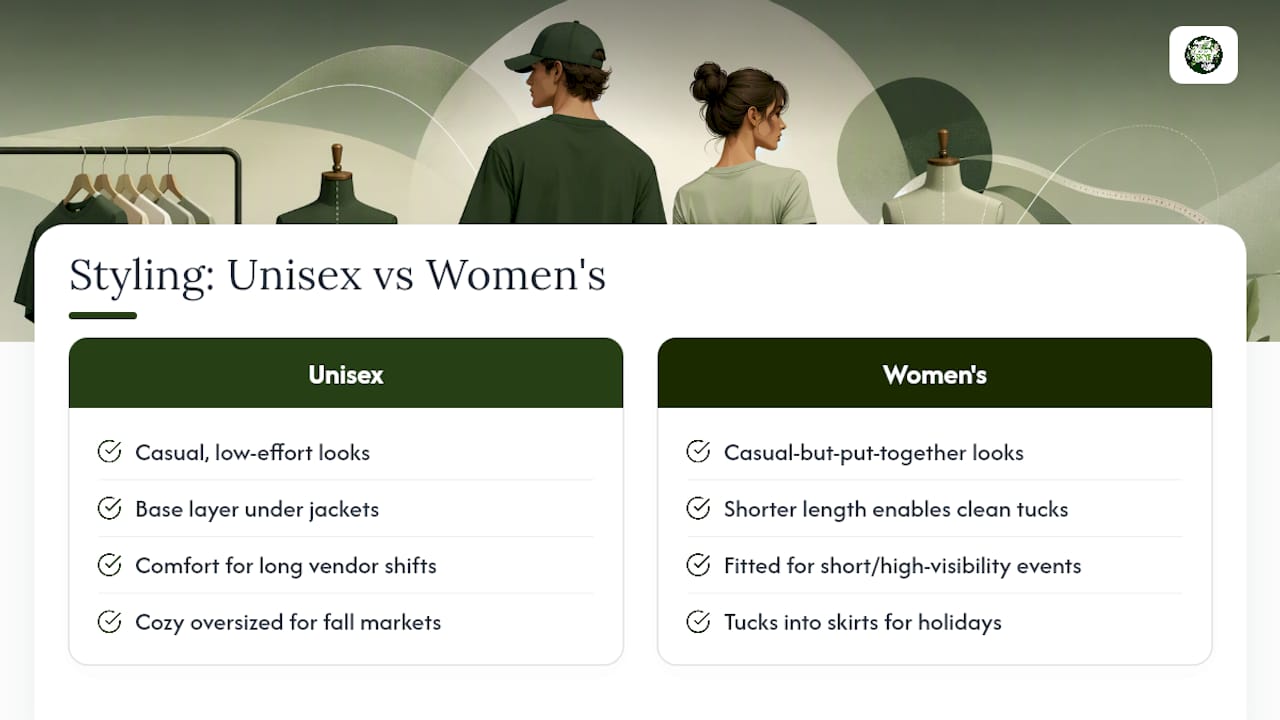
Fabric choice affects your shirt's footprint more than the cut does, but cut still plays a role worth understanding. Unisex tees, because one style fits a wider range of bodies, often mean less overstock and fewer unsold sizes sitting in a warehouse. That efficiency has a real environmental upside for brands producing at scale, since fewer unsold shirts means less textile waste overall.
Women's-cut shirts, with their extra shaping seams and pattern pieces, typically require slightly more fabric cutting waste per unit during production. That's a small factor compared to fiber choice, but it's part of the full picture for anyone weighing their wardrobe's impact.
The bigger sustainability lever, regardless of cut, is fabric and care. Cotton is a renewable fiber, but conventional cotton farming is water and pesticide intensive, which is why organic and recycled-blend options matter more than whether the pattern is unisex or women's. How you wash a shirt matters too. Cold water washing and lower dryer heat extend a shirt's life regardless of cut, which is the most direct way any shopper reduces their footprint: buying fewer replacement shirts because the one you have lasts.
Small, print-on-demand style brands also tend to produce closer to actual demand rather than mass-producing speculative inventory, which cuts down on the overproduction problem that plagues fast fashion generally. Buying from smaller craft-focused labels instead of high-volume fast fashion chains is arguably a bigger sustainability decision than the unisex-versus-women's question on its own.
Styling Unisex and Women's Tees for Real Occasions
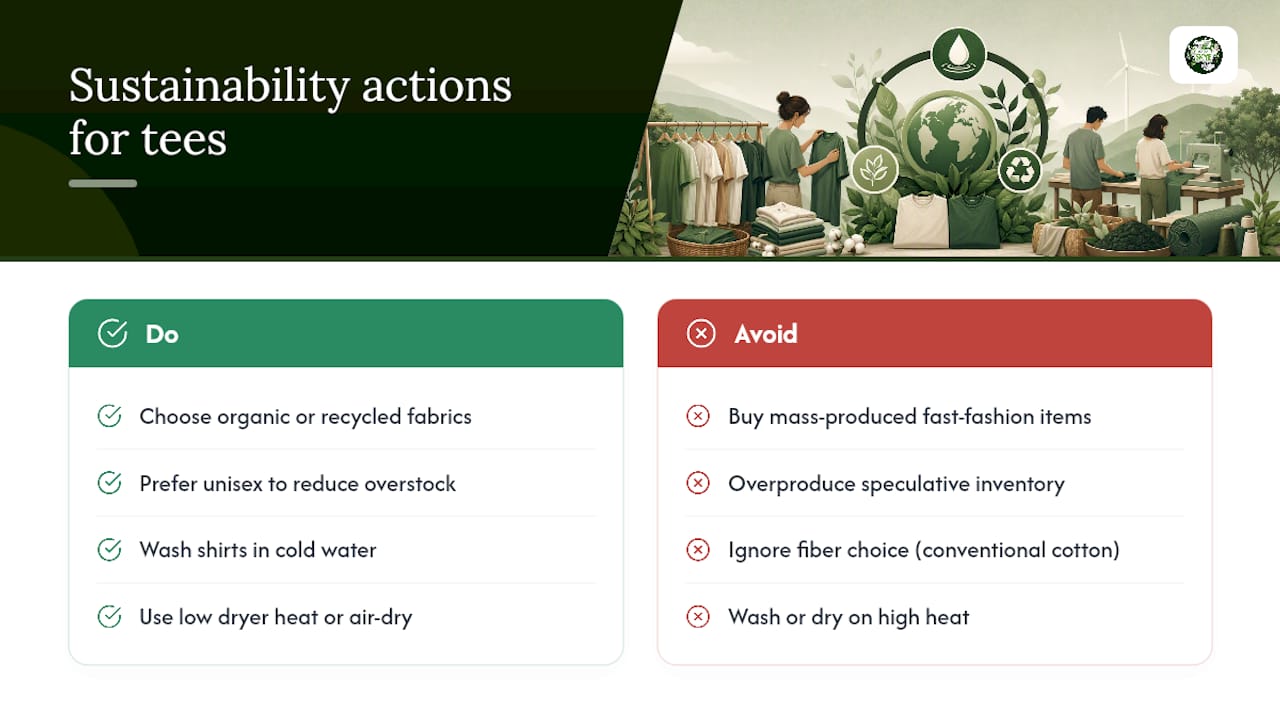
A unisex tee earns its keep in casual, low-effort settings. Knot it at the waist over leggings for a coffee run, layer it under an open flannel for a craft fair booth shift, or wear it oversized with bike shorts for a weekend errand look. The extra room in the body makes it a natural base layer under a denim jacket once the weather turns, too.
Women's-cut tees shine when you want to look slightly more finished without actually dressing up. Tuck a V-neck into high-waisted jeans for a casual-but-put-together brunch look, or pair a scoop neck with a midi skirt for something that reads more transitional-season than gym-to-street. The shorter body length is what makes the tuck work cleanly instead of bunching at your hip.
For craft fairs and vendor events specifically, a lot of makers actually reach for both depending on the day. A relaxed unisex tee with a bold graphic works well for a long standing shift where comfort matters most. A fitted women's cut works better for a shorter, higher-visibility appearance, like a pop-up shop or a photographed vendor spotlight, where you want the design and the silhouette both looking sharp.
Holiday and seasonal releases add another layer worth thinking about. A cozy, oversized unisex tee pairs naturally with leggings and slouchy boots for a fall market. A women's cut in the same seasonal print tucks cleanly into a skirt for a holiday gathering where you want the shirt to read a little more dressed-up.
The Real Lesson Buried in All This Sizing Talk
Here's what most sizing guides get backwards: they treat the unisex-versus-women's decision like it's about picking a side, when it's actually about picking a goal. Nobody's cut is objectively better. The relaxed unisex block and the shaped women's block are two different tools built for two different jobs, and the mistake is expecting one shirt to do both.
What the conventional advice underplays is fabric's role. People agonize over the size letter and barely glance at whether a shirt is heavyweight cotton or a soft blend, even though fabric weight can shift how a true-to-size shirt actually wears more than a full size jump can. A heavyweight unisex medium and a lightweight unisex medium are not the same shirt on your body, even with identical garment measurements on paper.
If you take one thing from all this, let it be this: stop shopping by letter and start shopping by a tape measure and a shirt you already trust. That single habit solves more fit problems than memorizing conversion charts ever will, and it works across every brand you'll ever buy from, ours included.
— Skye
Find Your Fit in the Sincerely Skye Shop
If you've read this far, you already know your goal, whether that's a relaxed oversized tee for weekend crafting or a shaped V-neck for a polished, pulled-together look. Sincerely Skye builds both into the same whimsical, craft-inspired designs, so you're not choosing between fit and personality.
Our Craft Now, Clean Later V-Neck Tee follows the women's-cut construction covered above: shorter body, shaped waist, narrower shoulder seam, perfect for tucking in or layering under an open cardigan at a craft fair. Prefer the boxier, oversized route? Browse our full tee lineup and check the garment measurements listed on each product page against a shirt you already own, using the measuring method from earlier in this guide.
Sizing feel off once it arrives? We handle returns and exchanges so you can size up or down without the hassle. Measure first, order with confidence, and get back to what actually matters: the craft, not the guesswork on your collar.
Sources
- Unisex vs. Women’s Fit Explained: How to Choose the Right Cut
- Women's Cut Shirt vs Unisex: What's the Difference and Which Should You Choose?
- What t-shirt sizes should I order for my group: A bulk order guide