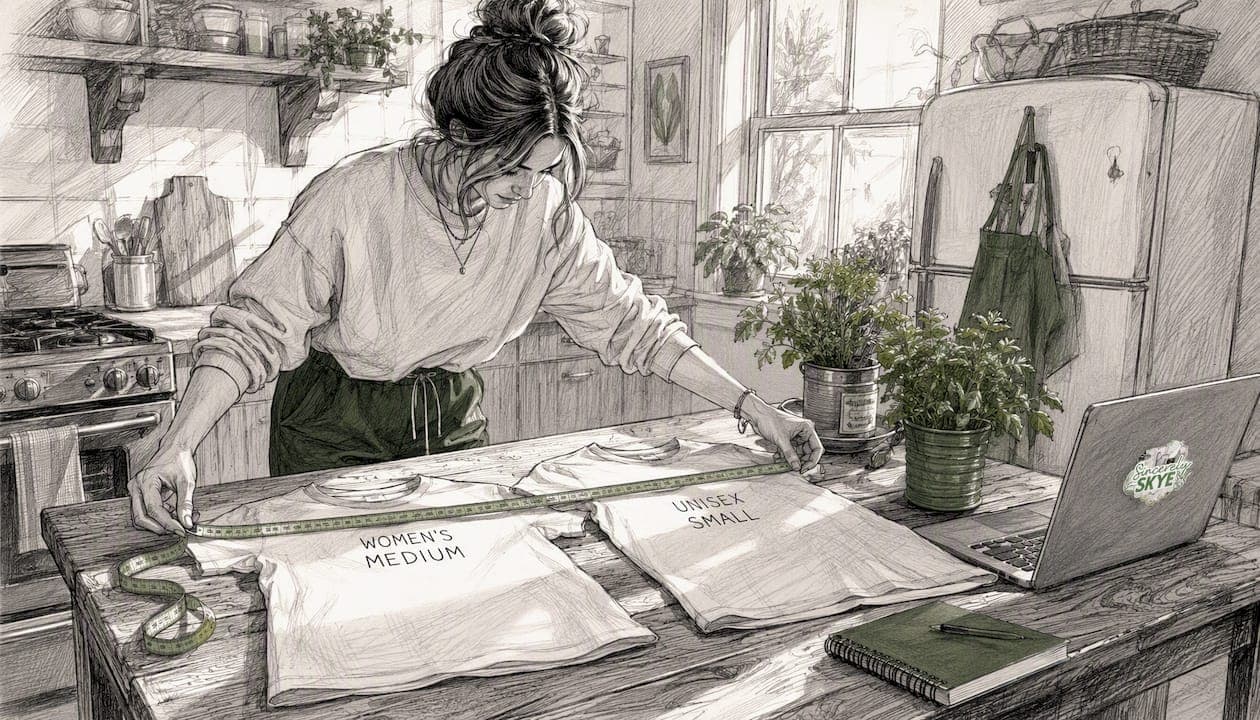
If you normally wear a women's M, pick a unisex S for comparable chest fit. That one-step-down rule covers most standard-fit brands and is the fastest starting point for online t-shirt sizing. The reason it works: unisex shirts run roughly 3–4 inches wider in the chest than women's cuts at the same label size, so dropping one size closes most of that gap.
The rule is a starting point, not a guarantee. Brand charts vary enough that a letter size alone can mislead you. Sincerelyskye recommends measuring a flat garment you already own, comparing that chest width to the product's flat-garment chart, and then confirming the label size. That two-minute step catches most fit surprises before checkout.
Pro Tip: Before ordering, lay a tee you love flat on a table, measure armpit to armpit, and double that number. That is your flat chest width. Match it to the brand chart, not to your body measurement alone.
Table of Contents
- Unisex t-shirt sizing chart: US and metric measurements
- How to measure yourself and a t-shirt accurately
- How unisex cuts differ from women's t-shirts
- Quick conversion reference: women's sizes to unisex
- Fit factors that change how a unisex size actually wears
- Before you buy: a quick checklist to avoid sizing mistakes
- Key Takeaways
- The case for measuring first, every time
- Sincerelyskye tees come with the sizing info you actually need
- Useful sources for sizing charts and measurement guides
Unisex t-shirt sizing chart: US and metric measurements
The table below shows typical flat-garment measurements for standard-fit unisex tees. These are armpit-to-armpit chest widths and highest-shoulder-seam-to-hem body lengths. Measurements reflect industry-typical ranges; always confirm against the specific product page.
| Label Size | Chest Width (in) | Chest Width (cm) | Body Length (in) | Body Length (cm) | Fits Chest Circumference |
|---|---|---|---|---|---|
| XS | 17" | 43 cm | 27" | — | — |
| S | 19" | 48 cm | 28" | — | 34" |
| M | 20" | 51 cm | 29" | — | 38" |
| L | 22" | 56 cm | — | — | 42" |
| XL | 24" | 61 cm | — | — | 46" |
| 2XL | 26–27" | 66–69 cm | — | 81 cm | 50–52" |
A typical unisex medium measures 20" chest and 29" body length; a women's medium typically runs 17–19" chest and 26–27" length. That gap is why the size-down rule exists.
Sleeve length for a standard unisex medium runs approximately 8–9" from shoulder seam to sleeve hem. Longer sleeves are one of the structural differences that persist even after you size down.
Note on measurement method: Chest width is measured flat, armpit to armpit. Body length runs from the highest point of the shoulder seam straight down to the hem. Always measure the garment flat, not stretched.
How to measure yourself and a t-shirt accurately
Getting the right size comes down to two measurements: your body and a shirt you already own. Here is the exact process.
Measuring your body:
- Wrap a soft tape measure around the fullest part of your chest, keeping it level and parallel to the floor. Do not pull it tight. This is your chest circumference.
- Measure your natural waist (the narrowest point, usually an inch above the navel) for any fitted styles.
- For hips, measure around the fullest part, roughly 8" below the natural waist.
- Measure shoulder width from the outer edge of one shoulder seam to the other across your upper back.
Measuring a flat garment:
- Lay the shirt on a flat surface with no wrinkles.
- Measure chest width from armpit seam to armpit seam. Double this number to get the full chest circumference equivalent.
- Measure body length from the highest point of the shoulder (at the neck seam) straight down to the hem.
- Measure sleeve length from the shoulder seam to the sleeve hem.
- Measure shoulder width from seam to seam across the back yoke.
Measuring an existing shirt flat and matching those numbers to the brand chart is the most reliable sizing method available, because body-only measurements do not capture pattern differences like armhole depth or shoulder slope.
Pro Tip: Measure twice, especially chest width. A half-inch error doubles when you calculate full circumference. Also avoid measuring over a thick hoodie or padded bra — measure over a fitted layer or nothing at all.
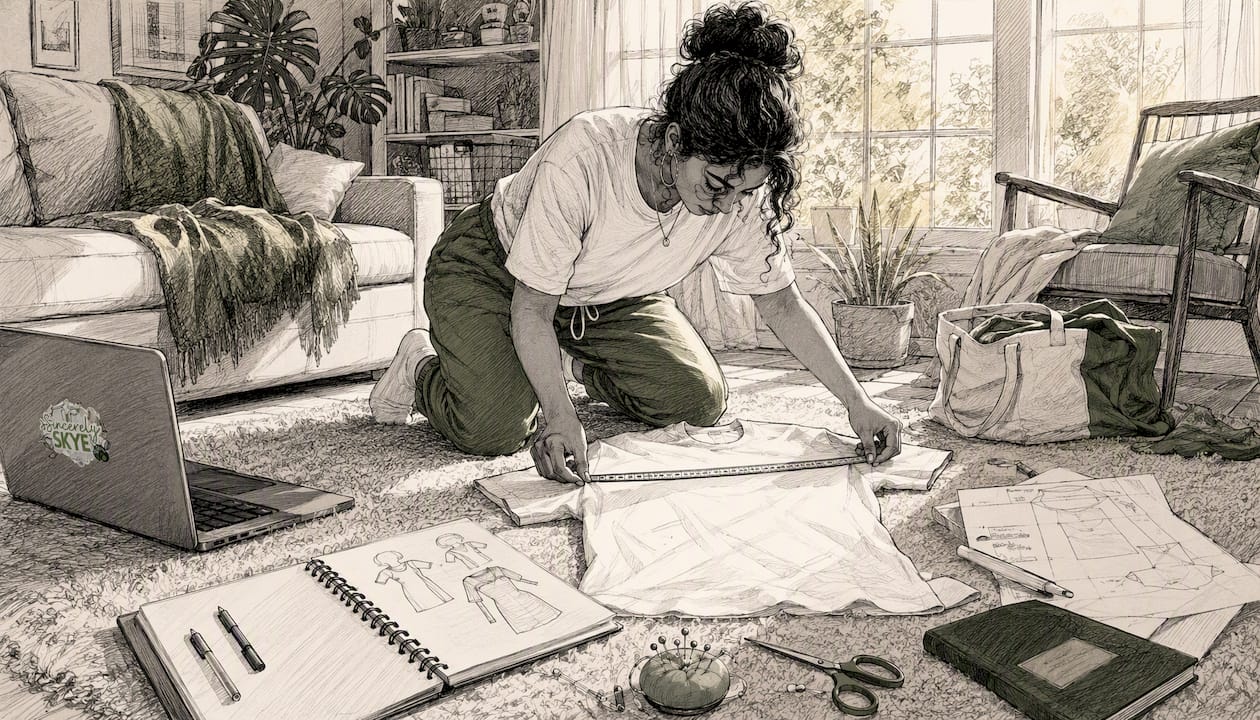
Common mistakes: holding the tape too loose (adds phantom inches), measuring a stretched-out shirt instead of a fresh one, and ignoring body length when you need a tee that stays tucked.
Add 1–2" of ease for a relaxed fit, or 3–4" for a genuinely roomy feel. For a slim look, match your chest circumference to the flat-garment width with minimal ease.
How unisex cuts differ from women's t-shirts
Unisex sizing is effectively men's sizing applied to a garment sold to everyone. The pattern is straight-cut with no waist taper, which means the shirt hangs the same width from chest to hem. Women's cuts, by contrast, are not simply smaller versions of men's patterns. Brands redesign the shoulder width, add waist shaping, shorten the body, and adjust the sleeve pitch to create a distinct silhouette.
The practical result: at the same label size, a unisex tee runs roughly 3–4" wider in the chest and about 2–3" longer in the body than a women's cut. Sizing down one step in unisex closes the chest gap. It does not fully close the shoulder or length gap.
Key structural differences to expect even after sizing down:
- Shoulder width: Unisex shoulder seams typically sit further out on the arm. Even in a smaller size, the seam may land past your natural shoulder point.
- Body length: Unisex tees run longer; a women's medium at ~26–27" becomes a unisex small at ~28", still an inch or two longer.
- Sleeve length: Unisex sleeves are cut for a longer arm, so they may hit lower on the bicep.
- Waist shaping: None. The straight cut means the shirt does not follow the body's curve, which reads as boxy depending on your frame.
- Chest ease: Sizing down one step brings the chest width close to a women's equivalent, but the extra ease is still there for most body types.
If the shoulder seam placement matters to you, check the shoulder width measurement specifically. A unisex XS may fit the chest but still have a shoulder seam that drops off the shoulder.
Quick conversion reference: women's sizes to unisex
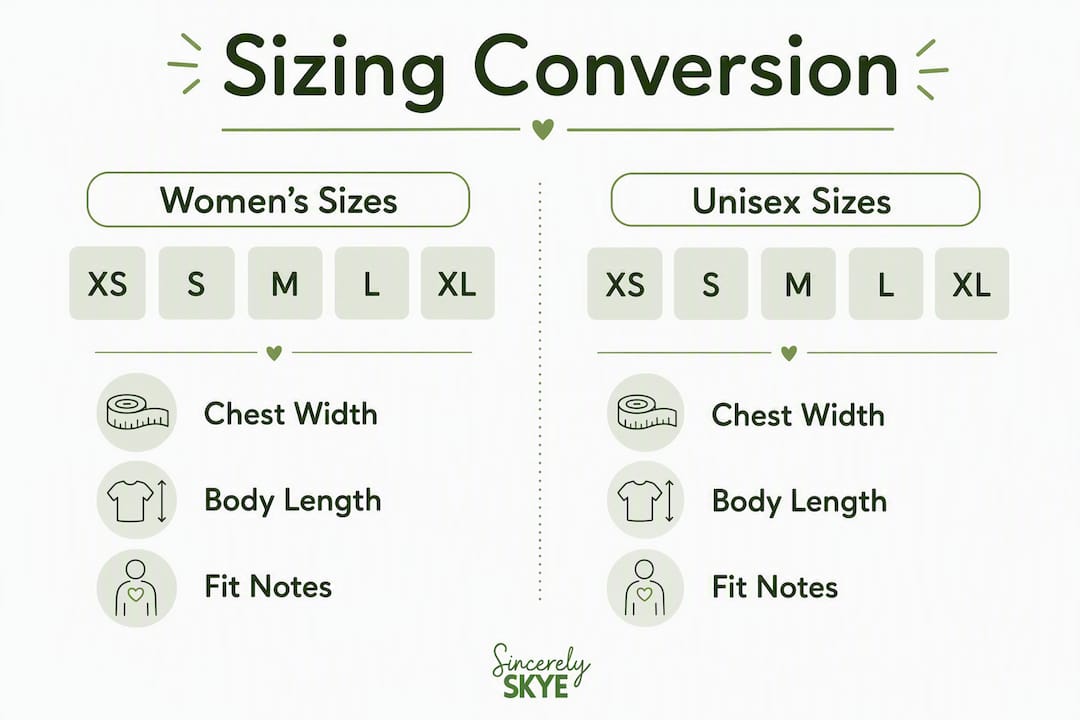
The table below reflects the standard one-step-down conversion used by most retailers. Women's M maps to unisex S; women's L maps to unisex M in the majority of standard-fit brands.
| Women's Size | Unisex Size (standard fit) | Fit Note |
|---|---|---|
| XS | Unisex XS (may still be roomy) | Relaxed through chest and shoulders |
| S | Unisex XS | Comfortable, some extra room |
| M | Unisex S | Closest chest match for most |
| L | Unisex M | Standard, slightly relaxed |
| XL | Unisex L | Roomy; size down for fitted look |
| 2XL | Unisex XL | Relaxed; confirm shoulder width |
Fit preference shifts the conversion. For a slim or fitted look, size down an extra step beyond the general rule — a women's M might land at unisex XS. For an oversized or streetwear silhouette, stay at your standard conversion or size up one step.
This table is approximate. No universal sizing standard exists across brands, so a brand's own flat-garment chart always takes priority over letter-size conversions.
Fit factors that change how a unisex size actually wears
The label size and the conversion rule get you close. These variables determine whether the shirt actually fits the way you want it to.
- Fabric weight and fiber content: Heavier 100% cotton (6 oz and above) holds its shape but shrinks more in the wash, typically 3–5% in length and width after the first wash. Lighter cotton-poly blends shrink less and drape more softly.
- Pre-shrunk vs. raw cotton: Pre-shrunk blanks have already been through a shrinkage process, so what you measure is close to what you keep. Raw cotton can shrink noticeably on first wash, which means sizing up by half a step is worth considering.
- Elastane content: Even 5% spandex changes everything. The shirt will stretch to accommodate a wider range of body shapes, and the fit label (slim, semi-fitted) becomes more reliable because the fabric moves with you.
- Fit label: "Standard" means straight cut with moderate ease. "Slim" or "semi-fitted" means the pattern is narrower through the chest and waist. "Relaxed" or "oversized" means extra ease is built in intentionally. The fit label is often a better predictor of final appearance than the letter size alone.
- Knit structure: A jersey knit (most tees) has natural horizontal stretch. A rib knit has more vertical stretch and tends to hug the body more closely at the same chest measurement.
Pro Tip: When a product page lists both a fit label and flat-garment measurements, use both together. A "slim fit" unisex medium will measure narrower than a "standard fit" unisex medium even at the same label size.
Brand-to-brand variation is real. A Bella+Canvas 3001 medium runs roughly 1–2" slimmer through the chest than a Gildan 5000 medium at the same label. If you are ordering from a specific blank, check that blank's chart, not a generic size guide.
Before you buy: a quick checklist to avoid sizing mistakes
Running through this list before checkout takes two minutes and prevents most returns.
- Flat-garment measurements: Does the product page list chest width and body length in inches or centimeters? If not, contact the seller or check a third-party chart for that specific blank.
- Fit label: Is it standard, slim, relaxed, or oversized? This changes which conversion step applies.
- Model photos with size info: Does the brand show a model's height, weight, and the size they are wearing? That context is more useful than a size chart alone for borderline decisions.
- Fabric and wash guidance: Is the cotton pre-shrunk? Does the listing mention shrinkage? Factor in one wash before you decide the shirt fits.
- Return or exchange policy: Know it before you order, especially for a first purchase from a new brand.
Because brand-to-brand variation is significant, customer photos in reviews are worth checking for borderline sizes. Someone with a similar build wearing the size you are considering tells you more than the chart alone.
Pro Tip: For group or team orders where people span multiple sizes, order one sample shirt in the most common size first. Confirm the fit before placing the full run. The cost of one test shirt is far less than exchanging a bulk order.
Key Takeaways
Measuring a flat garment you already own and matching that chest width to the brand's chart is the single most reliable step in unisex t-shirt sizing.
| Point | Details |
|---|---|
| Size down one step | Women generally convert one size down in unisex (women's M → unisex S) for comparable chest fit. |
| Measure a flat shirt first | Armpit-to-armpit chest width on an existing tee beats body-only measurements for accuracy. |
| Check brand charts | No universal sizing standard exists; a brand's flat-garment chart overrides any generic conversion table. |
| Factor fabric and fit label | Pre-shrunk cotton, elastane content, and fit labels (slim vs. oversized) all shift how a labeled size wears. |
| Sincerelyskye product pages | Sincerelyskye lists flat-garment measurements and model sizing on product pages so you can apply these rules directly before ordering. |
The case for measuring first, every time
The sizing-down rule is useful, but it is also the part of this conversation that gets oversimplified. Most guides stop at "size down one" and leave shoppers to figure out the rest when the shirt arrives with a shoulder seam hanging off their arm or a body length that covers their hips.
The measurement-first approach is not more complicated. It is just more honest about what a letter size actually tells you, which is not much on its own. A unisex S from one brand and a unisex S from another can differ by two full inches in chest width. That is not a rounding error; that is a fit difference you will feel.
What the conversion rule does well is give you a starting point fast. What it cannot do is account for fit labels, fabric behavior, or the specific pattern a brand uses. Sizing down one step and then confirming against the flat-garment chart takes thirty seconds longer than just picking a letter size, and it catches the cases where the rule breaks down.
For craft-themed merch especially, where you want the design to sit centered on the chest and the shirt to feel comfortable through a full day of making, getting the chest width right matters more than hitting a specific label. The label is just a shorthand. The measurement is the truth.
Sincerelyskye tees come with the sizing info you actually need
Sizing anxiety before buying a tee online is real, and it is almost always caused by product pages that list only a letter size with no measurements attached. Sincerelyskye product pages include flat-garment measurements and model sizing so you can apply the conversion rules from this guide directly before adding anything to your cart.
The Craft Now, Clean Later Tee and the Craft Now, Clean Later V-Neck Tee are two of the most popular unisex cuts in the shop, both designed with crafters in mind and listed with the garment specs you need to size confidently. Measure a tee you already love, check the chest width against the product chart, and order knowing exactly what you are getting. If the fit is not right, Sincerelyskye's exchange options mean you are not stuck with a shirt that does not work.
Browse the full Sincerely Skye Gear collection to see all available styles with sizing details included.
Useful sources for sizing charts and measurement guides
These are the sources worth bookmarking when you need brand-specific charts or additional measuring visuals.
- Sincerelyskye product pages — Each product listing includes flat-garment measurements and model info; use these to verify any conversion against the specific tee you plan to buy.
Pro Tip: Use these sources together rather than relying on any single chart. Cross-reference the conversion table from MeasuringKnowHow against the flat-garment numbers on the specific brand's product page before finalizing your size.
| Source | Best Used For |
|---|---|
| Arklavo | Brand-to-brand chest width comparisons |
| PrintlyMe | Flat-garment measuring technique and fit preference |
| MeasuringKnowHow | Quick women's-to-unisex conversion reference |
| Custom Ink | Group orders, model lineups, fit label guidance |
| Sincerelyskye shop | Verifying conversions against specific product charts |