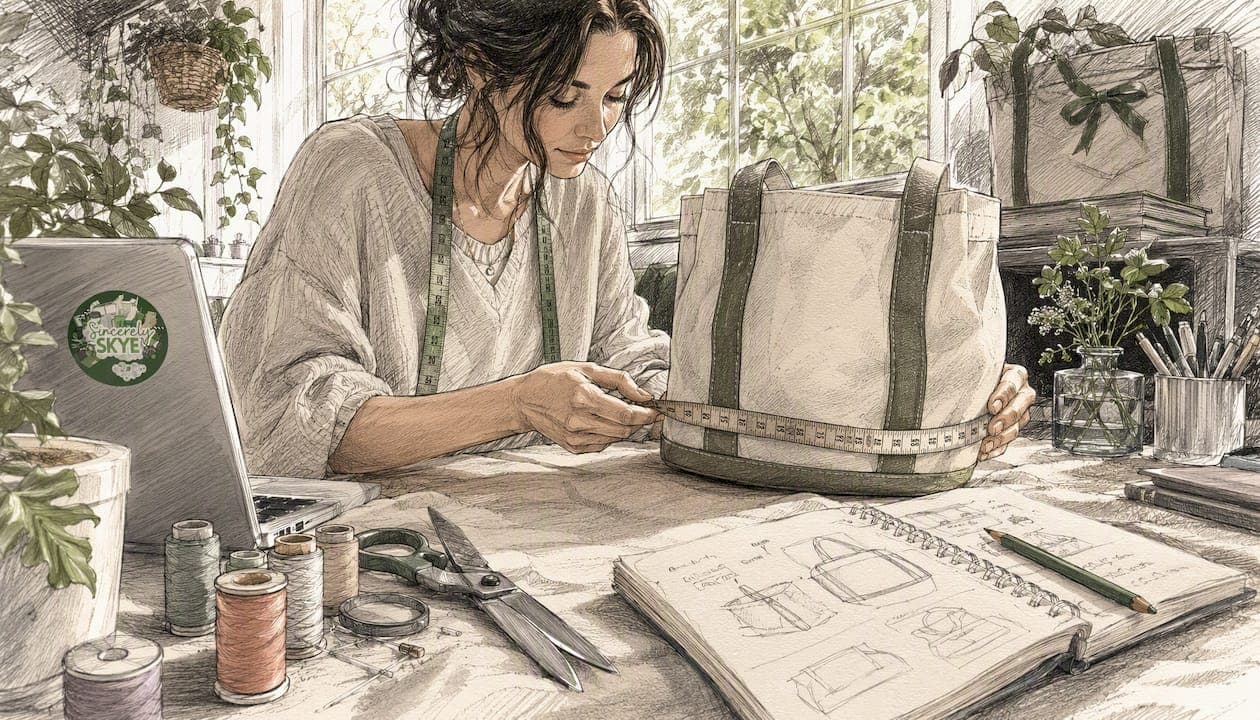
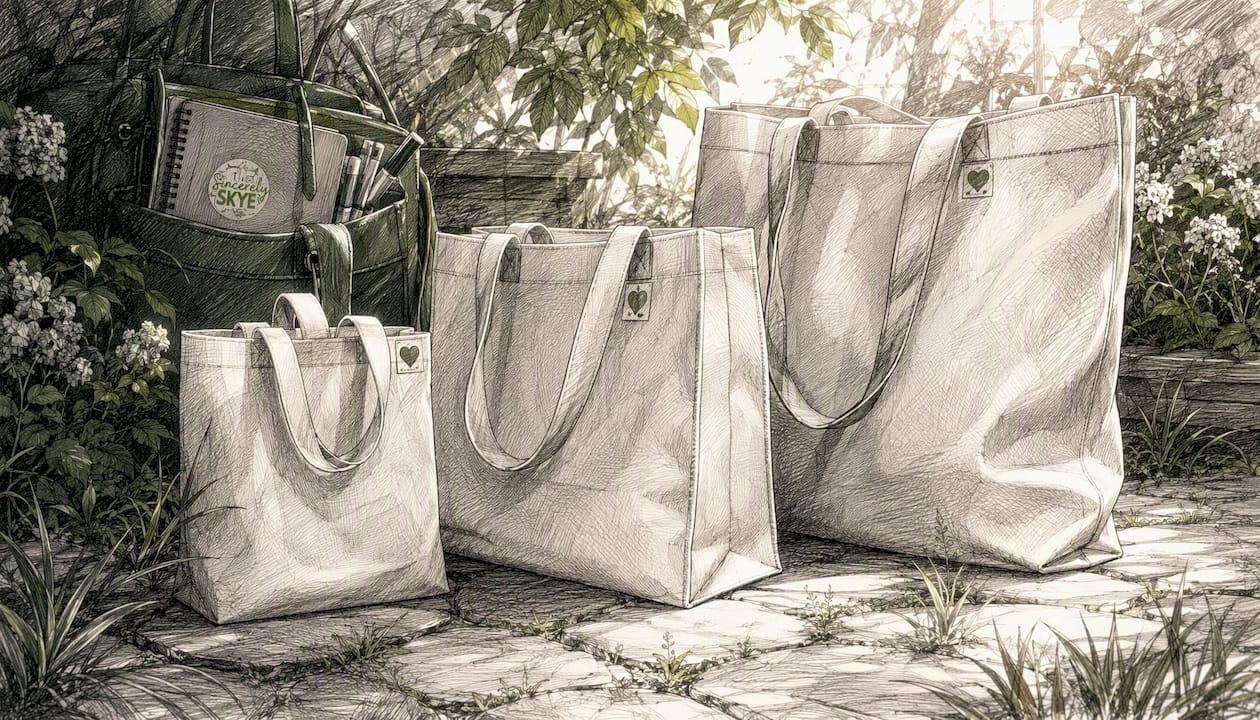
Tote bags fall into five practical categories: mini, small, medium, large, and oversized. For most people, a medium tote (roughly 14–16" wide × 14–16" tall, or 35–41 cm × 35–41 cm) is the everyday sweet spot. It fits a 13" laptop, a lunch container, and a small craft project without turning into a burden. A small tote is generally compact and easy to carry, while a large tote offers more space suitable for heavier or bulkier items. If you're sewing your own, always measure the gusset separately — flat width alone tells you almost nothing about how much the bag will actually hold.
- Mini/micro: 6–9" W × 6–8" H (15–23 cm × 15–20 cm) — phone, keys, lip balm
- Small: 10–13" W × 10–13" H (25–33 cm × 25–33 cm) — wallet, small notebook, snacks
- Medium: 14–16" W × 14–16" H (35–41 cm × 35–41 cm) — 13" laptop, lunch, light craft kit
- Large: 17–20" W × 15–18" H (43–51 cm × 38–46 cm) — groceries, beach towel, full project bag
- Oversized: 21"+ W × 18"+ H (53+ cm × 46+ cm) — market haul, blankets, bulky yarn stash
For crafters drafting a pattern: start with medium dimensions, then add 1–2" to the gusset for bulky supplies. And measure the gusset every time — a flat 15 × 16" bag and a 15 × 16" bag with a 4" gusset are not the same bag.
Table of Contents
- What are the standard tote bag sizes and how do you measure them?
- How do different tote dimensions compare across size categories?
- How does handle drop affect the way you carry a tote?
- Why does material and gusset structure change what a tote can actually hold?
- How do you choose the right tote size for buying or sewing?
- How often should you clean a canvas tote, and what's the right method?
- Key Takeaways
- Why tote sizing actually matters for crafters
- Sincerelyskye totes: find the right size for your craft life
- Useful sources and further reading
What are the standard tote bag sizes and how do you measure them?
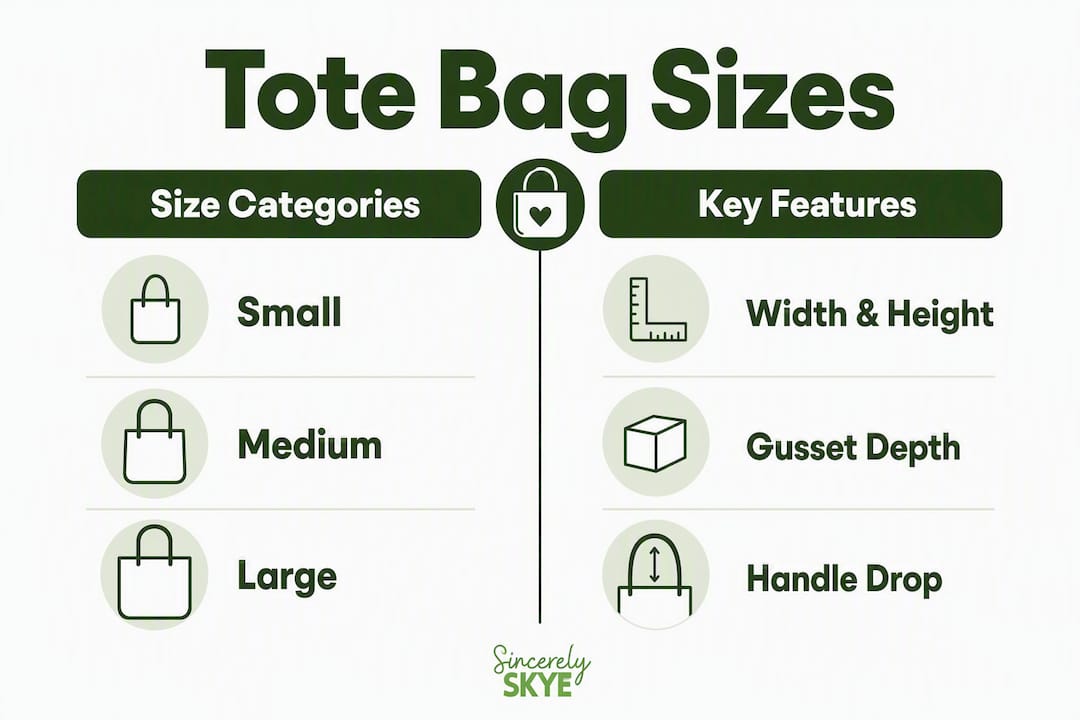
Measuring a tote correctly takes four numbers, not two. Most product listings show width and height, but those two alone can mislead you by a significant margin.
- Width (W): Measure left to right across the widest point of the bag when it's lying flat and empty.
- Height (H): Measure from the top edge (not the handles) straight down to the bottom seam.
- Gusset/depth (D): This is the bag's thickness — the folded bottom or the fully expanded side panel. Measure it flat first, then again with a typical load inside. These two numbers are often very different.
- Handle drop: Hold the bag by its handles as you normally would. The distance from the top of the handle to the top edge of the bag is the handle drop — not the full strap length.
Use a rigid ruler for flat measurements and a seamstress tape for curved seams or straps. When you're testing whether a specific item will fit (a laptop, a craft box, a lunch bag), place that item flat on a table and measure it directly. Measuring a real item you plan to carry beats any size label a retailer prints on a tag.
Pro Tip: Measure your bag both empty and with a typical load. Soft canvas expands noticeably under weight, so a bag that looks snug empty may carry more than you expect — or less, if the base has no structure.
How do different tote dimensions compare across size categories?
| Size | Width × Height (in) | Width × Height (cm) | Gusset (in) | Handle Drop | Fits |
|---|---|---|---|---|---|
| Mini/Micro | 6–9" × 6–8" | 15–23 × 15–20 cm | — | 4–6" | Phone, keys, cards |
| Small | 10–13" × 10–13" | 25–33 × 25–33 cm | — | 5–8" | Wallet, notebook, snacks |
| Medium | 14–16" × 14–16" | 35–41 × 35–41 cm | 2–4" | 8–12" | 13" laptop, lunch, light craft kit |
| Large | 17–20" × 15–18" | 43–51 × 38–46 cm | 3–5" | 10–14" | Groceries, beach towel, full project bag |
| Oversized | 21"+ × 18"+ | 53+ × 46+ cm | 4–6"+ | 12–16" | Blankets, market haul, bulky yarn |
A few things worth noting about specific Sincerelyskye totes:
- The Eco Tote Bag sits in the medium category — practical for daily errands, a craft kit, or a light grocery run.
- The 'My Worst Nightmare' Tote fits the small-to-medium range, making it a strong pick for gifting or lighter everyday carry.
- The 'Spooky Ribbon Hoarders Club' Tote leans large — built for the crafter who actually uses their tote as a project bag.
Pro Tip: A medium tote with a 3–4" gusset holds bulkier items far better than a flat bag with the same width and height. When choosing between medium vs large tote bag options, check the gusset before you size up.
How does handle drop affect the way you carry a tote?
Handle drop is the single most overlooked measurement in a tote bag size guide — and it determines whether you carry the bag in your hand, over your shoulder, or awkwardly under your arm.
- Short drop (4–6"): Hand carry only. Good for mini and small totes, gift bags, or market totes you'll set down often.
- Shoulder drop (8–12"): The standard for medium totes. Sits comfortably on the shoulder over a light jacket.
- Long drop (12–15"+): Needed for wearing over a winter coat or for tall frames. Common on large and oversized bags.
A few practical rules: thicker, wider straps distribute weight better on heavy loads, so if you're carrying groceries or a full craft kit, a 1" strap beats a narrow ribbon handle every time. Reinforced stitching at the handle attachment points matters more than the strap material itself — that's where most bags fail first. When testing a bag in-store or on a pattern mock-up, hold it at the handle and walk a few steps. If the bag swings into your hip or the strap slides off your shoulder, the drop is wrong for your frame.
For crafters building their own pattern: add a few inches to the handle drop if you plan to wear the bag over a coat, and always reinforce the bartack at the attachment point with a box-and-X stitch.

Why does material and gusset structure change what a tote can actually hold?
Two bags with identical width and height measurements can carry completely different loads depending on three structural factors.
Gusset shape and depth is the biggest variable. A flat tote folds closed at the bottom; a gusseted tote has a true base that expands. A 15 × 16" flat tote and a 15 × 16" tote with a 4" gusset are not interchangeable — the gusseted version holds bulkier items far more comfortably, and it keeps them organized rather than stacked.
Base reinforcement determines whether the bag holds its shape under load. A reinforced or structured base (cardboard insert, thick interfacing, or a sewn-in base panel) lets the bag stand upright and distributes weight evenly. Without it, a heavy load deforms the bottom seams over time.
Material stiffness changes how the bag behaves when full:
- Canvas: Holds structure, handles bulk, and is the most forgiving for heavy craft supplies. Machine washable in most cases.
- Nylon/polyester: Lightweight and packable, but collapses under load. Nylon and polyester blends are usually machine-safe.
- Jute/hemp: Looks great, but submerging jute in water damages the fibers — spot clean only. Not ideal for repeated heavy loads.
- Leather trim: Spot clean only; adds structure but limits washability.
For crafters adjusting a pattern: when you add gusset depth, also add seam allowance to the side panels. A 1" seam allowance on each side of a 4" gusset adds up fast, and skipping it is why finished bags end up narrower than the pattern suggests.
How do you choose the right tote size for buying or sewing?
Run through this checklist before you buy or cut fabric.
- Define your regular load. What goes in this bag every single time? A laptop? A lunch container? A skein of yarn and a project in progress?
- Measure the largest item. Lay it flat and record its width, height, and depth. That's your minimum interior dimension.
- Add buffer. You need at least 1" of clearance on each side for comfortable loading and unloading. For bulky craft supplies, add 1–2" to the gusset measurement.
- Choose your carry style. Hand carry needs a short drop (4–6"); shoulder carry needs 8–12"; over-a-coat carry needs 12"+.
- Consider storage. A structured large tote is harder to fold flat. If you need to pack it into a suitcase or a drawer, a soft medium with no base insert is more practical.
- Check the use case. Commuting? Medium with laptop clearance. Farmers market? Large with a gusseted base. Gifting? Small or medium with a clean print. Craft kit? Large with reinforced handles.
- Test with a real item. Place your laptop, craft box, or lunch bag against the product dimensions before ordering.
The one-line rule: if you regularly carry a 13" laptop, choose a medium with at least a 3" gusset and an 8–10" handle drop. For makers adapting a pattern for bulkier fills, add 1–2" to the gusset and recheck your seam allowances before cutting.
How often should you clean a canvas tote, and what's the right method?
Cleaning pros recommend washing light-use totes as needed or about once a month. Beach bags and outdoor-use totes that pick up sand, sunscreen, and moisture should be cleaned every one to two weeks.
By material:
- Plain cotton canvas: Cold water, gentle machine cycle. Hand washing is safest for bags with delicate prints or trims; machine washing is fine for plain canvas.
- Printed or custom designs: Spot clean first. Turn the bag inside out before any machine wash to reduce friction on the print.
- Jute/hemp: Spot clean only — submerging damages the fibers.
- Leather trim: Wipe with a damp cloth; no submersion.
- Nylon/polyester blends: Usually machine-safe on a gentle cycle.
Avoid bleach, fabric softener, and harsh detergents on canvas — they weaken fibers and shift color over time. Air dry always; a dryer causes shrinkage and can warp a structured base.
Quick cleaning timeline for typical use:
- Daily: shake out crumbs and debris
- Weekly: spot-check for stains and wipe the interior
- Monthly: light wash (hand or gentle machine, cold)
Pro Tip: Before washing any printed or dyed tote, test for colorfastness by dampening a hidden corner and blotting with a white cloth. If dye transfers, hand wash only in cold water. After washing, blot excess moisture with a towel and air dry flat — never wring a canvas bag, especially one with a structured base.
Key Takeaways
The most practical tote bag decision comes down to four measurements: width, height, gusset depth, and handle drop — and gusset depth is the one most buyers skip.
| Point | Details |
|---|---|
| Medium is the everyday pick | A 14–16" wide tote with a 3–4" gusset fits a 13" laptop, lunch, and a light craft kit. |
| Gusset beats flat width | A 15 × 16" bag with a 4" gusset holds significantly more than a flat bag with the same footprint. |
| Handle drop sets carry style | Choose 8–12" for shoulder carry; 12"+ if you wear a coat; 4–6" for hand carry only. |
| Match cleaning to material | Plain canvas tolerates cold machine wash; printed designs need spot cleaning and inside-out washing. |
| Sincerelyskye tote options | The Eco Tote Bag (medium), 'My Worst Nightmare' Tote (small/medium), and 'Spooky Ribbon Hoarders Club' Tote (large) cover the most common size needs. |
Why tote sizing actually matters for crafters
Most size guides treat tote dimensions as a shopping filter. For crafters, they're a design decision — and getting it wrong means a bag that looks great flat but can't hold a project in progress without buckling at the seams.
The gusset is where most ready-made totes cut corners, and it's the first thing I look at when evaluating a bag for actual craft use. A flat medium tote might look like it fits a yarn project, but the moment you add a skein and a set of needles, the bag strains at the sides and the handles pull inward. A true gusseted base changes that entirely. It's also where print placement gets complicated — a deep gusset means the design wraps around the base, which affects how the bag reads when carried.
The Sincerelyskye Eco Tote Bag was sized with that balance in mind: enough room for a real craft haul, with a print placement that stays visible when the bag is full. The 'My Worst Nightmare' Tote is the one I'd reach for as a gift — it's the right size to feel intentional without being overwhelming. And the 'Spooky Ribbon Hoarders Club' Tote is unapologetically for the crafter who actually needs the space.
Size isn't just a spec. It's a statement about how you use the bag.
Sincerelyskye totes: find the right size for your craft life
Knowing your dimensions is half the work. The other half is finding a bag that was actually designed with craft use in mind, not just sized to fit a product photo.
The Sincerelyskye gear collection covers all three size needs covered in this guide. The Eco Tote Bag handles everyday medium carry. The 'My Worst Nightmare' Tote is the right call for gifting or lighter use. The 'Spooky Ribbon Hoarders Club' Tote gives you the large-format capacity a serious crafter actually needs, with a print that makes the bag worth pulling out at every craft night. Every bag is designed with print placement, handle comfort, and real-world capacity in mind — not just flat dimensions on a spec sheet. Browse the full collection and pick the size that fits your actual load.
Useful sources and further reading
These are the most useful references for going deeper on measuring, cleaning, and material care:
- Tote Bags Size Guide: Measuring Guide for Tote Bag Dimensions — best starting point for measurement technique and real-item testing
- We Asked Cleaning Pros How to Clean Our Dirty Tote Bags — cleaning frequency and method recommendations from pros
- How to Wash Canvas Tote Bags — hand wash vs machine wash guidance by material
- Sincerelyskye Gear Collection — browse tote options by size and design