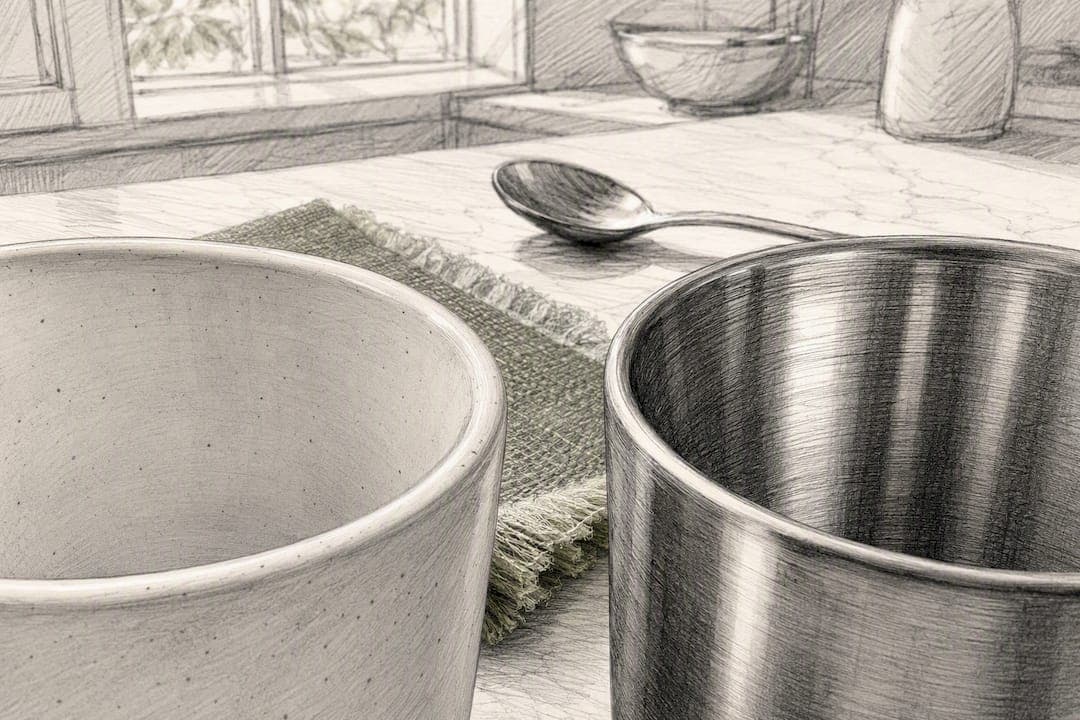
If pure flavor is what you're after, pick ceramic or a ceramic-lined mug. If you need heat that lasts through a long commute, go with a vacuum-insulated stainless steel tumbler. Split the difference with a ceramic-lined insulated mug, which pairs a neutral interior with an insulated shell. More on how vacuum insulation and ceramic thickness actually perform is below.
TL;DR:
- Ceramic mugs are preferred for taste-sensitive drinks like black coffee and delicate teas, as their inert glaze prevents flavor reaction.
- Insulated stainless steel tumblers excel at heat retention over several hours, making them ideal for long commutes or all-day use.
- Ceramic-lined mugs offer a balance of flavor preservation and better heat retention than plain ceramic, suitable for moderate durations.
- Durable travel mugs should have locking lids or screw-on seals to prevent leaks, especially when tossed in bags or used on the go.
- Both materials' environmental impact depends on longevity; a high-quality mug that lasts years reduces waste more effectively than disposables.
Table of Contents
- Travel Mug vs. Ceramic: Quick Recommendations By Use Case
- Heat Retention And Insulation: What The Data And Construction Tell You
- Taste And Flavor: Why Ceramic Matters To Flavor-Sensitive Drinkers
- Durability And Fragility: Real-World Risks And What To Inspect
- Portability, Lid Types, And Leakproof Fit
- Cleaning And Care: Keep Taste Pure And Seals Healthy
- How To Choose: A Checklist You Can Use In-Store Or Online
- Sincerely Skye Notes: Mug Sizing, Care, And Design For Crafters
- Environmental Impact: Comparing Long-Term Waste
- Cost Comparison: What You're Actually Paying For
- Aesthetic Variety: Design Options Worth Considering
- Safety: BPA, Chemicals, And What To Check
- Weight And Comfort: What Your Hand Actually Feels
- Skye's Take: When We Recommend Ceramic-Lined Mugs
- Find Your Everyday Mug At Sincerely Skye
- Sources
Travel Mug vs. Ceramic: Quick Recommendations By Use Case
Here's the short version before you get into the weeds:
- Taste purists (black coffee, light roasts, delicate tea): Go ceramic or ceramic-lined. Nothing beats a flavor-neutral surface.
- Long commuters and outdoor workers: Choose vacuum-insulated stainless steel. It holds heat far longer than ceramic alone.
- Everyone else who wants both: A ceramic-lined insulated mug gets you close to ceramic's clean taste with meaningfully better heat retention than plain ceramic, according to Serious Eats.
Desk use rarely needs insulation at all. A short commute (under 20 minutes) works fine with either material. A long commute or an all-day thermos situation is where stainless steel earns its keep.
Pro Tip: If you drink your coffee black or your tea unsweetened, taste the same drink from a stainless tumbler and a ceramic mug side by side. The metallic edge in the steel version is obvious once you've felt the difference.
Heat Retention And Insulation: What The Data And Construction Tell You
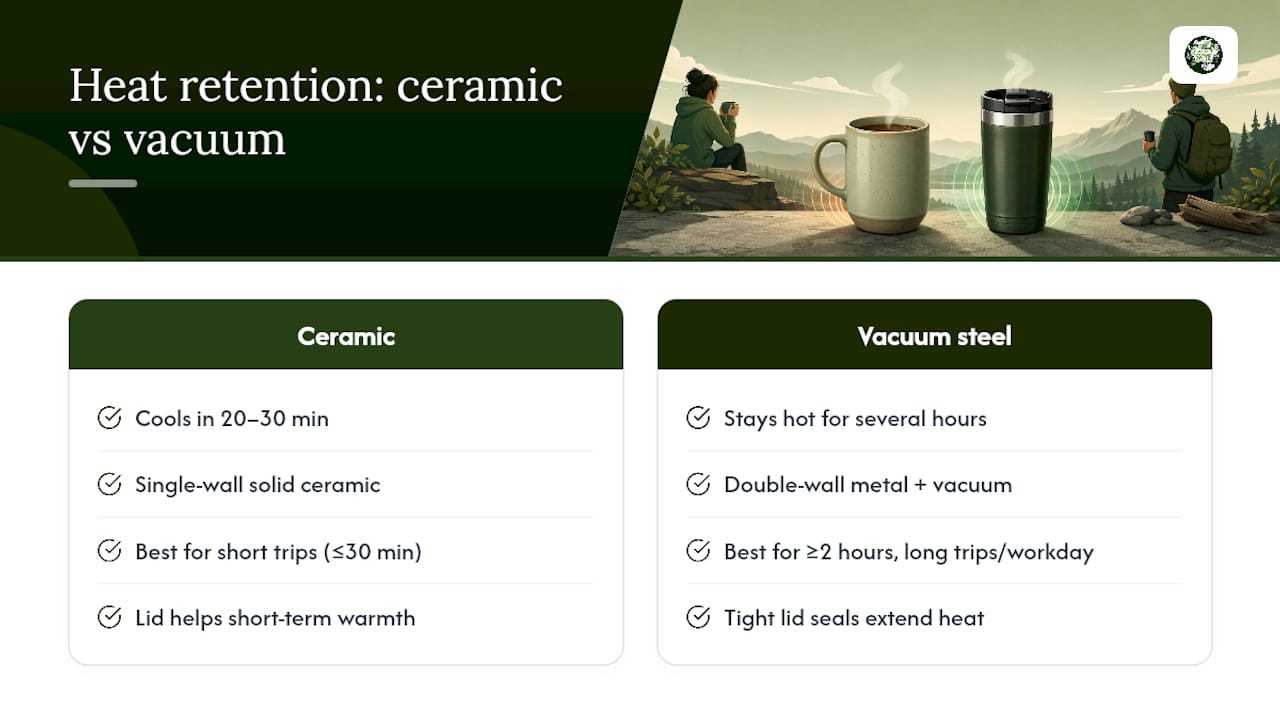
Vacuum insulation works by sealing an empty gap between two walls of metal, which stops heat from transferring through conduction or convection. That's fundamentally different from ceramic, which is a solid, single-wall material that loses heat mostly through its exposed surface and lid opening. A double-wall vacuum tumbler can hold a drink well above room temperature for hours, while a ceramic mug without a lid starts cooling noticeably within 20 to 30 minutes.
Editorial testing backs this up in practical terms. Food & Wine's testing found that ceramic-lined mugs deliver a neutral drinking surface, but vacuum-insulated stainless steel models typically retain heat longer overall. Bon Appétit's reviewers reported that many well-built insulated mugs keep drinks hot for several hours, a range that lines up with what you'd expect from a quality double-wall design with a tight lid seal.
Here's what that means for your morning routine. A short walk to the office or a 15-minute drive doesn't stress any material much. A four-hour road trip or a full workday at a job site is where the gap between ceramic and vacuum steel becomes obvious. If your mug sits untouched for more than two hours and you still want it hot, insulated stainless steel is the safer bet.
Ceramic still holds warmth reasonably well in the short term, especially with a lid on, but it's not built for marathon insulation. Match your expectations to your actual routine rather than to marketing copy on the packaging.
Taste And Flavor: Why Ceramic Matters To Flavor-Sensitive Drinkers
Ceramic is chemically inert once it's properly glazed, meaning it doesn't react with acids, oils, or tannins the way some metals can. That inertness is why ViviMug notes that quality ceramic preserves flavor better than many alternative materials. Stainless steel, particularly lower-grade or older tumblers, can impart a faint metallic note, especially when the drink is hot and acidic.

"Ceramic-lined" means a mug has a stainless or aluminum outer shell with a ceramic coating fused to the interior. You get the insulation benefits of the metal body with a drinking surface that behaves like real ceramic. Serious Eats specifically recommends this construction for coffee and tea drinkers who care about taste but still want portability.
The flavor gap isn't always noticeable. Milk, cream, and sugar mask subtle off-notes, so a latte or a sweetened tea rarely reveals the difference. Black coffee, light roasts, and delicate teas are where it shows up, since there's nothing to cover a metallic edge.
A few habits keep flavor carryover in check regardless of material:
- Rinse your mug immediately after each use rather than letting residue sit.
- Deep clean weekly with baking soda and warm water to lift built-up oils.
- Avoid switching between strong flavors, like green tea and dark roast coffee, without a thorough wash in between.
- Skip abrasive scrubbers on ceramic-lined interiors, which can wear down the coating over time.
Durability And Fragility: Real-World Risks And What To Inspect
Full ceramic mugs chip and crack under impact in a way insulated metal simply doesn't. Drop one on tile and you're often looking at a hairline crack that eventually seeps or a chip that catches your lip every time you drink. Ceramic-lined stainless steel mugs handle drops far better on the outside, but the interior coating can still develop hairline cracks after repeated impacts or years of use.
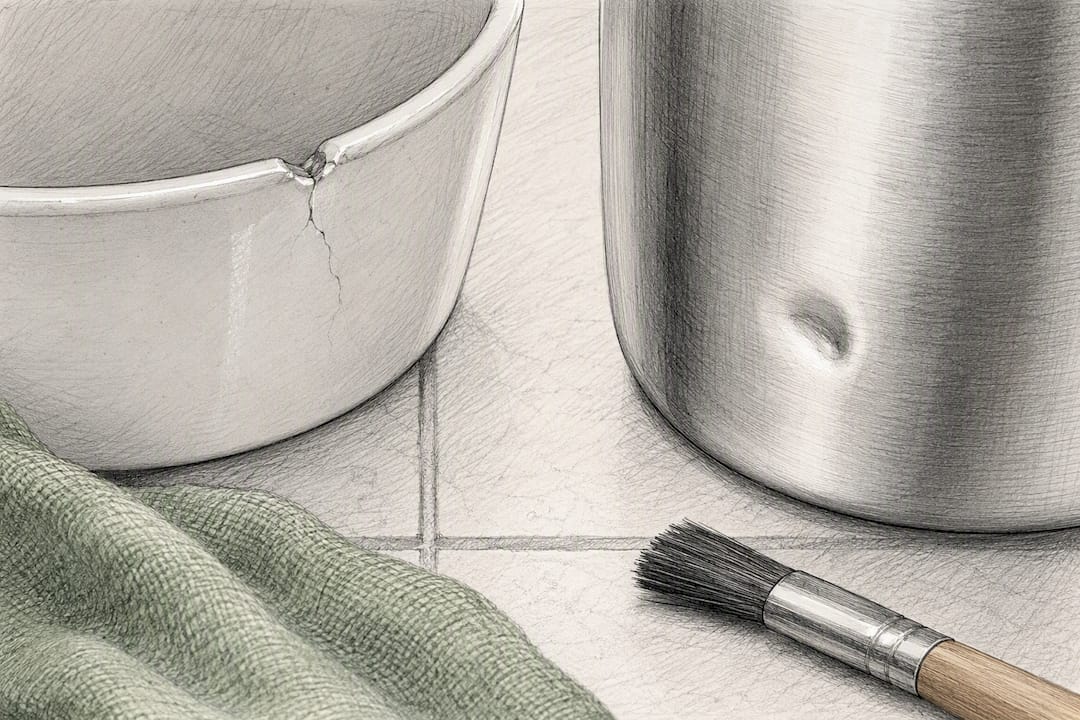
Stainless steel isn't invincible either. A hard enough drop can dent the outer shell, and if that dent reaches the seal area near the lid, you'll start getting leaks that weren't there before. Sportive Lives frames the trade-off simply: ceramic and ceramic-lined mugs suit desk and taste-focused use, while straight stainless steel suits rugged, long-duration situations where drops are more likely.
Run this quick check every few months:
- Look for chips or cracks along the rim and base of ceramic mugs.
- Check ceramic-lined interiors for hairline cracks or discoloration where the coating meets the metal.
- Smell the mug after washing. A persistent odor that survives a deep clean usually means the lining has degraded.
- Press gently around any dent in a stainless tumbler to see if it flexes near the lid seal.
Portability, Lid Types, And Leakproof Fit
Lid design affects leakproof performance more than the mug's body material does, based on repeated editorial testing. Bon Appétit's reviewers found that locking flip lids and threaded screw-on lids consistently outperform simple pop-on lids, which tend to leak under pressure or when tipped in a bag.
- Locking flip lids offer one-handed drinking and a reliable seal when the mechanism actually clicks shut. Check that the lock engages fully before you toss it in your bag.
- Screw-on lids are the most leakproof option overall, though they require both hands to open and close, which slows you down in the car.
- Sliding lids are convenient for sipping but generally leak more if the mug tips sideways.
Beyond the lid, think about handle versus no-handle. A handle adds bulk that can crowd a standard cupholder, while handleless tumblers slide into most cupholder cutouts without a fight. If you're tossing your mug into a bag rather than a cupholder, pack it upright, away from anything that could press against the lid release button.
Cleaning And Care: Keep Taste Pure And Seals Healthy
Most ceramic mugs are dishwasher and microwave safe once properly glazed, according to ViviMug, though hand-painted or metallic-trim designs are usually the exception. Ceramic-lined and stainless steel travel mugs are typically dishwasher safe on the outside, but almost never microwave safe, since the vacuum-sealed metal walls can warp or spark.
A few care basics keep every material performing:
- Hand wash lids separately, since gaskets and locking mechanisms wear out faster in a dishwasher's heat cycle.
- Use a mix of baking soda and warm water for stubborn coffee or tea stains rather than bleach, which can degrade seals over time.
- Air dry fully before capping to prevent trapped moisture from turning into odor.
- Retire a mug once you notice a chip near the drinking rim, a smell that survives a deep clean, or a lid seal that no longer holds pressure.
How To Choose: A Checklist You Can Use In-Store Or Online
Start with your actual routine, not the flashiest feature on the box.
- Match the mug to your commute. Desk use or a short trip barely stresses insulation, so prioritize taste. A long commute demands vacuum insulation first.
- Identify your drink type. Black coffee and light roasts favor ceramic or ceramic-lined interiors. Milky drinks and sweetened tea are more forgiving of stainless steel.
- Check the lid mechanism before buying. Locking flip and screw-on lids leak less than pop-on styles, based on consistent editorial testing.
- Look at the interior finish closely. A smooth, even ceramic coating with no visible seams beats a rough or uneven lining.
- Read reviews for leak complaints specifically, not just general star ratings, since leaks are the most common real-world failure point.
- Set a budget that includes replacement lids. Many quality mugs sell lids separately, which extends the life of the whole mug.
Pro Tip: Before buying online, fill a similar mug you already own with water, seal it, and shake it upside down over a sink. It's the fastest way to catch a bad lid design before it ruins a bag.
Sincerely Skye Notes: Mug Sizing, Care, And Design For Crafters
A mug that holds your morning coffee should also hold up to your morning routine. For crafters printing or personalizing mugs, interior finish affects both how a drink tastes and how long a design lasts through dishwasher cycles.
Sublimation printing tolerates dishwasher use differently depending on the glaze and coating underneath it, which is why we walk through washing specifics in our sublimation mug care guide. For sizing, our guidance on choosing the right mug capacity points most everyday routines toward an 11 to 12 ounce mug, and our breakdown of ceramic versus enamel options covers home, office, and camp use in more detail.
Environmental Impact: Comparing Long-Term Waste
A well-made ceramic mug or insulated tumbler that lasts five or ten years beats any disposable cup on environmental impact, full stop, but the two materials break down differently at end of life. Ceramic is essentially fired clay and glaze, which means a broken mug is inert waste that won't leach chemicals into a landfill, though it also won't biodegrade or recycle through standard municipal programs.
Stainless steel travel mugs carry a heavier manufacturing footprint upfront, since mining and processing metal takes more energy than firing clay. That cost gets paid back over years of reuse, particularly if the mug replaces daily disposable cups from a coffee shop. The real environmental win with either material comes from longevity, not the material itself. A cracked ceramic mug that gets replaced every year does less good than a stainless tumbler that survives a decade of drops and dishwasher cycles.
Buying fewer, better-made mugs matters more than agonizing over which raw material is greener. A single well-cared-for mug, ceramic or steel, that replaces hundreds of paper cups over its lifespan is the actual sustainability story here, not the manufacturing process behind the mug itself.
Cost Comparison: What You're Actually Paying For
Ceramic mugs are usually the cheapest entry point, often running $10 to $20 for a solid, well-glazed option. You're paying mostly for the clay, the glaze, and any printed design, since there's no insulation hardware to manufacture.
Ceramic-lined insulated mugs and full vacuum-insulated stainless steel tumblers cost more, frequently landing in the $20 to $40 range, because you're paying for the double-wall construction, the vacuum seal, and a more complex lid mechanism. That price gap narrows once you factor in replacement costs. A ceramic mug that chips gets tossed and replaced. An insulated tumbler with a failed lid seal often just needs a new lid, which is usually available separately and cheaper than buying a whole new mug.
Value for money depends entirely on your use case. If you're a desk drinker who never travels far, a $15 ceramic mug outperforms a $35 insulated tumbler you don't need. If you're commuting an hour each way, that same $35 tumbler saves you from lukewarm coffee daily, which is worth more than the price difference over a year of use.
Aesthetic Variety: Design Options Worth Considering
Ceramic wins on design range without much competition. Glazes, hand-painted details, and printed artwork all sit beautifully on a ceramic surface, which is part of why ceramic mugs remain a favorite for personalized and gift-worthy pieces. Crafters in particular gravitate toward ceramic and ceramic-lined mugs because sublimation and printed designs render with more color depth and sharper detail than they typically do on bare metal.
Stainless steel tumblers lean toward matte finishes, powder coating, or laser engraving, which look sleek but rarely match the vibrancy of a printed ceramic design. If you want a mug that doubles as a piece of personal style, whimsical artwork, or a seasonal design statement, ceramic and ceramic-lined options give you far more visual range to work with.
Safety: BPA, Chemicals, And What To Check
Properly glazed ceramic is chemically inert, meaning it doesn't leach anything into your drink under normal use, according to ViviMug's overview of ceramic mug benefits. The one exception worth knowing: cheap or improperly fired glazes, particularly older imported pieces, can contain lead or cadmium that leaches under heat and acidity. Stick to reputable brands with clear safety labeling.
Stainless steel and ceramic-lined mugs are typically BPA-free at this point in the market, since most manufacturers phased out BPA-containing plastics in lids and seals years ago. Still, check the product listing specifically for "BPA-free" labeling on the lid and gasket, since those small parts are more likely to contain plastic than the mug body itself. If a listing doesn't mention it at all, that's worth a direct question to the seller before buying.
Weight And Comfort: What Your Hand Actually Feels
Ceramic mugs are noticeably heavier than empty insulated tumblers of the same size, which matters if you're holding one through a long meeting or a slow drive. That weight also gives ceramic a certain solidity in the hand that some drinkers genuinely prefer, since it feels less like holding an empty can.
Insulated stainless steel tumblers, especially double-wall vacuum designs, like the EverSip Hydration Bottle from SweeTee Beauty, are lighter than they look given their bulkier profile, since the insulation gap is just air. Once filled, the weight difference shrinks considerably, but an empty ceramic mug sitting on your desk all day still feels more substantial than an empty tumbler. If wrist comfort during a long commute matters to you, a lighter stainless tumbler with a good handle beats a heavy ceramic mug you're gripping one-handed at a stoplight.
Skye's Take: When We Recommend Ceramic-Lined Mugs
For crafters and desk drinkers who care about how their coffee actually tastes, ceramic-lined mugs are the honest recommendation, not just the convenient one. The neutral interior respects your drink, and the printed exterior gives you room for real design. Browse our drinkware collection to see what fits your routine.
— Skye
Find Your Everyday Mug At Sincerely Skye
If you've landed on ceramic or ceramic-lined as your pick for flavor and desk use, Sincerely Skye offers clean drinking experience mugs featuring unique artwork. Every design leans into the whimsical, vintage-inspired style crafters actually want on their morning mug, sized to fit the 11 to 12 ounce range that works for most routines.
Our Pink Checkered Heart Mug is a solid example of that combination: a comfortable size, a design built for daily use, and care guidance you can actually follow without guessing. If you're outfitting a whole desk setup or shopping for a gift, our full drinkware collection has more sizes and designs to browse. Pick your favorite, check the care notes on the product page, and add it to your cart. That's the whole process.
Sources
- The Best Travel Mugs — Serious Eats
- The best travel coffee mugs — Food & Wine
- Best travel coffee mugs — Bon Appétit
- Ceramic-Lined vs Stainless Steel Mugs — Sportive Lives
- What are the benefits of using a ceramic mug? — ViviMug