
For most home use, ceramic wins. It keeps your coffee warmer longer and never imparts a metallic taste. For camping and outdoor use, enamel is the clear pick. It survives drops, tolerates direct flame, and weighs roughly half as much as a ceramic mug. For the office, either works, though ceramic edges ahead if you use a microwave.
- Home slow-sipper: Ceramic, because its higher thermal mass holds comfortable sipping temperatures 10–20 minutes longer than a comparable enamel mug.
- Office or desk use: Ceramic again, since it's microwave-safe and flavor-neutral, and you're unlikely to drop it from a height.
- Camping or outdoors: Enamel, because it survives drops that would shatter ceramic, tolerates campfire and camp-stove heat, and weighs roughly 150–200 g versus a typical ceramic's 300–400 g.
One trade-off to watch: a chipped enamel mug can rust at the exposed metal, while a cracked ceramic mug is simply done. Know your failure modes before you commit.
Key Takeaways
Ceramic is the better daily mug for home and office use; enamel is the right call for camping, outdoor use, and anywhere durability under impact matters more than heat retention.
| Point | Details |
|---|---|
| Heat retention winner | Ceramic holds comfortable sipping temperatures 10–20 minutes longer due to higher thermal mass. |
| Durability trade-off | Enamel chips and can rust at exposed metal; ceramic cracks or shatters but carries no rust risk. |
| Safety check | Vintage enamel and ceramic pieces may contain lead; modern reputable mugs are lead-free and food-safe. |
| Weight advantage | Enamel mugs weigh roughly 150–200 g versus ceramic's 300–400 g, a real difference for camping. |
| Sincerelyskye option | The Sincerelyskye custom mug and Crafters Collection offer craft-inspired ceramic drinkware with clear care guidance. |
Table of Contents
- How do enamel and ceramic mugs compare across the key factors?
- What are enamel and ceramic mugs actually made of?
- How do enamel and ceramic mugs hold up to daily damage?
- How does each mug handle heat, and can you boil water in enamel?
- Does the mug material affect taste, and are there safety risks?
- How do you clean and care for enamel and ceramic mugs?
- Which mug material fits your situation best?
- What should you look for when buying an enamel or ceramic mug?
- What the mug debate gets wrong
- Sincerelyskye mugs: craft-inspired drinkware worth owning
- Sources
How do enamel and ceramic mugs compare across the key factors?
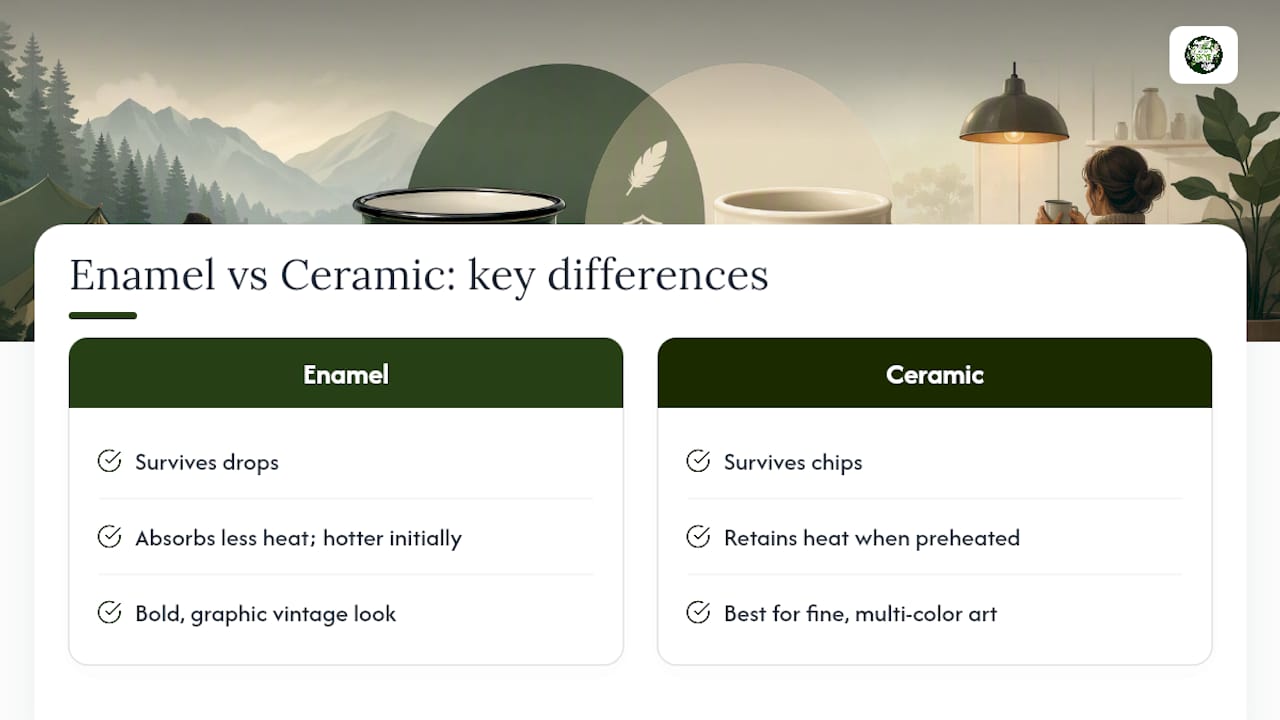
Ceramic mugs retain heat longer because of their greater thermal mass, while enamel mugs are lighter, tougher under impact, and safe for direct heat. Here's how the two materials stack up across the dimensions that matter most.
| Factor | Enamel | Ceramic |
|---|---|---|
| Durability / break-resistance | Survives drops; chips rather than shatters | Cracks or shatters on hard drops |
| Heat retention / thermal mass | Warms fast, cools faster; better under ~8 min if not preheated | Holds heat 10–20 min longer overall |
| Weight and portability | ~150–200 g; great for packing | ~300–400 g; better for home/office |
| Reactivity / taste / safety | Neutral when intact; metallic risk if chipped or low-quality | Neutral when properly glazed |
| Cleaning / dishwasher safety | Dishwasher-safe when intact; handwash if chipped | Generally dishwasher-safe; check manufacturer |
| Direct heat / stovetop / campfire | Yes, with caution; avoid dry-heating | No open flame; check oven/microwave rating |
| Aesthetics / customization | Bold, vintage, outdoorsy graphics | Fine-line decals, multi-color prints, higher perceived gift value |
| Typical price range | $10–$25 | $8–$30+ |
For home and office, ceramic is the default. For camping, backpacking, or anywhere a mug might get knocked around, enamel is the practical choice.
What are enamel and ceramic mugs actually made of?
Understanding the construction explains almost every behavioral difference between these two materials.
Enamel: steel core plus fused glass
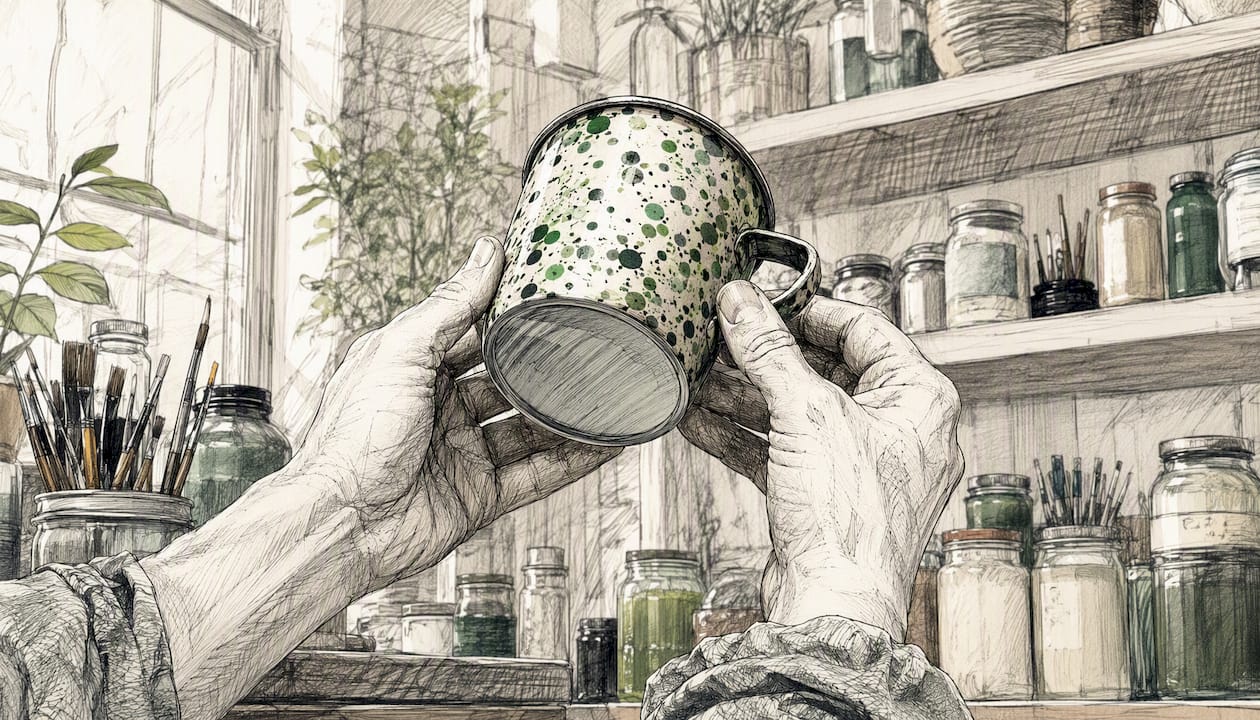
Enamel mugs start with a steel or aluminum base. Powdered glass, called vitreous enamel, is applied to that metal surface and fired at roughly 1,380°F–1,560°F (750°C–850°C). At those temperatures the glass fuses into a smooth, non-porous coating that bonds permanently to the metal. "Vitreous" simply means glass-derived. When produced to modern standards, that surface is chemically inert and does not leach at normal coffee-serving temperatures. The metal core is what makes enamel mugs lightweight and heat-conductive; the glass coating is what makes them food-safe and easy to clean.
Ceramic: fired clay with a glaze
Ceramic mugs are shaped from clay, dried, and fired in a kiln. Most everyday mugs are either stoneware (fired at higher temperatures, denser, more durable) or porcelain (finer grain, thinner walls, higher firing temp). After the initial firing, a liquid glaze is applied and the mug is fired again to seal the surface. A food-safe glaze creates a non-reactive, non-porous finish. Stoneware's thicker walls give it more thermal mass, which is the physical property responsible for its superior heat retention.
A quick terminology note: "Food-safe glaze" means the glaze has been formulated and fired so it does not leach lead, cadmium, or other harmful compounds into food or drink. Both enamel and ceramic can achieve food-safe status, but the manufacturing process and quality control matter.
How do enamel and ceramic mugs hold up to daily damage?
Durability is where the two materials diverge most sharply, and the failure modes are completely different.
Enamel failure modes
- Chipping: The most common failure. A hard knock against a countertop or another mug chips the glass coating, exposing the metal underneath.
- Rust at chip sites: Once the metal is exposed, moisture causes rust. A small surface chip on the exterior is cosmetic; a chip on the interior is a reason to retire the mug for hot beverages.
- Denting: The metal base can dent under severe impact, which may stress the enamel bond nearby.
Drop tests consistently show that enamel mugs survive impacts that shatter ceramic pieces, though enamel typically chips at the point of impact rather than surviving completely unscathed.
Ceramic failure modes
- Cracking: A hard drop often produces a clean crack or complete break, especially in thinner porcelain.
- Hairline fractures: Less visible but still a problem. Hairline cracks compromise the glaze, allow liquid to seep into the clay body, and can harbor bacteria.
- Shattering: On tile or concrete, a ceramic mug dropped from counter height often shatters completely.
Pro Tip: Before filling a chipped enamel mug with hot liquid, run your finger across the interior. Any rough, exposed metal patch larger than a couple of millimeters means it's time to replace the mug. Rust and sharp edges at chip sites are the real hazards, not the chip itself.
How does each mug handle heat, and can you boil water in enamel?
Heat behavior is the most misunderstood part of the enamel vs ceramic mugs comparison, and the answer depends on whether you preheat your mug.
Thermal mass vs single-wall conduction
Ceramic's thicker clay walls store more heat energy (higher thermal mass), which slows the rate at which your drink cools. Enamel's thin metal walls conduct heat quickly in both directions: the mug warms up fast, but it also gives up heat to the surrounding air faster.
In practice, ceramic holds comfortable sipping temperatures roughly 10–20 minutes longer than a similar-volume enamel mug over a typical drinking session.
There's a nuance worth knowing. Community heat-retention testing suggests that if you drink your coffee quickly (under about 8 minutes) and you haven't preheated either mug, enamel may actually feel hotter because it doesn't absorb as much heat from the liquid on first contact. Ceramic's thermal mass initially pulls heat from the drink to warm the mug walls. Once those walls are warm, they radiate heat back, which is why ceramic wins for longer sessions.
Pro Tip: Preheat any mug by filling it with hot water for 60 seconds before adding your coffee. For ceramic, this step is especially worth doing — it saturates the thermal mass so the walls stop pulling heat from your drink and start giving it back.
Direct heat, stovetop, and campfire use
- Enamel: Safe for direct flame, camp stoves, and stovetops. Enamelware tolerates direct flame in short bursts, making it the standard choice for camp cooking. Avoid heating dry (no liquid inside) and avoid rapid repeated thermal cycling, which stresses the enamel bond over time. Handles get very hot over open flame.
- Ceramic: Not safe for open flame or stovetop. Some ceramic pieces are oven-safe; check the manufacturer's rating. Microwave-safe in most cases, but confirm there's no metallic decoration.
Yes, you can boil water in an enamel mug over a camp stove or campfire, with liquid inside and a watchful eye on the handle temperature.
Does the mug material affect taste, and are there safety risks?
For most people using modern, reputable mugs, neither material noticeably changes the flavor of coffee or tea. The details matter, though.
Flavor and reactivity
A properly glazed ceramic mug is essentially inert. The glaze seals the clay body and creates a neutral surface that doesn't react with acidic drinks like coffee or citrus tea. Enamel, when intact and made to modern standards, behaves the same way. The vitreous glass coating is non-porous and non-reactive.
The metallic taste some people associate with enamel mugs almost always comes from one of two sources: a chipped interior where the metal is exposed, or a low-quality mug with a thin or poorly fired enamel coat. A well-made, intact enamel mug should taste like nothing.
Safety: modern mugs vs vintage pieces
Modern enamel and ceramic mugs from reputable manufacturers are produced with lead-free, food-safe glazes. The risk is concentrated in vintage or unverified pieces.
Safety callout: Vintage enamel pigments, particularly those used before the 1980s, sometimes contained lead compounds for color stability. Older ceramic glazes, especially those with bright red, orange, or yellow colors, may also contain lead or cadmium. If you're using a vintage mug for hot beverages, stop until you can verify its safety.
What to do with a suspected vintage piece:
- Stop using it for hot beverages immediately. Heat accelerates leaching.
- Use an at-home lead test kit (available at most hardware stores) as a first screen.
- Look for any food-safety certification or country-of-origin documentation.
- When in doubt, replace it. A new mug costs less than a lab test.
When buying new, ask the seller or manufacturer directly: "Is this enamel lead-free and cadmium-free?" and "Does this glaze meet FDA food-contact standards?" A reputable seller answers both questions without hesitation.
How do you clean and care for enamel and ceramic mugs?
Good care habits extend the life of either mug and prevent the kind of damage that turns a cosmetic flaw into a safety issue.
Enamel care
- Do: Handwash chipped enamel to avoid further damage from dishwasher jets.
- Do: Dry thoroughly after washing to prevent rust at any chip sites.
- Do: Use baking soda paste or a diluted white vinegar soak for stubborn coffee stains.
- Don't: Put enamel in the microwave. The metal core will arc.
- Don't: Heat an enamel mug dry over a flame. No liquid inside means rapid, uneven heat that stresses the enamel bond.
- Don't: Use steel wool or abrasive scrubbers. They scratch the enamel surface and create microchips.
Ceramic care
- Do: Check the manufacturer's label for dishwasher and microwave ratings before assuming either is safe.
- Do: Use baking soda or a gentle enzymatic cleaner for tea and coffee stains.
- Don't: Expose ceramic to open flame or stovetop burners.
- Don't: Move ceramic directly from freezer to boiling water. Thermal shock can crack even well-made stoneware.
Practical care guidance from manufacturers consistently flags microwave use as the single most common misuse of enamel mugs, and abrasive scrubbing as the fastest way to degrade either surface.
Pro Tip: For stubborn coffee or tea rings inside either mug, fill it with warm water, add a tablespoon of baking soda, and let it sit for 20 minutes before scrubbing gently with a soft sponge. This lifts tannin stains without touching the glaze or enamel surface.
Which mug material fits your situation best?
| Use case | Best material | Primary reason |
|---|---|---|
| Home slow-sipper | Ceramic | Higher thermal mass keeps drinks warmer longer |
| Office / desk use | Ceramic | Microwave-safe, flavor-neutral, stable surface |
| Camping / backpacking | Enamel | Lighter weight, survives drops, safe for direct heat |
| Kids at home | Ceramic (thick stoneware) | No rust risk if chipped; no metal exposure |
| Car commute | Insulated stainless travel mug | Neither enamel nor ceramic seals well for travel |
| Gifting / aesthetics | Ceramic | Better surface for fine-line prints and multi-color designs |
A note on kids: thick stoneware ceramic is generally the safer choice for children. If it chips, there's no metal underneath to rust or create a sharp edge. Enamel's chip-and-rust failure mode is manageable for adults who inspect their mugs regularly, but it's a harder habit to build into a child's routine.
For long car commutes, neither material is ideal. An insulated stainless steel travel mug with a sealed lid keeps drinks hotter for hours and won't spill. Save the ceramic or enamel for when you're stationary.
What should you look for when buying an enamel or ceramic mug?
Buying checklist
- Material specs: Confirm whether the base is steel or aluminum (for enamel) and whether the clay body is stoneware or porcelain (for ceramic).
- Food-safety certification: Look for explicit "lead-free" and "cadmium-free" claims. FDA food-contact compliance is the relevant US standard.
- Weight: Enamel should feel noticeably lighter than ceramic of similar volume. If an "enamel" mug feels as heavy as ceramic, ask about the base material.
- Glaze finish: Run a finger across the interior. Any rough patches, pinholes, or uneven spots are red flags for a poorly fired glaze.
- Microwave and dishwasher ratings: Confirmed in writing, not assumed.
- Country of origin: Not a disqualified on its own, but relevant for quality-control questions. Ask if the manufacturer follows US or EU food-safety standards.
Questions worth asking the seller
- Is the enamel (or glaze) lead-free and cadmium-free?
- What is the firing temperature, and does it meet food-contact safety standards?
- Is this mug microwave-safe, dishwasher-safe, and safe for direct heat?
- What is the base metal for enamel mugs — steel or aluminum?
Red flags: vague answers about origin ("made overseas"), no food-safety documentation, unusually low prices with no brand information, and bright vintage-style colors with no lead-free certification.
Price ranges and sustainability
Enamel mugs typically run $10–$25 for everyday quality; ceramic mugs range from $8 for basic pieces to $30 or more for handmade stoneware. Neither is expensive, but durability affects long-term value. A $15 enamel mug that lasts a decade on camping trips beats a $10 ceramic mug replaced every two years after drops.
On sustainability: both materials are more durable than single-use cups, and both can be recycled at end of life, though the composite nature of enamel (metal plus glass coating) makes it harder to recycle cleanly than pure ceramic. Buying once and buying well is the most sustainable choice for either material.
What the mug debate gets wrong
Most comparisons frame enamel vs ceramic as a straight durability contest, and that framing misses the point. Durability isn't one thing. Enamel survives the drop; ceramic survives the chip. They fail differently, and which failure mode you can live with depends entirely on how you use the mug.
The other thing comparison guides consistently underplay is the preheating variable. Ceramic's reputation for superior heat retention is real, but it's conditional. Skip the preheat step and pour straight into a cold ceramic mug, and you've handed a meaningful portion of your drink's heat to the mug walls. Enamel, with its thin metal walls, absorbs less heat on first contact, which is why some coffee drinkers swear their enamel mug "keeps coffee hotter" when they're drinking quickly. Both observations are correct. They're just describing different time windows.
For crafters and makers who want a mug that doubles as a design statement, ceramic is the stronger canvas. Fine-line artwork, multi-color prints, and detailed illustrations reproduce better on ceramic's denser surface than on enamel's slightly textured coat. Enamel's aesthetic strength is bold, graphic, vintage-style designs, which is a real look, but a narrower one. If the mug is going to sit on your craft table and hold your morning coffee while you work, the material that keeps that coffee warm the longest and shows off the design you love is the one worth buying.
Sincerelyskye mugs: craft-inspired drinkware worth owning
If you've worked through this comparison and want a mug that's been thought about the same way, Sincerelyskye's drinkware collection is worth a look. The mugs are designed for crafters and makers who want something that actually reflects their aesthetic, not just a generic white cylinder.
The custom mug option lets you put your own design on a piece built for daily use, and the Crafters Collection includes whimsical, vintage-inspired designs that hold up to the same care standards covered in this guide. Each mug comes with clear use and care guidance so you're not guessing about microwave or dishwasher safety. Browse the full drinkwear collection to find the design that fits your craft space.
Sources
- Are Enamel Mugs Safe for Hot Coffee? Facts & Myths – Ridgebrew
- Ceramic vs. Enamel Mugs: Which One to Use Every Day? – CURVD
- Heat retention of enamel vs ceramic cups : r/Coffee
When buying, always verify the country of origin and ask for food-safety documentation. A manufacturer willing to share firing temperatures and lead-free certification is one worth trusting.