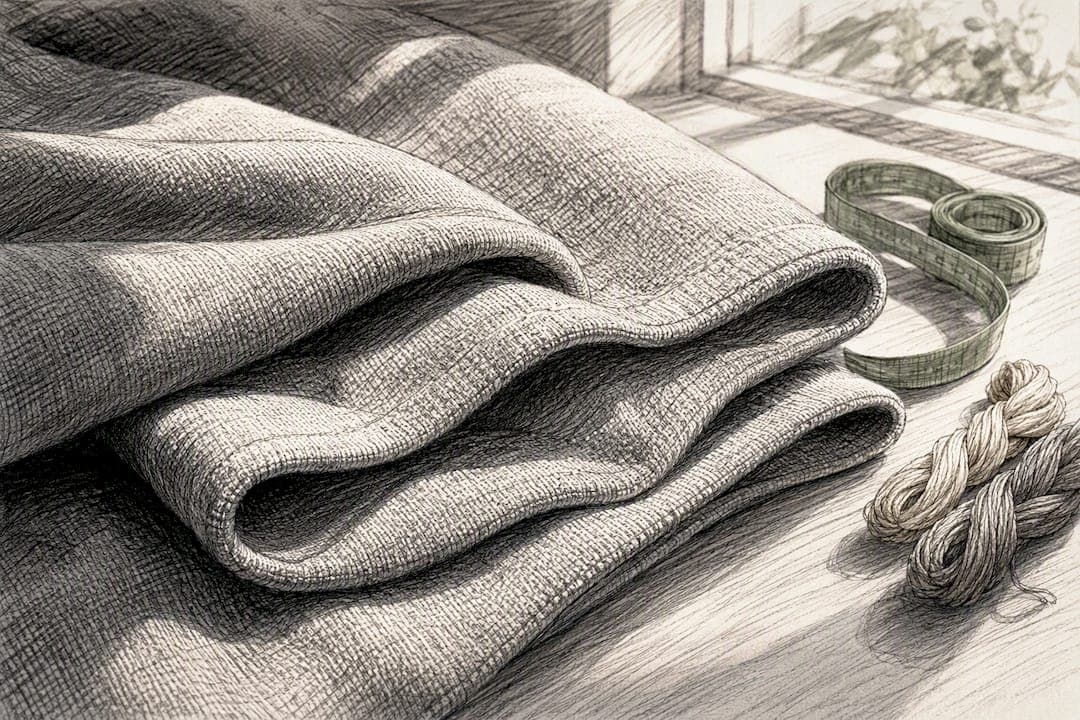
For everyday wear, aim for 280 to 350 GSM: heavy enough to hold its shape and survive winter, light enough to layer under a coat. Anything below 240 GSM feels closer to a T-shirt than a sweatshirt, and anything above 400 GSM starts acting like outerwear. Construction details like double hoods, kangaroo pockets, and heavy rib can add noticeable weight even within the same GSM band, so the number on a spec sheet is only half the story.
TL;DR:
- Fabrics in the 280 to 350 GSM range are ideal for everyday sweatshirts due to their balance of warmth, drape, and durability.
- Construction details such as double hoods and reinforced pockets can significantly increase a garment's weight beyond what GSM alone indicates.
- Finished garment weight varies with design features and is typically 0.50 to 0.75 kilograms for midweight hoodies, regardless of fabric GSM.
- GSM measurements provide raw fabric weight, but actual garment weight depends on trims, hardware, and fit, which can double or triple the base fabric weight.
- Shipping costs can be underestimated if the additional weight of packaging isn't factored in, often adding 0.1 to 0.2 pounds per garment.
Table of Contents
- What Does GSM Mean for a Sweatshirt Weight Guide?
- What Are the GSM Bands for Sweatshirts and Hoodies?
- How Does Finished Garment Weight Relate to Fabric GSM?
- How Do Fleece, French Terry, and Cotton Feel at the Same GSM?
- How Do I Choose the Right Sweatshirt Weight?
- How Does Sweatshirt Weight Affect Cost and Shipping?
- How Sincerelyskye Chooses Fabric Weight for Craft Apparel
- Why Weight Choices Matter More Than Shoppers Realize
- Find Your Weight in the Sincerelyskye Shop
- Sources
- FAQ
What Does GSM Mean for a Sweatshirt Weight Guide?
GSM stands for grams per square meter. It measures how much a single square meter of fabric weighs before it becomes a garment. That's the industry standard, and it's the number you'll see on every credible spec sheet, fabric swatch card, and supplier quote.
American shoppers often see the same measurement expressed in ounces per square yard (oz/yd²). The conversion is simple: divide GSM by 33.9 to get the oz/yd² equivalent, so a 300 GSM fabric works out to roughly 8.85 oz/yd². Group-order sellers frequently talk in oz/yd² because it maps cleanly onto popular blank sweatshirt lines that use that unit on their own tags.
Here's where GSM gets misleading: it measures fabric mass, not the finished garment. A hoodie with a double-layered hood, a kangaroo pocket, and a heavyweight zipper will weigh noticeably more than a crewneck cut from the exact same 300 GSM fleece. GSM tells you about the raw material. It doesn't tell you what happens once a pattern maker adds trim, ribbing, and hardware.
If you're comparing options or requesting samples from a manufacturer, ask for a full spec sheet rather than trusting a single number. Useful items to request include:
- GSM of the base fabric
- Knit type (fleece, French terry, jersey)
- Interior finish (brushed, loopback, or napped)
- Yarn type and cotton/poly ratio
- Finished weight by size, not just a single "average"
- Shrinkage percentage after one home wash
That last item matters more than most buyers realize. A supplier can quote a perfect GSM and still ship you a sweatshirt that shrinks two sizes after laundering.
What Are the GSM Bands for Sweatshirts and Hoodies?
Weight bands aren't universal law. Different mills, blank suppliers, and retailers draw the lines slightly differently, and treating the numbers as directional rather than absolute will save you from arguing over a 10 GSM difference that doesn't matter in practice. That said, most of the industry converges around four practical zones.
| Band | GSM range | Approx. oz/yd² | Best for |
|---|---|---|---|
| Lightweight | 240–280 GSM | 7.1–8.2 oz/yd² | Layering, warm-climate wear, spring/fall drops |
| Midweight | 280–350 GSM | 8.3–10.3 oz/yd² | Everyday hoodies, premium retail, broad sell-through |
| Heavyweight | 350–450 GSM | 10.3–13.3 oz/yd² | Oversized streetwear, winter workwear, structured fits |
| Ultra-heavy | 450+ GSM | above 13.3 oz/yd² | Cold-climate outerwear, heavyweight fleece jackets |
Lightweight fabric in the 240 to 280 GSM range moves and breathes like a heavier T-shirt. It's the right call for layering pieces, spring and fall product drops, or anyone shipping to warmer climates where a 400 GSM hoodie would just sit in a closet.
Midweight, roughly 280 to 350 GSM, is where most successful merch and retail programs live. It's heavy enough to feel substantial in hand, drapes well on a range of body types, and holds screen printing and embroidery without puckering. Private-label sellers building a crewneck line often start development around 300 to 350 GSM precisely because it balances comfort, cost, and print performance.
Heavyweight fabric, 350 to 450 GSM, is the territory of oversized streetwear drops and cold-weather workwear. It holds a boxier silhouette on its own, which is why brands chasing that dropped-shoulder look reach for it deliberately. The tradeoff is cost: heavier fabric means more yarn per garment and slower sewing time, and premium or oversized winter styles built at 380 to 450 GSM carry real development risk if you're new to sourcing.
Ultra-heavy fabric above 450 GSM crosses into fleece-jacket territory rather than traditional sweatshirt weight, and it's rarely the right call for a first product line unless the brand is explicitly positioning around cold-climate outerwear.
Quick selection rule: if you only stock one weight and want the widest possible appeal across seasons and body types, midweight wins. It's the safest single bet for broad sell-through.
How Does Finished Garment Weight Relate to Fabric GSM?
GSM tells you what the fabric weighs. Finished garment weight tells you what the customer actually holds in their hands, and the gap between the two can be significant. A men's medium hoodie built from midweight fabric commonly lands between 0.50 and 0.75 kilograms, while a true heavyweight garment in the same size often runs 0.75 to 1.10 kilograms once hood, pocket, and rib are factored in.
Pro Tip: If a supplier quotes GSM but won't confirm finished weight by size, treat that as a warning sign. Finished weight is the easiest cross-check against an inflated or rounded-up GSM claim, and any supplier confident in their fabric will hand it over without a fight.
Construction adds real, measurable weight beyond the base fabric:
- A double-layered hood can add noticeably more mass than a single-layer hood, especially with drawcords and metal grommets
- A kangaroo pocket with reinforced stitching adds fabric area you won't see on a flat swatch
- A full-length zipper and its tape add weight a pullover never carries
- Heavy ribbed cuffs and waistband, especially in a tighter rib gauge, weigh more than they look
Here's what that means for a size M cross-check: a lightweight pullover crewneck should land around 0.35 to 0.50 kilograms finished. A midweight hoodie with a standard single hood and pocket typically falls in the 0.50 to 0.75 kilogram range. A heavyweight zip-up with a lined hood can push past 1.10 kilograms even though its base fabric might carry the same GSM label as a lighter hoodie missing those features.
That's the core lesson: two garments can share an identical GSM tag and still feel completely different in your hands, purely because of what got sewn onto them.
How Do Fleece, French Terry, and Cotton Feel at the Same GSM?
GSM measures mass, not texture, and that's exactly why two fabrics at the same GSM can feel completely different once you factor in interior finish and yarn quality. Material choice changes warmth, drape, and shrinkage independently of the number on the tag.
Brushed fleece has a napped interior, meaning the loops on the inside are mechanically brushed to raise soft fibers. It traps air well, which makes it the warmest option at a given GSM, but that same brushing process can shed fibers over repeated washes and slightly shorten the fabric's life.
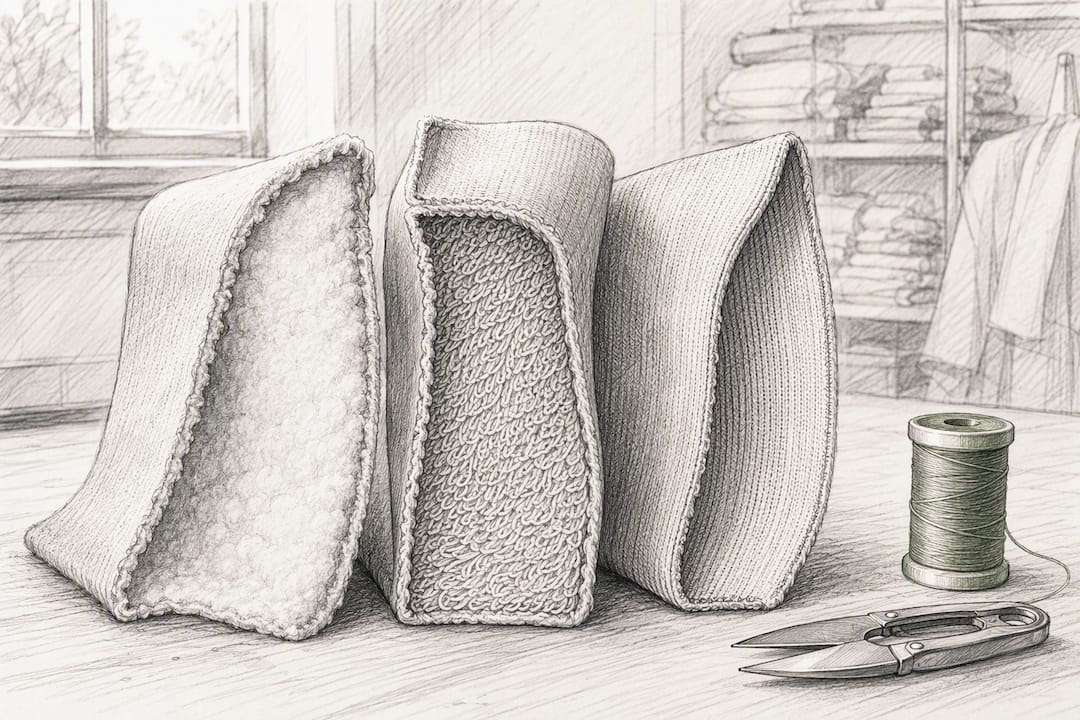
Loopback French terry keeps its interior loops intact and unbrushed. It runs cooler and drapes with a bit more structure than brushed fleece, which is why you'll see it favored for lighter hoodies meant to be worn indoors or in mild weather rather than as a cold-weather layer.
Ring-spun cotton, whether used alone or as the cotton side of a blend, produces a smoother hand feel and takes screen printing exceptionally well. It also shrinks more than synthetic-heavy blends. Shrinkage in the 3 to 7 percent range after washing is common for 100% ring-spun cotton, which is worth factoring into sizing charts before a first production run.
Cotton-poly blends split the difference: less shrinkage, faster drying, and a slightly cooler feel than all-cotton fleece at the same GSM, though usually with less of that soft, broken-in hand feel cotton loyalists want.
When you're shopping product photos rather than fabric in hand, a few cues help you guess the interior finish before you buy. A visibly fuzzy interior in a close-up photo usually signals brushed fleece. Copy that mentions "loopback" or "terry" points to French terry. And any listing that specifies "ring-spun" is flagging a softer hand feel and a higher shrinkage number than you'd get from a poly-heavy blend. For a deeper side-by-side, our fleece versus French terry breakdown walks through both in more detail.
How Do I Choose the Right Sweatshirt Weight?
Work through these steps in order, and you'll land on a GSM target that actually fits your situation instead of guessing:
- Nail down use-case and season first. Layering piece, standalone everyday hoodie, or cold-weather outer layer each point toward a different band before you even look at fabric options.
- Decide on fit. A fitted silhouette reads fine in midweight fabric; an oversized, boxy cut needs heavier fabric (350 GSM or higher) to hold its shape instead of collapsing on the body.
- Match weight to decoration method. Screen printing performs well across most weights, but dense embroidery or heavy appliqué needs sturdier fabric and better rib recovery to avoid puckering or distortion around the stitching.
- Factor in packability and price. Heavier fabric costs more per yard and takes longer to sew, which shows up directly in your landed cost and how many units fit in a shipping carton.
- Set a shrinkage tolerance before you order. Decide what percentage shrink you can accept, then hold every sample to that number rather than discovering it after a customer complains.
- Request a real sample and check finished weight by size, not just a GSM claim on a spec sheet.
When a sample's actual weight doesn't match the quoted GSM, don't assume it's a rounding error. A gap of more than roughly 5 to 8 percent between claimed and measured weight usually means either the fabric mill missed spec or the supplier is quoting an aspirational number rather than a tested one.
Before you commit to a bulk order, ask your supplier three questions directly: who measures the GSM (the mill or a third party), whether the fabric is pre-shrunk before cutting, and what the rib's recovery spec is after stretching. Vague answers to any of those three are your clearest early warning sign.
How Does Sweatshirt Weight Affect Cost and Shipping?
Fabric cost scales with GSM in a fairly predictable way: heavier fabric uses more yarn per square meter, and sewing time increases slightly because thicker material is harder to feed through a machine at speed. That incremental cost adds up fast across a production run, which is exactly why so many small brands default to midweight rather than heavyweight for a first product.
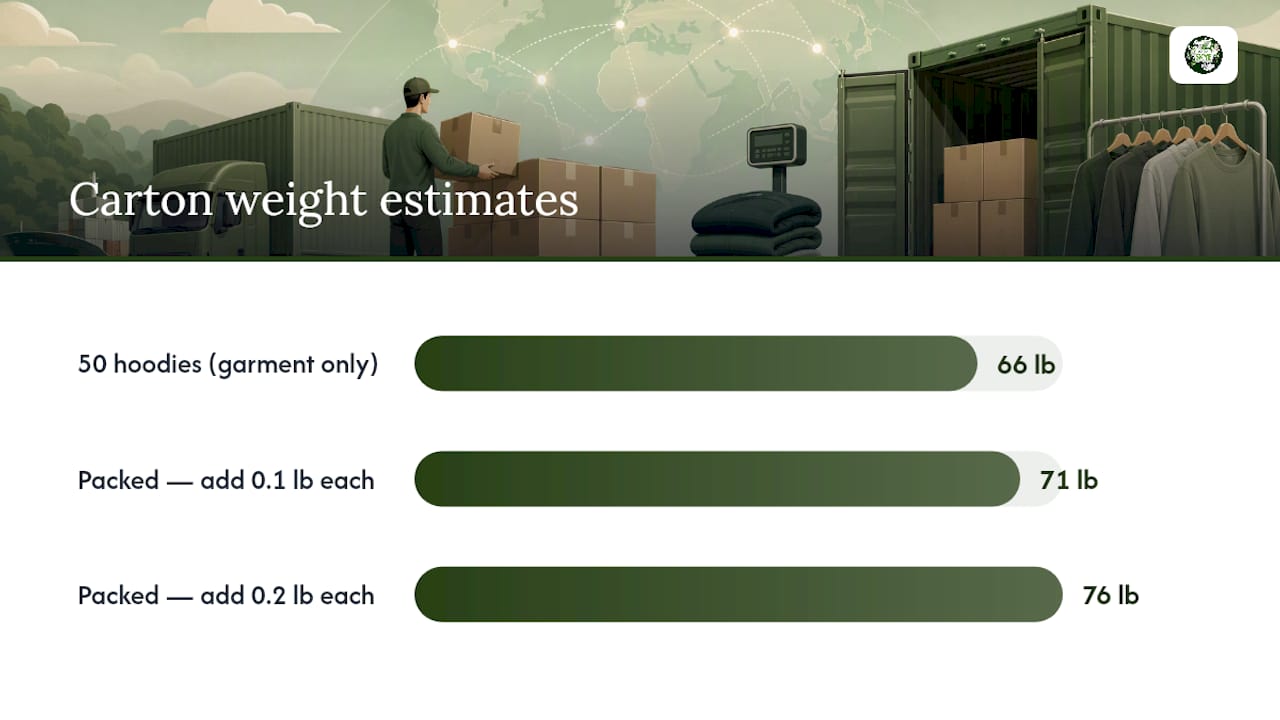
Shipping weight is where a lot of new sellers get surprised. The finished garment isn't what ships. It's the finished garment plus a polybag, a hang tag or care label, and its share of the shipping carton itself. As a rule of thumb, add roughly 0.1 to 0.2 pounds per garment on top of the bare finished weight when you're estimating shipping costs for a batch order.
That add-on sounds small per unit, but it compounds across a full carton. A case of 50 midweight hoodies at roughly 0.6 kilograms each already weighs around 66 pounds before packaging; add the per-unit shipping buffer and you're planning cartons and freight quotes against a noticeably higher number than the garment weight alone would suggest.
For landed-cost planning, a workable approach is to price your fabric target first, confirm finished weight by size on a sample, then build your shipping estimate from that real number rather than a supplier's optimistic GSM claim. Brands that skip that last step tend to underestimate freight costs on their first run, sometimes by a wide enough margin to erase the margin they built into their retail price.
How Sincerelyskye Chooses Fabric Weight for Craft Apparel
Some brands lean toward the 280 to 350 GSM range for everyday pieces because it holds up at craft fairs, on gifting tables, and through repeat washes without losing shape. Heavier weights get reserved for seasonal drops where a boxier, warmer fit fits the design.
Shrinkage testing happens before any print run gets approved, and care instructions get built around what that testing shows. Our wash guide for hoodies covers the specific steps that protect both the fabric and the print.
Why Weight Choices Matter More Than Shoppers Realize
Most people don't think about GSM until a sweatshirt disappoints them, either too thin to wear alone or too heavy to gift comfortably. Getting the weight right the first time is what makes a piece feel like it was made with care rather than mass-produced without a second thought. That's the whole point behind styling a graphic sweatshirt that people actually want to wear again, not just unwrap once.
— Skye
Find Your Weight in the Sincerelyskye Shop
Every piece in the Sincerelyskye lineup sits inside the weight bands this guide covers, chosen deliberately rather than picked off a generic catalog. Everyday pieces typically land in that dependable midweight zone, comfortable enough for extended wear and sturdy enough to survive wash after wash without losing their print.
If you want a hands-on example of what midweight construction feels like, The Sweatshirt shows the fit and fabric hand this whole guide has been describing. For anyone leaning toward heavier outerwear alongside a hoodie, Maronko Fashion's fleece jacket line is worth a look as a heavyweight comparison point. Browse the full Sincerely Skye Store to see the current lineup, or head straight to Sincerely Skye Gear if you already know you want that everyday, midweight comfort piece. Pick your size, check the fit notes on the product page, and add it to your cart.
Sources
- GSM - Wikipedia
- Hoodie Weight Guide: How GSM Impacts Shipping Costs & Garment Quality
- How to Choose the Best Custom Sweatshirts: Fabric, Style, and Design Guide - Custom Ink Blog
- Hoodie GSM Guide: 280–400 GSM Explained | Organic Blank
FAQ
What Is a Good Weight for a Sweatshirt?
For most everyday wear, 280 to 350 GSM (roughly 8.3 to 10.3 oz/yd²) offers the best balance of warmth, structure, and comfort across seasons.
Is 8.5 oz Heavy for a Sweatshirt?
No. 8.3 oz/yd² converts to roughly the midweight, everyday-wear GSM range rather than the heavyweight category.
What Is the Weight of a Standard Sweatshirt?
A standard midweight sweatshirt in a men's medium typically finishes between 0.50 and 0.75 kilograms, depending on hood, pocket, and rib construction.
Is a 12 oz Hoodie Heavy?
Yes. 12 oz/yd² converts to about 407 GSM, placing it at the upper edge of heavyweight fabric best suited to oversized fits or cold-weather wear rather than everyday layering.