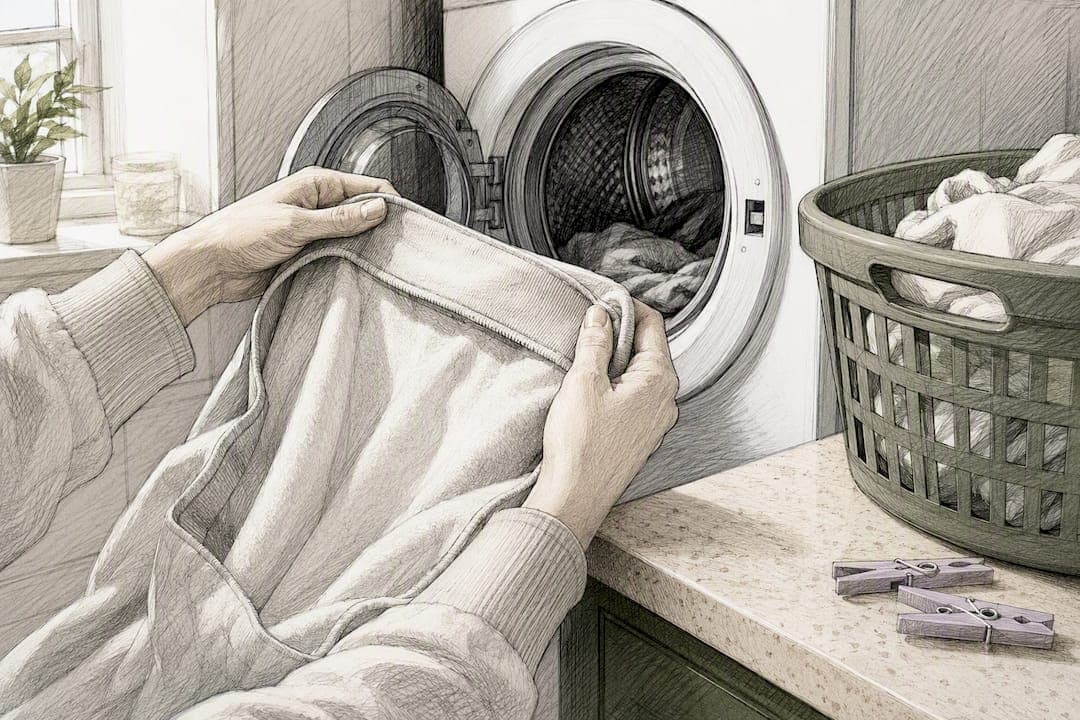
Wash most hoodies cold on a gentle or delicate cycle, inside out, zipped up, with a mild detergent and less than the bottle recommends. Skip the fabric softener. Air-dry flat when you can, or tumble on low heat and pull it out while still slightly damp. That combination protects both the fabric and the print, and it's the fastest route to a hoodie that still fits right a year from now.
TL;DR:
- Washing hoodies inside out on a gentle cycle with cold water and less detergent prevents fiber damage and preserves prints over many washes.
- Pre-treat stains with appropriate removers and avoid rubbing or scrubbing to prevent spreading or embedding stains further.
- Air-drying flat minimizes shrinkage and maintains shape, while tumble drying on low heat should be avoided on cotton-heavy hoodies.
- Protect graphics and hardware by zipping zippers, securing drawstrings, and using mesh bags, especially for delicate embellishments or prints.
- Cotton hoodies are more prone to shrinking, requiring strict cold-water and low-heat drying care, unlike synthetics, which resist shrinking but trap odors more easily.
Table of Contents
- How Do You Prepare a Hoodie Before Washing?
- What's the Best Way to Pretreat Stains on a Hoodie?
- How Do You Machine Wash a Hoodie the Right Way?
- When Should You Hand Wash a Hoodie Instead?
- How Do You Dry a Hoodie Without Shrinking It?
- How Often Should You Wash a Hoodie?
- How Do You Protect Prints, Zippers, and Drawstrings When Washing?
- Sincerely Skye Hoodies: What to Know Before You Wash
- Cotton vs. Synthetic Hoodies: Different Fabrics, Different Rules
- The Washing Mistakes That Wreck Hoodies Fastest
- A Note From Skye on Caring for What You Make and Wear
- Find Hoodies Built to Handle the Wash Right
- Sources
How Do You Prepare a Hoodie Before Washing?
Most hoodie damage doesn't happen in the wash. It happens in the thirty seconds before you press start, when a zipper snags a hood string or a wadded-up hoodie gets tossed in with a load of bath towels.
Start with the care label. It's a small tag, easy to ignore, but it's the manufacturer telling you exactly what the fabric can handle. If it says "dry clean only," that's not a suggestion. Fleece-lined and heavily embellished hoodies sometimes carry that instruction because water can warp the backing or loosen adhesive-backed appliqués.
Once you've checked the label, run through this short list:
- Empty every pocket. Coins, tissues, and gum wrappers turn into a mess mid-cycle.
- Zip all zippers and tuck or knot drawstrings so they don't snag on other fabric.
- Turn the hoodie inside out to shield prints and reduce pilling on the outer surface.
- Sort by color and fabric weight. A dark hoodie bleeding onto a light one is a bad Tuesday.
- Keep hoodies away from towels, bras, or anything with hooks or zippers that can snag threads or pull fibers.
None of this takes more than a minute, and it's the difference between a hoodie that looks the same after twenty washes and one that looks tired after five.
Pro Tip: Keep a small mesh laundry bag in your hamper specifically for graphic hoodies and printed sweatshirts. Toss them in as they get worn, and washing day requires zero sorting.
What's the Best Way to Pretreat Stains on a Hoodie?
Grease stains, sweat rings, and the occasional coffee drip all respond better to pretreatment than to hoping the wash cycle handles it. Blot liquid spills with a clean cloth right away; rubbing just spreads the stain into more fibers. Scrape off anything solid, like dried food, before it gets anywhere near water.
Different stains call for different fixes:
- Grease or oil: a dab of dish soap worked gently into the fabric, left for a few minutes before washing.
- General stains: an oxygen-based stain remover applied directly, which lifts residue without bleaching color.
- Sweat yellowing around the collar or underarms: a vinegar-based pretreatment loosens the buildup that plain detergent misses.
Test any treatment on a hidden seam or inside hem first. Some dyes react to vinegar or oxygen cleaners in ways you don't want discovering on the front of your favorite hoodie. Rinse the treated spot before it goes into the wash, so the cleaner doesn't sit and dry into the fibers during the cycle.
How Do You Machine Wash a Hoodie the Right Way?
This is the routine that matters most, since it's how the vast majority of hoodies get cleaned week after week. Get the settings right and you can wash hoodies dozens of times without the fabric losing its shape or the print starting to crack.
- Set the water to cold, roughly 30°C, on a gentle or delicate cycle with a short spin. Cold water protects fiber structure and cuts down on shrinkage and fading, while warmer water accelerates both.
- Measure the detergent carefully. Use a mild, color-preserving formula and less than the bottle suggests. Overdoing it leaves residue that stiffens fabric and speeds up pilling over time.
- Skip the fabric softener entirely. Softener coats fibers with a film that reduces absorbency and can dull printed graphics after repeated washes.
- Turn the hoodie inside out before it goes in, and drop anything with a screen print, embroidery, or patch into a mesh laundry bag for extra protection against friction.
- Wash with like fabrics in a load that isn't packed tight. Hoodies need room to move so water and detergent actually reach the fibers instead of just sitting on the surface.
That's the whole routine, and it takes no longer than a normal wash cycle you're already running.
Pro Tip: If your hoodie has a large front graphic, wash it with the print facing another dark, inside-out fabric rather than against the machine drum. Less direct friction means the design lasts longer.
When Should You Hand Wash a Hoodie Instead?
Some hoodies aren't built for a washing machine at all, no matter how gentle the cycle. Delicate knits, hand-embroidered details, and anything with beading or sequins do better with hand washing, and it's a lot less complicated than people expect.
- Fill a basin or clean sink with cold water and a small amount of mild detergent, just enough to create a light suds.
- Submerge the hoodie and gently agitate it with your hands, working the water through the fabric instead of scrubbing at it.
- For light soil, let it soak 10 to 20 minutes. Heavier stains might need a second round of gentle agitation.
- Drain the basin and rinse with fresh cold water, squeezing (never wringing) until no soap remains in the fabric.
- Roll the hoodie in a clean towel to press out excess water before laying it flat to dry.
Wringing is the one move to avoid completely. Twisting a wet hoodie distorts the collar, cuffs, and shoulder seams, and once those stretch out of shape, they rarely bounce back.
How Do You Dry a Hoodie Without Shrinking It?
Drying does more damage to hoodies than washing ever will. Tumble drying on high heat is the single most common cause of shrinkage, and once a cotton-heavy hoodie shrinks, there's no reliable way to stretch it back to its original size.
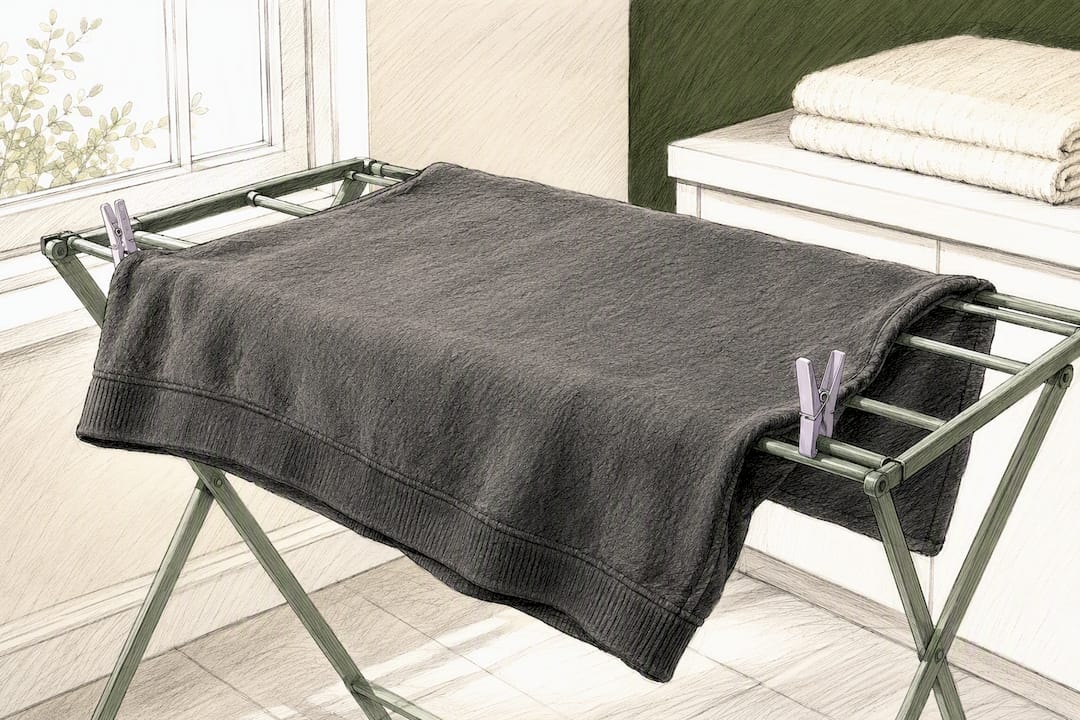
Air-drying flat on a rack or a clean towel is the safest option every time. Lay the hoodie out and reshape it while it's still damp, pulling the cuffs, hem, and hood back into their natural lines. Keep it out of direct sunlight, since UV exposure fades colors and prints faster than most people realize.
If you need to use a dryer:
- Choose the lowest heat setting available, ideally an "air fluff" or delicate option.
- Run shorter cycles and check the hoodie every 10 to 15 minutes rather than letting it run to completion.
- Pull it out while it's still slightly damp and finish the drying process flat. That last bit of moisture is where most over-drying and shrinkage happens.
- Never hang a heavy hoodie to dry. The wet fabric's own weight stretches the shoulders and collar out of shape over time.
Pro Tip: Before drying, roll the hoodie in a dry towel and press down firmly to squeeze out water. It cuts drying time significantly and means less exposure to heat overall.
How Often Should You Wash a Hoodie?
Hoodies function as outerwear more often than not, which means they don't need the same wash frequency as a t-shirt worn against bare skin. Most hoodies can handle two to six wears before they genuinely need a wash, depending on how much you sweat in them and what you're doing while wearing them.
Between washes:
- Air the hoodie out overnight on a hanger or hook rather than tossing it straight into a hamper.
- Spot-clean small marks or use a garment steamer to freshen the fabric without a full wash cycle.
- Store heavy hoodies folded rather than hung. A hanger, especially a thin one, will leave shoulder bumps that are hard to press out.
- If you do hang a hoodie, use a wide-shouldered hanger to distribute the weight evenly.
Washing less often isn't just about convenience. Every cycle, even a gentle one, puts mechanical stress on the fibers, so cutting unnecessary washes adds real years to a hoodie's life.
How Do You Protect Prints, Zippers, and Drawstrings When Washing?
Graphics, hardware, and drawstrings are usually the first parts of a hoodie to fail, and almost all of that damage is preventable. Washing inside out with a mesh bag for fragile decorations cuts down on the friction that cracks screen prints and loosens embroidery threads over repeated washes.
Before the hoodie goes anywhere near water:
- Zip every zipper closed and snap or button any other hardware so it can't catch on the fabric itself.
- Tuck drawstrings back into their channel, or tie a loose knot at each end so they don't pull all the way out.
- Keep the heat low during both washing and drying. High heat softens adhesive backing on prints and warps plastic zipper teeth.
- For hoodies with dense embroidery, sequins, or multiple embellishments, a professional cleaner is often the safer bet than a home wash.
A little bit of prep here saves you from ever discovering a missing drawstring on laundry day.
Sincerely Skye Hoodies: What to Know Before You Wash
Sincerely Skye hoodies are built around craft-inspired designs, which usually means a printed or embroidered graphic sits front and center. That's exactly the kind of detail these washing steps are meant to protect. Cold water, inside-out washing, and skipping the dryer's high heat setting will keep the artwork sharp for years, not just a few washes.
Every hoodie's exact fabric blend and care instructions live on its own product page, so check the label before your first wash. If you're shopping for a new piece, styles like the Ribbon Hoarders Hoodie in red zip-up or the purple chapter zip hoodie come with care guidance built right into the listing. Treat the print the way you'd treat a hand-stitched patch, and it'll outlast the trend it was designed around.
Cotton vs. Synthetic Hoodies: Different Fabrics, Different Rules
Not every hoodie behaves the same way in the wash, and fabric content is the reason. Cotton and cotton-blend hoodies are prone to shrinking because the fibers contract when exposed to heat and moisture together. That's why cold water and low-heat drying matter so much more for a heavyweight cotton fleece hoodie than for other materials.
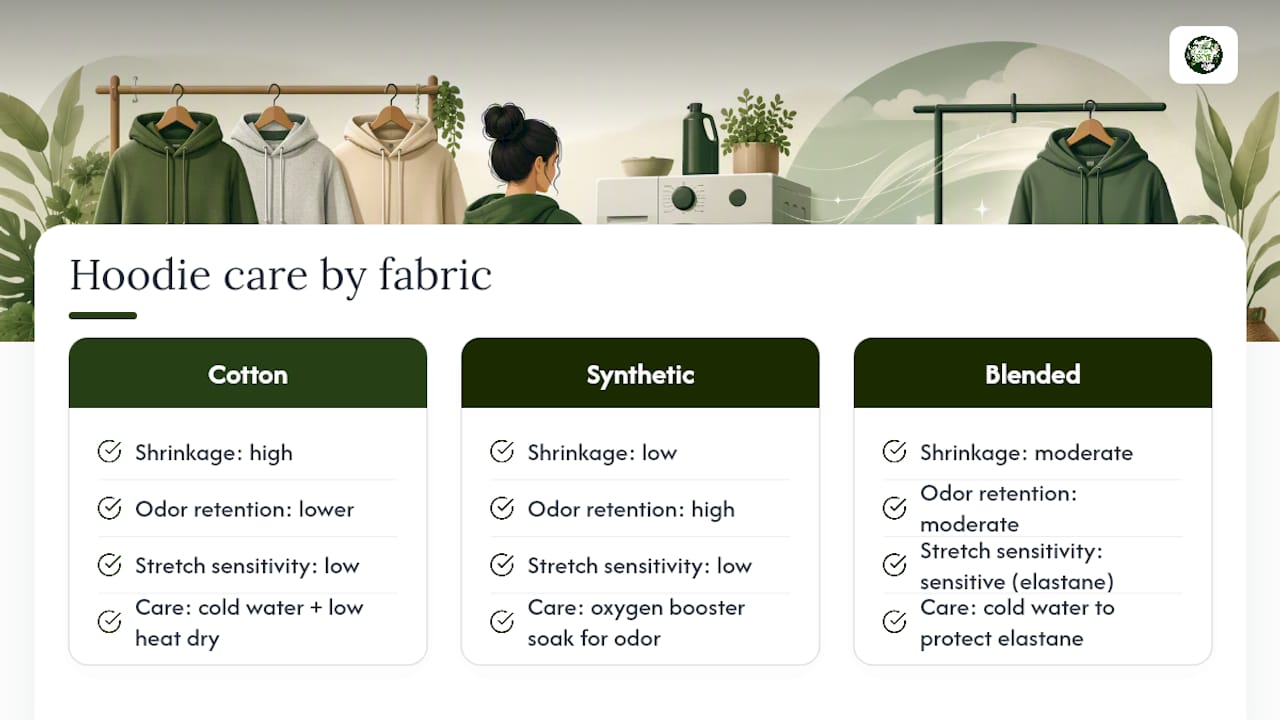
Synthetic hoodies, made from polyester or a poly-cotton blend, hold their shape better and resist shrinking, but they come with their own weakness: they trap odor. Synthetic fibers don't absorb moisture the way cotton does, so sweat and bacteria tend to sit on the surface longer, which is part of why activewear hoodies can smell stronger even after a wash. A short soak in an oxygen-based detergent booster helps break down that odor buildup better than detergent alone.
Blended hoodies, cotton mixed with polyester or spandex, generally split the difference. They shrink less than pure cotton but still need cold water to protect any elastane content, since heat breaks down stretch fibers over time and leaves cuffs and waistbands looser than they started.
The Washing Mistakes That Wreck Hoodies Fastest
A handful of habits account for most of the ruined hoodies people write off too soon. Hot water is the biggest one. It's the single fastest route to shrinkage, and once cotton fibers contract, they don't loosen back up in a later wash.
Overloading the washer is a close second. Cramming too many clothes into one cycle means detergent can't rinse out fully, and the friction between overpacked garments accelerates pilling and fading, especially on printed designs.
Skipping the "inside out" step seems minor, but it's the difference between a print that lasts for years and one that starts cracking after a dozen washes. Fabric softener causes quieter damage. It builds up in the fibers over time, leaving hoodies less absorbent and duller looking, even though the bottle promises softness.
And high-heat drying rounds out the list. It's the fastest way to undo every careful step taken during the wash itself, shrinking the body, warping the ribbing at the cuffs and hem, and baking in wrinkles that no amount of ironing fully removes.
A Note From Skye on Caring for What You Make and Wear
Small habits protect the things people actually keep. A hoodie that survives cold washes and flat drying for years becomes the one someone reaches for on a rough day, not the one shoved to the back of a drawer after the print cracked.
That's the whole reason care instructions matter to us at Sincerelyskye. These designs aren't printed to be disposable. They're made for people who treat a hoodie like a keepsake, whether it was a gift, a treat-yourself purchase, or something picked out for a craft fair booth. A few extra minutes of care up front is a small price for a piece that still looks right a few years down the road.
— Skye
Find Hoodies Built to Handle the Wash Right
Sincerelyskye designs hoodies with craft-inspired prints meant to hold up under real, repeated wear, not just look good in one photo. Every graphic is applied with washing in mind, so following the cold-water, inside-out routine above keeps the artwork crisp for years instead of fading after a season.

Browse the Ribbon Hoarders Hoodie in red or explore the full Sincerely Skye Gear collection for craft-themed styles built around the same print-protective materials. Whatever hoodie you pick, check its specific care label first. Then head to the Sincerely Skye shop and find the design that's going to earn a permanent spot in your closet.
Sources
A few outside guides go deeper on specific parts of this process if you want more detail on any single step:
- Nike
- How to Wash a Hoodie Without Ruining It — The Complete Care Guide
- How to Dry Hoodies Without Damage (No Shrinking or Fading) – SYN3R
- How to Wash Sweatshirts & Hoodies - Care Guide
- How to Wash a Hoodie — wikiHow
None of these replace the care label sewn into your own hoodie. Treat them as background reading, not a substitute for checking the tag first.