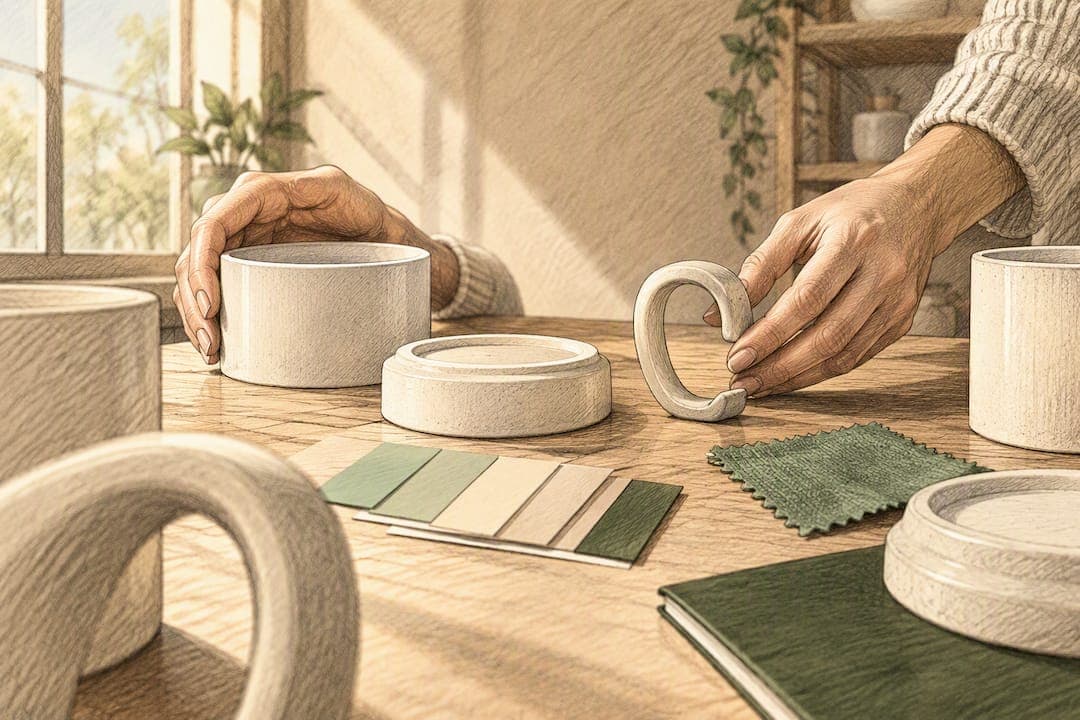
The mug ideas with the best return for small businesses right now are personalized gift mugs, logo-forward branded merch, and niche gift sets built around a single illustration. Stick to 11 oz and 15 oz ceramic as your workhorse sizes, test through print-on-demand before committing to bulk, and bundle mugs with a sticker or tote to push average order value past what a $15 mug alone can earn.
TL;DR:
- Personalized mugs with names or initials generate the highest margins and appeal to buyers seeking customized products.
- Designing one strong "hero" illustration per season and applying it across multiple SKUs boosts efficiency and creates a cohesive product line.
- Using print-on-demand first allows testing new designs risk-free before switching to small bulk runs for proven sellers to lower costs.
- Packaging must include multiple layers of protection, especially for handles, to minimize breakage and protect margins during transit.
- Seasonal and limited editions should be planned six to eight weeks in advance to meet holiday demand and maximize sales periods.
Table of Contents
- Small Business Mug Ideas Organized by Buyer Type
- Mug Template Sizes, Bleed, and Print-Ready Artwork Rules
- Turning a Mug Design Into a Sellable Product
- Are Mugs Still Worth Selling in 2026?
- How Sincerely Skye Turns One Design Into a Full Mug Lineup
- A Fast Pre-Launch Checklist for New Mug Designs
- Packaging and Shipping Mugs Without Losing Money to Breakage
- Copyright and Licensing Rules Every Mug Seller Should Know
- Marketing Mugs Without a Big Ad Budget
- Using Customer Feedback to Improve Your Mug Line
- Sustainable and Eco-Friendly Mug Options
- Why Mugs Still Earn Their Shelf Space for Craft Brands
- Let Sincerely Skye Help You Design and Produce Your Next Mug
- Sources
- FAQ
Small Business Mug Ideas Organized by Buyer Type
Random design ideas rarely turn into sales. What works is matching a design category to a specific buyer, because a mug bought as a gift behaves nothing like a mug bought as company swag. Here's how to think through each category so you're not guessing what to design next.
Branded mugs exist to keep your logo in front of a customer every morning, which is why VistaPrint positions custom mugs as one of the more affordable, long-lasting branding tools available to a small business. The trick is restraint. A logo centered on the front, paired with a single accent color on the interior or handle, reads as premium. A logo stretched into a full wrap print usually reads as cluttered, especially once the design wraps around the handle seam where alignment tends to shift during production. Decide upfront whether you're doing front-only placement or a full wrap. Front-only is safer for text-heavy logos; wraps work better for patterns and illustrations that don't depend on perfect symmetry.
Personalized mugs are the single strongest margin lever in this category, and it isn't close. Buyers pay a premium for something made just for them, which is why Printful's analysis of mug design categories treats personalization as a core driver of gift and ecommerce sales rather than a niche add-on. Names, initials, monograms, coordinates for a meaningful location, or profession-specific text ("Nurse on Duty," "Third Grade Teacher Fuel") all outperform generic sayings because the buyer is purchasing identity, not just ceramic. If you sell through Etsy or a similar personalization-friendly platform, build your listing so the customer can type in a name or date without needing a back-and-forth message.
Niche gift sets stretch one piece of art across multiple products instead of designing from scratch for every SKU. A single illustration becomes a mug, a sticker, and a tote bag, which cuts your creative workload dramatically while giving the customer a reason to buy more than one item. Reusing artwork across low-cost add-ons like stickers also increases how easily your product gets discovered in a crowded shop, since gift-focused retailers note that pairing a mug with a smaller companion item raises perceived gift value without much added production cost. Pair a $16 mug with a $4 sticker and a $6 candle, and suddenly you're selling a $26 bundle instead of a $16 mug.
Funny and motivational mugs only work when the humor is specific. "But First, Coffee" has been printed a million times and buyers know it. A joke that only a fellow crafter, dog groomer, or accountant would fully get performs better because it signals belonging to a group, not just a mood. If you're stuck for copy, a running list of niche-specific craft-focused mug sayings is a faster starting point than staring at a blank page hoping for a punchline.
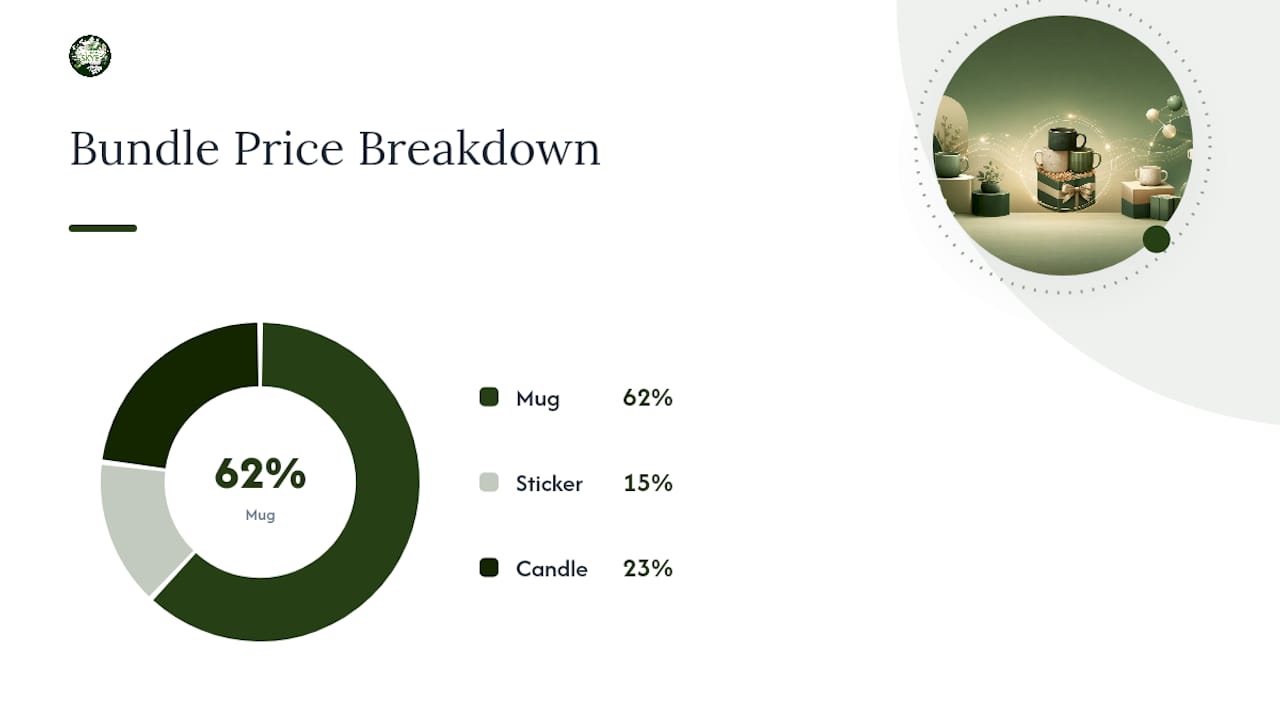
Photo and illustrated mugs cover pet portraits, custom line-art icons, and repeat patterns designed specifically for wrap printing. Pet portraits deserve their own mention because they've become one of the most requested personalization categories on marketplaces, according to a review of Etsy's 2026 personalization trends for custom mugs. A simplified, high-contrast illustration of a customer's dog or cat converts better than a photorealistic print, mostly because ceramic printing doesn't hold fine photographic detail the way paper does.
Seasonal and limited editions need lead time built in, not tacked on. Holiday mugs sell in a tight window, so a design finished in November for a December launch is already late if you're using anything beyond instant POD. Treat limited runs as a merchandising tool, too. A mug labeled "Fall 2026 Collection, Limited Run" creates urgency that a permanently available mug never will.
- Branded: logo-forward, single accent color, front-only for text-heavy marks
- Personalized: names, initials, coordinates, profession-specific phrasing
- Niche gift sets: one illustration reused across mug, sticker, and tote
- Funny/motivational: niche-specific humor, not generic coffee clichés
- Photo/illustrated: simplified pet portraits and repeat wrap patterns
- Seasonal/limited: plan artwork 6 to 8 weeks ahead of the holiday window
Pro Tip: Design one "hero" illustration per season and build every SKU (mug, sticker, tote) from that single piece of art instead of creating five unrelated designs. You'll finish faster and your shop will look like a cohesive collection instead of a grab bag.
Mug Template Sizes, Bleed, and Print-Ready Artwork Rules
Get the template dimensions wrong and your logo prints half an inch off center, or worse, splits awkwardly across the handle seam. Adobe Express's mug design templates list standard printable dimensions of roughly 8.5 inches wide by 3.6 inches high for an 11 oz mug, and about 8.5 inches wide by 4.1 inches high for a 15 oz mug. Confirm these against your actual printer's spec sheet before finalizing artwork, since bleed and safe-area margins vary slightly between vendors.
By the numbers: An 11 oz mug prints at approximately 8.5 x 3.6 inches, while a 15 oz mug prints at approximately 8.5 x 4.1 inches, per Adobe Express. That extra half inch of height on the 15 oz size gives you real room for a tagline or secondary graphic that would feel cramped on the smaller mug.
A few production rules can help save you from reprint costs down the line, including working at high resolution for raster artwork and using vector files for clean scaling without pixelation.
- Keep thin strokes above roughly 1.5 points at final print size. Anything thinner tends to disappear or look broken once it's fired onto ceramic.
- Never place small text within about half an inch of the handle. That's where wrap seams and grip distortion cause legibility problems.
- Always proof at actual-size mockups before approving a run, checking specifically for seam artifacts where a wrap design meets itself.
- Choose front-only placement for logos and text-heavy designs; save full wraps for patterns, illustrations, and photo mugs.
Material choice changes your printing constraints as much as your price point. Standard ceramic is the default for full-color sublimation and handles both front-only and wrap prints well. Enamel and camp-style mugs print in fewer colors, often just one or two, but they photograph beautifully for outdoor and rustic branding. Color-changing mugs need designs built specifically for the reveal effect, which limits your artwork choices to what shows up clearly against the heat-reactive coating. Insulated travel tumblers usually cost more to produce and print, but they command a higher retail price and appeal to a different buyer than a $16 ceramic mug does.
Turning a Mug Design Into a Sellable Product
Print-on-demand and bulk ordering solve different problems, and picking the wrong one for your stage of business either wastes cash or wastes time. POD carries no inventory risk and lets you test five designs in a week without spending a dollar upfront beyond your design time. Bulk ordering drops your per-unit cost meaningfully once you know a design sells, but it locks up cash in inventory and forces you to guess at demand ahead of time.
- Start with POD for every new design. Launch it, run it for two to four weeks, and let actual sales tell you whether it's worth scaling.
- Move proven sellers to small local runs. Once a design has real order history, a local batch order lowers your per-unit cost and often unlocks premium finishes like matte coatings that POD vendors don't always offer.
- Bundle before you discount. A mug, sticker, and tote sharing one illustration raises your average order value far more reliably than a percentage-off sale.
- Match the channel to the product. Etsy still performs best for personalized and gift-driven mugs because buyers there are already searching with intent to personalize. Shopify gives you full brand control and better margins over time, but only once you're driving your own traffic. Local craft fairs and markets work well for branded promotional runs where bulk pricing matters more than one-off customization.
- Vet your vendor before committing. Request a physical proof sample, confirm minimum order quantities, ask about lead time during peak season, and read the return policy for damaged-in-transit claims before you place a real order.
Retail pricing for a standard 11 oz custom mug typically lands between $12 and $20, and margin at that price point depends almost entirely on personalization, bundling, or volume, according to a print-on-demand seller guide. A 15 oz mug or an insulated tumbler can command a noticeably higher price simply because it feels like more product for the money.
Pro Tip: Don't price your mug in isolation. Price the bundle first, then work backward to what the standalone mug needs to cost. Buyers judge a $26 bundle very differently than they judge a $16 mug sitting next to a $10 add-on.
Are Mugs Still Worth Selling in 2026?
Minimalist typography, pet portraits, personalized text, and vintage or craft-inspired aesthetics are the design directions gaining the most traction this year, and craft-oriented brands are naturally positioned to lean into that last category. The drinkware category overall keeps showing steady demand, with market analysis from Fortune Business Insights pointing to ongoing growth in the space rather than a category that's peaked.
That said, mugs are a low-ticket item by nature, and a $16 mug sold one at a time will never build a business on its own. Profitability comes from stacking levers: personalization premiums, bundles that raise order value, and seasonal planning that lets you catch holiday demand instead of scrambling to meet it. Plan seasonal artwork at least six to eight weeks before the relevant holiday window, since shipping and production slow down right when demand peaks. A mug is a reliable product, not a shortcut. Treat it as one piece of a broader merch strategy and it earns its shelf space.
How Sincerely Skye Turns One Design Into a Full Mug Lineup
We build most of our mug lineup around three repeatable workflows instead of designing every SKU from scratch. First, a fast POD test: one illustration, one mug SKU, launched to see if it resonates before any real investment goes in. Second, a small-batch local run once a design proves itself, which lowers cost per unit and opens up better finishes. Third, a bundle-first approach where the same core illustration becomes a mug, a sticker, and a tee, so the creative work happens once and gets sold three ways.
Our Custom Mug product line shows this in practice: a single hand-drawn design line that customers can personalize, paired with matching stickers and apparel built from the same artwork. The Red Checkered Heart Mug started as a seasonal test piece and became a repeat bundle item once it proved out.
- Fast POD test: one illustration, one SKU, low commitment
- Small-batch local run: reserved for designs with proven demand
- Bundle-first: mug, sticker, and tee from a single illustration
A Fast Pre-Launch Checklist for New Mug Designs
Before you approve a proof or publish a new listing, run through this quickly:
- Confirm DPI (300 minimum), color mode (CMYK for most print vendors), and bleed match your printer's exact spec sheet.
- Check font size and contrast, especially near the handle, and clear any trademark or copyright concerns on fonts, characters, or phrases.
- Set up SKU naming with size variants and price tiers clearly separated, and use real mockup photos rather than generic stock templates.
Pro Tip: Save your approved proof file as a reusable template. The next design in the same product line will take a fraction of the setup time. Keep every line of text large enough to read at arm's length. If you can't read your own mockup from three feet away, neither can your customer's browsing thumb on a phone screen.
Packaging and Shipping Mugs Without Losing Money to Breakage
Ceramic breaking in transit is one of the fastest ways to eat your margin on a product that already runs thin. Wrap each mug individually in at least two layers of protection, ideally bubble wrap plus a corrugated mug sleeve or divider box designed specifically for drinkware. Never let ceramic touch ceramic or ceramic touch the outer box wall directly.
Fill every empty gap in the shipping box. Movement during transit, not the initial drop, causes most breakage, since a mug that can shift an inch inside a loosely packed box will find every corner on the way to your customer. Kraft paper, air pillows, or crumpled packing paper all work, but pack the box until you can shake it and hear nothing move.
If you're shipping mugs with handles, orient them so the handle isn't pressed against a box wall or another item. Handles are the weakest structural point on a ceramic mug and tend to chip or snap first. For higher-volume sellers, a double-box method, packing the wrapped mug into a snug inner box, then placing that inner box into a larger outer box with cushioning on all sides, meaningfully cuts damage claims for a small added cost per shipment.
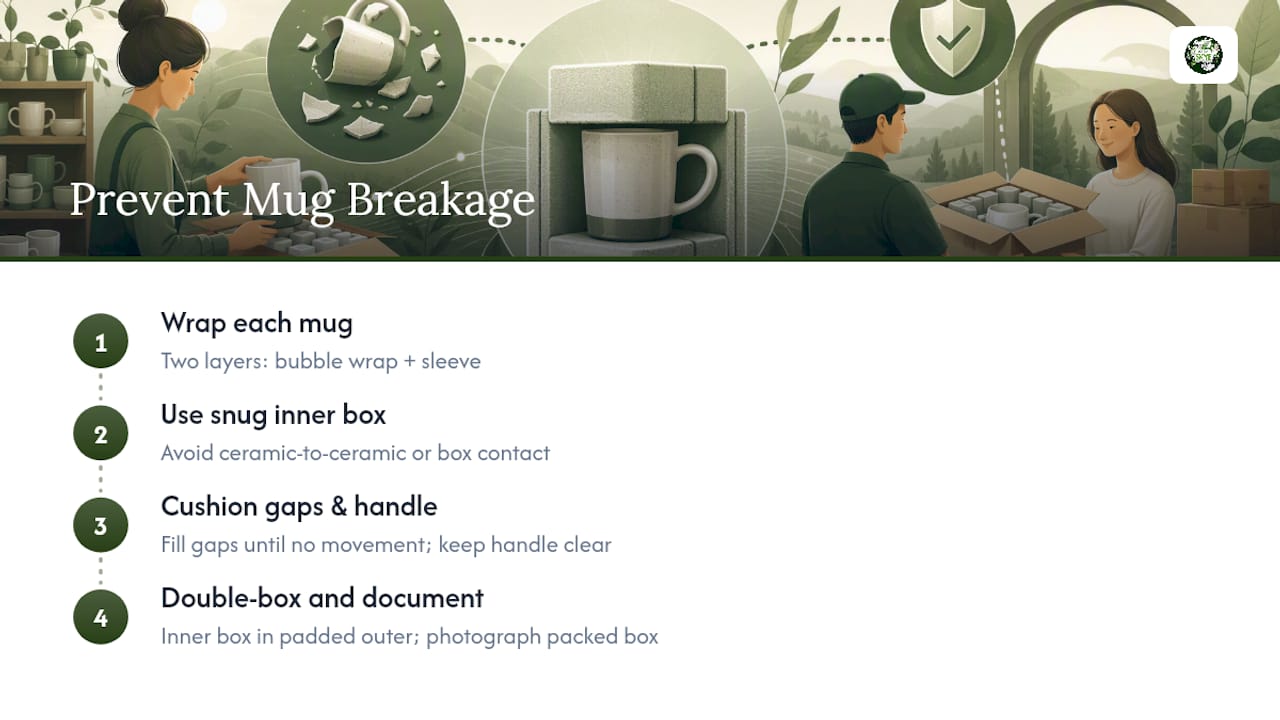
Always photograph the packed box before sealing it, and keep a simple care insert in every shipment reminding customers the mug is dishwasher-safe or hand-wash-only, whichever applies. A step-by-step mug care guide makes a good insert or follow-up email, since it reduces damage complaints tied to improper washing rather than shipping.
Copyright and Licensing Rules Every Mug Seller Should Know
Original artwork you draw or design yourself is automatically protected once created, but that protection only goes one direction. It stops you from being copied. It doesn't give you permission to use someone else's copyrighted character, brand logo, or licensed quote just because you found it on a free stock site or a group text.
Fonts deserve specific attention here. Many popular script and display fonts are licensed for personal use only, and using them on a product you sell commercially without a commercial license is a real legal exposure, not a technicality. Check the font's license terms before building it into a design you plan to sell repeatedly.
Quotes and song lyrics are trickier than most sellers assume. A quote from a movie, book, or song is frequently still under copyright even if it's short and widely shared online. Public domain material (generally work old enough that copyright has expired) is safe to use, but "I saw it on Pinterest" is not the same as "this is legally clear to sell." If you're building a mug around a phrase you didn't originate, do a quick trademark search and lean toward paraphrasing or writing an original variation instead.
Personalized mugs carry their own consideration: if a customer submits a name, photo, or design element for you to print, you're producing on their request, but you should still have clear terms stating you're not liable for content they submit that infringes on someone else's rights, including using another person's likeness without permission.
Marketing Mugs Without a Big Ad Budget
Mugs photograph well, which makes them one of the easier products to market organically before you spend a cent on ads. A styled flat-lay with coffee, a cozy blanket, and good morning light will outperform a plain white-background product shot every time on social platforms built around lifestyle imagery.
Short-form video works especially well for mugs because the reveal moment, unboxing a personalized name or watching a color-changing mug transform, is inherently watchable. A 15-second video showing a customer's custom order arriving and being unwrapped tends to get shared more than a static product post, since it doubles as social proof.
Influencer collaborations don't require a big budget to work. Micro-influencers in the crafting, coffee, or home-decor niches with a smaller but genuinely engaged audience often convert better for a low-ticket item like a mug than a large general-audience account does. Send a free mug in exchange for an honest post rather than a scripted ad, and prioritize creators whose actual audience overlaps with your buyer, not just follower count.
Seasonal timing matters more for mugs than almost any other product category. Run holiday and gift-focused ads starting six weeks out, since mug buyers are often shopping for someone else and shipping time factors directly into their purchase decision. Pair every paid push with a bundle offer rather than a single-item discount. It protects your margin while still giving the buyer a reason to act.
Using Customer Feedback to Improve Your Mug Line
The mugs that sell best six months into a shop rarely look identical to the first version you launched. Customer feedback, reviews, direct messages, and return reasons, is the fastest way to find out what's actually wrong with a design before it quietly tanks your conversion rate.
Pay close attention to specific complaint patterns rather than one-off comments. If three different customers mention text being hard to read, that's a contrast or font-size problem worth fixing immediately, not a coincidence. If personalization requests keep asking for an option you don't currently offer, like a second line of text or a different font choice, that's a signal to expand the listing rather than ignore the request.
Star ratings tell you less than the written comments attached to them. A four-star review that says "loved it, wish the mug was a bit bigger" is more actionable than five generic five-star reviews with no detail. Read every review for specific, fixable feedback, not just sentiment.
Treat your best-selling design as a living product, not a finished one. Small iterations, adjusting a color that photographs poorly, tightening a font that reads cramped at actual size, or adding a second size option, keep a proven seller performing instead of slowly declining as customer expectations shift. Revisit your top three SKUs every quarter and ask honestly whether feedback since the last update points to a change worth making.
Sustainable and Eco-Friendly Mug Options
Ceramic mugs are inherently more sustainable than disposable drinkware simply because they're built for years of reuse, but material and finish choices within ceramic still matter to environmentally conscious buyers. Lead-free glazes and food-safe certifications are worth confirming with your vendor and stating clearly in your product description, since buyers increasingly ask before they purchase, not after.
Bamboo-lidded mugs and recycled-content ceramic are both gaining traction as alternatives to standard glazed ceramic, offering a visibly different material story that appeals to buyers actively shopping for lower-impact products. Recycled glass mugs are another growing option, particularly for cold-drink or hybrid product lines.
Packaging is where sustainability claims are easiest to back up honestly. Swapping plastic bubble wrap for molded pulp inserts or recycled kraft paper cushioning protects the mug just as well while giving you a genuine, checkable sustainability claim rather than a vague one. If you're marketing a product as eco-friendly, make sure the claim is specific, "packaged in recycled materials," "lead-free glaze," "made from recycled glass," rather than a general label that doesn't hold up to a customer's follow-up question.
Don't overstate this. A single ceramic mug isn't a major environmental purchase either way, and small business owners rarely need to lean hard into sustainability messaging unless it's genuinely central to their brand. State what's true, keep it specific, and let it be one selling point among several rather than the whole pitch.
Why Mugs Still Earn Their Shelf Space for Craft Brands
A mug gets used every single morning, which gives it more daily visibility than almost anything else you could put a design on. That's the real case for keeping mugs in a craft-focused product lineup: repeated, quiet contact with a customer's routine, long after the purchase moment has passed.
The tension every small maker eventually runs into is authenticity versus scale. You can hand-illustrate every single design, but that doesn't survive twenty SKUs. The better approach is reusing your strongest artwork across a mug, a sticker, and a tote, which keeps the creative voice consistent instead of diluted across too many unrelated ideas.
If you're just starting, run one design through a quick POD test before you commit to anything bigger. Once it proves itself, scale it into a bundle. That sequence protects both your budget and your creative energy.
— Skye
Let Sincerely Skye Help You Design and Produce Your Next Mug
If designing print-ready artwork or figuring out mockups feels like the part of this that keeps stalling your launch, that's exactly where Sincerely Skye can pick up the slack. Rather than teaching yourself vector software from scratch or guessing at bleed specs, Sincerely Skye Logo Creation turns your idea into finished, print-ready artwork built by someone who designs for makers and small crafting businesses every day.
We handle the design and mockup work so you can focus on what actually sells. Whether you're finishing your first personalized mug or building out a full seasonal bundle, our team creates handmade-inspired artwork sized correctly for standard 11 oz and 15 oz templates, ready for whichever print vendor you use. Browse our own Custom Mug line for a real example of what a finished, bundle-ready design looks like, then book a design session to get your own artwork started this week.
Sources
- Design Custom Mugs for Free with Online Templates | Adobe Express
- Small Business Mug Design Ideas | VistaPrint
- 31 Mug design ideas to create and sell | Printful
- Custom Mugs: How to Design and Sell Them With Print-on-Demand · Trendlytic
FAQ
Is Selling Mugs Still Profitable in 2026?
Mugs can be profitable, but only when you add a margin lever beyond the base product. A plain 11 oz mug sold for $12 to $20 with no personalization or bundle attached typically earns thin per-unit margin, according to print-on-demand seller data. Personalization, bundling with a sticker or tote, and volume through repeat SKUs are what turn mugs into a real revenue line rather than a break-even side product.
What Are the Mug Trends for 2026?
Minimalist typography, pet portraits, and deep personalization are leading the way this year, alongside vintage and craft-inspired aesthetics that fit naturally with handmade brands. Etsy's 2026 personalization trend data points to pet portraits and custom text as top requests among mug buyers specifically.
What Are Some Simple Mug Design Ideas to Start With?
Start with a name or monogram, a short profession-specific phrase, or a single-color logo centered on the front. These are the easiest designs to execute cleanly at standard template sizes and, per Printful's category breakdown, consistently outperform overly detailed or busy artwork on small ceramic surfaces.
What Is the Best-Selling Mug Design?
There's no single universal best-seller, but personalized designs (names, initials, custom text) consistently outperform generic sayings because buyers are paying for something made specifically for them or a gift recipient. Sincerely Skye's own bundle-based approach, reusing one strong illustration across a mug, sticker, and tee, reflects this pattern in how our Custom Mug line performs.
Should I Use Print-on-Demand or Order Mugs in Bulk?
Use print-on-demand to test a new design with zero inventory risk, then move proven sellers to a small local bulk run once you have real order history. This sequence, testing first and scaling second, protects your cash while still letting you capture the lower per-unit cost that bulk ordering offers once demand is confirmed.