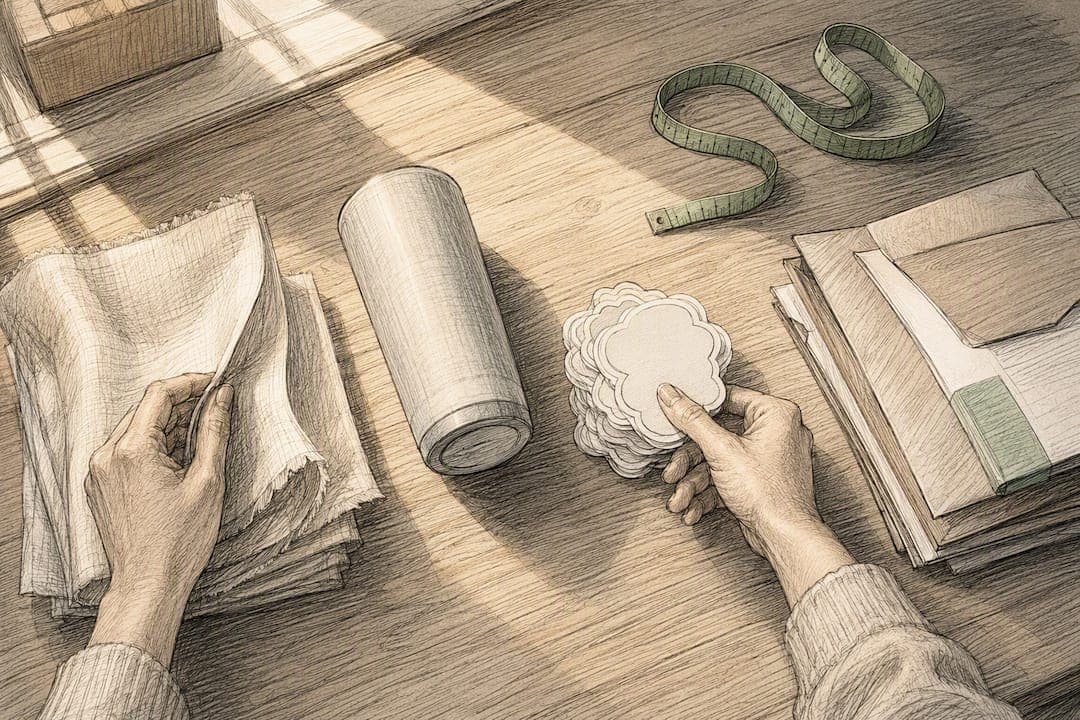
Stickers, premium hoodies, custom tumblers, and art prints carry the widest margins and the fastest validation cycles for craft sellers right now. Before you sink money into a full product line, run a single-question Instagram poll on your top two design concepts, then sell a 10-piece test batch of whichever one wins. Pick one idea, test one SKU, and let real buyers, not your own preference, decide what comes next.
TL;DR:
- Running a simple Instagram poll before investing in bulk helps identify the most demand-driven design for test batches, reducing risk.
- Stickers and enamel pins offer high impulse-buy potential and quick validation with minimal production costs, perfect for initial testing.
- Using print-on-demand removes inventory risk early on, but switching to local printers becomes cost-effective once a design proves popular.
- Focus on a narrow product range, such as apparel, drinkware, or small accessories, to build a recognizable brand and efficiently leverage repeated designs.
- Prioritize high-margin items like art prints or digital products to maximize profitability while testing scalable, low-effort products first.
Table of Contents
- Craft Business Merch Ideas by Category
- How to Pick the Right Merch for Your Shop
- Production Options: POD, Local Printers, or Handmade Batches
- Pricing, Packaging, and Profit Tips
- How to Promote and Sell Your Craft Merch
- Skye's Perspective: What Worked for Sincerely Skye
- Why Personalization and Niche Focus Sell Merch
- Keeping Your Branding Consistent Across Every Merch Item
- Sourcing Sustainable and Ethical Materials
- Marketing Strategies Built for Craft Merch
- Managing Inventory for Small Merch Batches
- Trending and Seasonal Craft Merch Ideas
- The Real Priority: Effort, Margin, and Shipping, Not Just Ideas
- Sincerely Skye: Custom Merch and Ready-to-Sell Gear
- Primary Resources and Tools
- Sources
- FAQ
Craft Business Merch Ideas by Category
The strongest lineups don't try to be everything. The most successful sellers pick 5 to 8 product types that pair low production cost with high perceived value, rather than spreading thin across twenty options nobody remembers. Here's how the main categories break down.
Apparel and wearables. Tees, hoodies, and embroidered crewnecks remain the backbone of most craft shops. Print-on-demand works well here because it carries no inventory risk while you figure out which designs resonate. Local screen printers become worth the switch once you're reordering the same design monthly. Sizing matters more than sellers expect. List a measurement chart on every apparel listing, since unisex sizing runs large and return requests over fit are one of the most preventable headaches in this category.
Drinkware and tumblers. Custom tumblers, mugs, and personalized cups sell year-round with predictable spikes around holidays, weddings, graduations, and back-to-school season. Offer a couple of finish options (matte versus glossy, or a color choice) rather than a dozen. Fewer choices actually convert better, and it simplifies your production queue. Pack tumblers with extra bubble wrap and a "this end up" label. Breakage claims eat margin faster than almost anything else in a small shop.
Small accessories and impulse items. Stickers, pins, keychains, and patches do more than pad an order. They function as low-cost discovery drivers that pull in first-time buyers who then come back for the higher-ticket item. A $5 sticker pack next to a $45 hoodie on your shop page does real work: it gives hesitant browsers a reason to buy something today.
Home goods and art prints. Framed prints, coasters, and wooden signs sit at a higher price point and make excellent gifts, which is exactly why they convert well in November and December. These items also showcase your art in a way apparel can't. A hand-lettered print looks like a keepsake; the same design on a tee reads as a slogan.
- Stickers and vinyl decals — cheapest to produce, highest impulse-buy rate
- Enamel pins and patches — great for craft-fair tables, low shipping weight
- Framed art prints — highest perceived value per production dollar
- Wooden or acrylic signs — strong gift-giving category, heavier to ship
Packaging and promo extras. Custom tissue paper, a branded sticker on the box seal, and a simple thank-you card cost pennies but shape whether a customer reorders. Tote bags do double duty as both a sellable product and walking advertising once someone carries yours to a farmers market.
Digital products. Printables, SVG bundles, and planner templates carry near-zero marginal cost since you sell the same file infinitely. They're the highest-margin category on this whole list, and they pair naturally with your physical merch. A crafter who buys your embroidery pattern SVG is a strong candidate for the finished tote bag version too.
One design mistake shows up constantly among new sellers: dropping the identical artwork onto every product without adjusting it. Treat each item as its own canvas. Square artwork that looks great on a tee often needs cropping or a layout change to work on a vertical tumbler or a horizontal pencil case, since the aspect ratio and negative space rarely translate cleanly between formats.
How to Pick the Right Merch for Your Shop
Run every idea through four filters before you commit a dollar to it: demand, margin, fit, and repeatability. Does anyone actually want this? Does it leave enough room after materials and labor? Does it match your brand's voice? Can you make it again next month without dreading it?
- Post a two-option poll to your Instagram Stories or email list and let followers pick between two design directions.
- Take preorders on the winning concept, or run a 10-piece sample batch before committing to bulk inventory.
- Track which niche resonates. Pet owners, teachers, seasonal gift shoppers, and hobby "tribes" (knitters, plant parents, home bakers) tend to buy repeatedly once they trust a brand's voice.
- Only scale production after a real batch sells out, not after a design simply gets likes.
Instagram polls and engagement data beat guesswork every time, because likes are cheap but a preorder is a real vote with money behind it.
Pro Tip: Ask your poll question as a real choice, not a popularity contest. "Which mug would you buy?" gets more honest answers than "Which do you like better?"
Production Options: POD, Local Printers, or Handmade Batches
Print-on-demand removes inventory risk entirely, which makes it the right starting point for any idea you haven't tested with real buyers yet. You pay nothing upfront and learn fast, though your per-unit cost stays higher than bulk options. Local printers or bulk suppliers make sense once a design proves itself. Unit costs drop, but you're now holding stock and covering minimum order quantities. Fully handmade batches carry the most brand value and the highest labor cost. That tradeoff is worth it for signature items your shop is known for.
- File formats: keep master art in SVG or a high-resolution PNG; save print-ready files as TIFF or PDF when a printer requests it.
- Color modes: RGB works for online mockups; switch to CMYK before sending anything to a print shop, or colors will shift.
- Always approve a physical sample before a full run, and ask your printer for realistic lead times in writing.
- Order inventory only after a design has sold through a small test batch. Stay on POD everywhere else.
Different printers specialize in different goods. Textile-focused platforms handle fabric better than general POD sites, so match the partner to the product instead of using one vendor for everything.
Pricing, Packaging, and Profit Tips
Price with a simple formula: materials plus labor plus overhead, then add your target profit on top, typically a 2 to 3x markup on cost for handmade goods. Premium apparel like hoodies and sweatshirts tends to carry a wider margin than basic tees, and digital products lead the whole lineup on margin since there's no reprint cost after the first sale.
- Stickers: aim for 60 to 70% margin; they're cheap to produce and priced for impulse buys.
- Mugs and tumblers: 40 to 55% margin after materials and breakage buffer.
- Tees and hoodies: 35 to 50%, higher on premium blanks with strong niche art.
- Art prints and digital products: often 70%+ once the design work is done.
Packaging upgrades that actually move the needle: branded tissue paper, a small sticker on the box, and a handwritten or printed thank-you card. Bundle a sticker pack with a tumbler for a few dollars more and you've raised average order value without adding a new product to manage.
How to Promote and Sell Your Craft Merch
Etsy brings built-in search traffic but takes fees and puts you next to competitors on the same page. Your own Shopify or storefront gives full control and better margins once you have an audience. Craft fairs deliver instant feedback and cash sales but demand physical inventory and a weekend of your time.
- Pinterest functions like a visual search engine for craft shoppers; post tall, keyword-described pins for long-term, compounding traffic.
- Instagram and TikTok reward process videos: show the making, not just the finished product.
- Write keyword-rich listing titles that describe the item and the occasion, not just the design name.
- Send an email pre-launch to past buyers a few days before a new drop goes live.
- Trade samples with a small-follower influencer in your niche, or bundle two items to jump-start early reviews.
Skye's Perspective: What Worked for Sincerely Skye
A themed tumbler tied to a crafting inside joke outsold a plain logo version by a wide margin. It resonated because it said something specific to the buyer's identity, not just the brand's. Batching production around seasonal drops, instead of launching constantly, kept quality consistent and gave customers a reason to check back. One rule I don't bend on: every design uses original art or properly licensed assets. A cute font pack you found on Pinterest is rarely cleared for commercial resale, and that mistake gets expensive fast.
Why Personalization and Niche Focus Sell Merch
A mug that says "World's Best Grandma" competes with a thousand identical mugs. A mug that says "World's Best Nana Who Also Sews at 2 AM" competes with almost nothing, because it speaks to one specific person's exact life. Personalization sells because it removes the buyer's last hesitation: is this really for me? A name, initial, or hyper-specific inside joke answers that question before they even finish reading the listing.
Niche focus works the same way at the shop level. A general "cute stuff" store fights for attention against thousands of similar shops. A shop built around one clear niche, quilters, plant parents, dog moms who crochet, becomes the obvious choice for that exact buyer, because everything on the page confirms they're in the right place.
Some niche directions worth testing: teachers gearing up for the school year, pet owners buying gifts for other pet owners, wedding parties needing bridesmaid-proposal merch, and hobby-specific groups like embroiderers or woodworkers who buy from sellers who clearly share their craft. These groups also tend to be vocal online, which means a design that lands well often gets shared organically inside private groups and forums where your ad budget could never reach.
Start small: pick one niche, build three to five products around it, and resist the urge to please everyone. A shop that sells to one person really well outperforms a shop that sells to everyone a little.
Keeping Your Branding Consistent Across Every Merch Item
A customer who buys your sticker pack should recognize your tote bag on sight, even from across a craft fair table. That recognition comes from repeating the same handful of choices everywhere: one or two fonts, a fixed color palette, and a consistent tone in your product copy, whether it's playful, cozy, or a little cheeky.
Inconsistency is the fastest way to look like a dozen different sellers instead of one growing brand. If your tees use hand-lettered script and your mugs use a bold sans-serif with no shared color, buyers won't connect the two products even if they love both. Pick your visual identity before you design product number two, not after product number ten.
One efficient approach: take a single winning design and extend it across several formats, a hoodie, a mug, a sticker pack, rather than inventing a new concept for every item. This raises average order value because a buyer who loves the design on a hoodie often wants the matching sticker too, and it keeps your catalog visually cohesive without extra design hours.
Packaging carries the same responsibility as the product. A branded tissue paper pattern, a consistent thank-you card design, and even your shipping label all reinforce the same identity a buyer just paid for. Treat your Etsy banner, your Instagram grid, and your box interior as three views of the same brand, not three separate projects.
Sourcing Sustainable and Ethical Materials
Craft buyers increasingly ask where materials come from, and that question isn't going away. Sourcing responsibly starts with three practical checks: where a blank product is manufactured, what it's made from, and whether the supplier can actually document their claims instead of just printing "eco-friendly" on the label.
For apparel, organic cotton and recycled-polyester blends cost more per unit but justify a higher price point, especially with buyers who already care about handmade goods for ethical reasons. For packaging, recycled kraft paper, soy-based inks, and compostable mailers cost only marginally more than standard options and photograph beautifully in unboxing content, which doubles as free marketing.
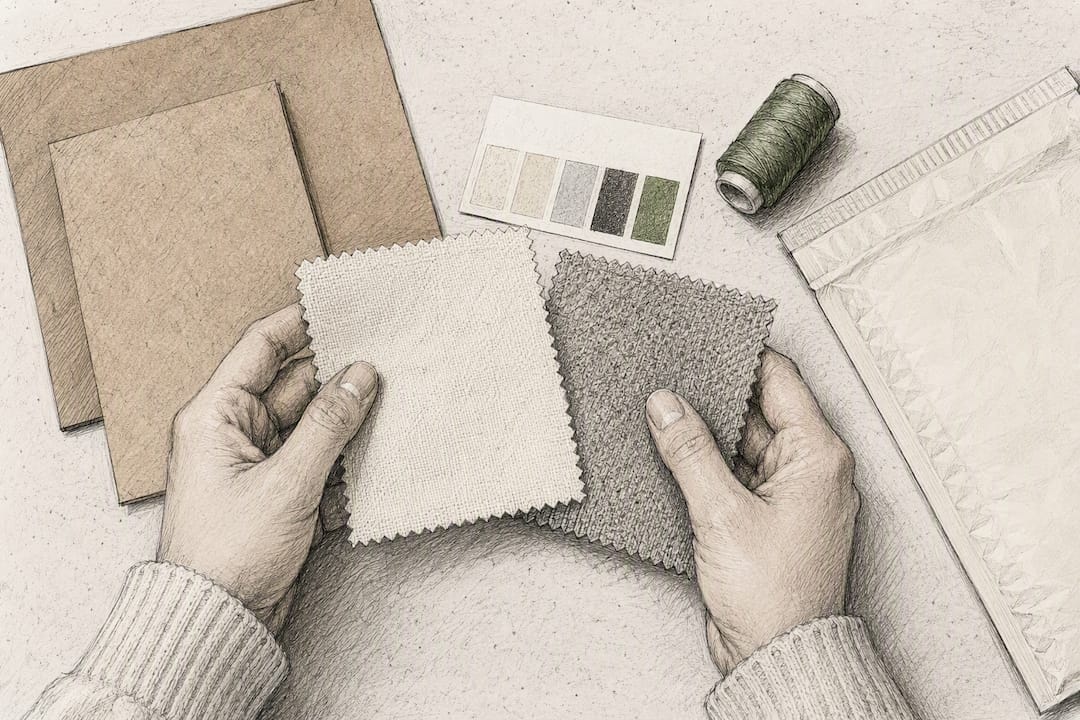
Print partners vary widely here. Some POD platforms partner with mills that hold Global Organic Textile Standard or OEKO-TEX certifications; others don't disclose sourcing at all. Ask directly before you commit to a supplier, and don't take a vague answer as a yes.
Sustainable sourcing also protects margin over time. Suppliers who can document ethical sourcing tend to have more stable pricing and fewer sudden minimum-order changes than budget suppliers chasing the lowest possible cost. It's a business decision as much as a values one, and buyers who care about handmade goods are usually the same buyers who read your "about" page before checking out.
Marketing Strategies Built for Craft Merch
Generic marketing advice tells you to "post consistently." Craft buyers respond to something more specific: process. A 15-second video of a heat press stamping your design, a tumbler being wrapped in shrink film, or a stack of stickers getting hand-cut generates more engagement than a polished product photo alone, because it shows the labor behind the price tag.
Lean into behind-the-scenes content on the platforms where craft audiences already browse. Pinterest rewards tall, well-captioned pins that people save for months, which means a single well-optimized pin can drive traffic long after you've stopped promoting it. Instagram and TikTok reward the making, not just the made.
Email still outperforms most social platforms for actual sales, particularly for pre-launch buzz. A short "this drops Friday" email to your list, sent two or three days ahead, consistently outsells a cold social post announcing the same product the day it launches. Craft buyers who've purchased before are your warmest audience; treat that list like the asset it is.
Cross-promotion inside the crafting community itself works better than paid ads for most small shops. Swapping samples with a fellow maker in an adjacent niche, trading shoutouts, or contributing a piece to a group giveaway puts your work in front of an audience that's already primed to buy handmade goods, at a fraction of the cost of running ads to cold traffic.
Managing Inventory for Small Merch Batches
Small batches fail for one of two reasons: too much stock sitting unsold, or too little stock when a design finally takes off. Both are avoidable with a system simpler than most sellers expect.
Start every new product on print-on-demand or a small 10 to 15 unit test run. Only convert to bulk inventory after that batch sells through completely, which tells you demand is real rather than a one-time spike from a single viral post. Track sell-through rate, not just total sales. A product that sells 20 units in a week is a very different signal than one that sells 20 units over three months.
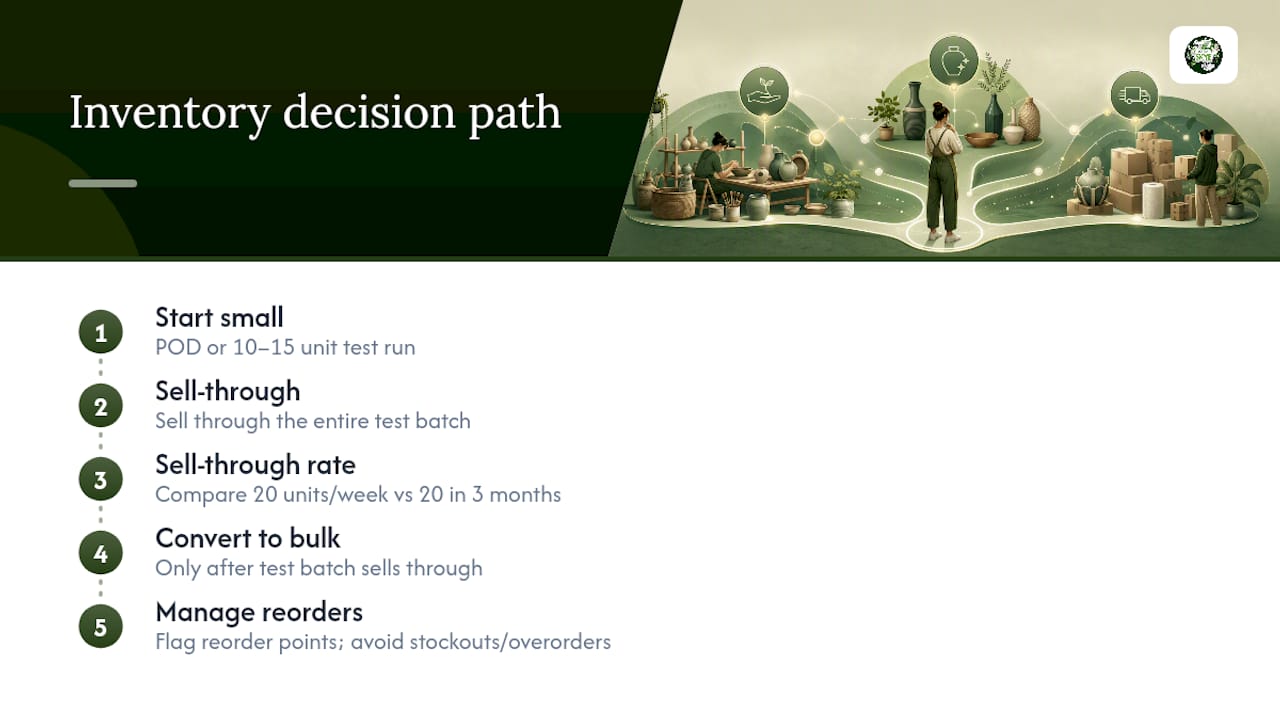
Keep a simple spreadsheet or use your shop platform's built-in inventory tool to flag reorder points before you actually run out. Running out of a bestseller for two weeks while you wait on a reorder costs you momentum and search ranking on marketplaces like Etsy, where consistent sales velocity affects visibility. On the flip side, overordering ties up cash in inventory that might not move until next season, which is especially risky with seasonal or holiday-themed items that lose relevance fast once the date passes.
Trending and Seasonal Craft Merch Ideas
Seasonal merch carries built-in urgency that evergreen products don't. Fall brings pumpkin and plaid motifs, cozy sweater weather tees, and Halloween-adjacent crafting humor. Winter holidays are the single biggest sales window most craft shops see all year, with custom tumblers, mugs, and personalized gifts spiking hard around the season. Spring and back-to-school bring teacher gifts and planner accessories; summer favors totes, outdoor drinkware, and gift items for weddings and graduations.
Beyond the calendar, a few product types are having a real moment right now: laser-cut wood ornaments, temporary tattoos with craft-community inside jokes, and printed wrapping paper featuring original patterns. Unusual formats like these help a shop stand out against the sea of standard tee-and-mug combinations most sellers default to.
Plan seasonal drops a few weeks ahead rather than scrambling the week of. A themed collection launched with enough lead time lets you batch production, build anticipation on social media, and avoid the shipping crunch that hits every craft seller in December.
The Real Priority: Effort, Margin, and Shipping, Not Just Ideas
Most merch guides hand you a long list of product ideas and call it strategy. That's only half the job. The list matters less than how you sort it: by how much of your own labor an item eats, what margin it actually leaves after materials and platform fees, and how much of a headache it is to ship without breaking.
A tumbler looks like a great idea until you've packed your fifth broken one this month. A digital SVG file looks unglamorous until you realize it has no shipping cost, no breakage risk, and sells while you sleep. The conventional advice skips this sorting step entirely, which is why so many new sellers end up with a catalog of twelve products and profit from maybe three of them.
Start with the lowest-effort, highest-margin item you can make well, usually stickers, pins, or a digital product, and use it to fund testing on the higher-effort pieces. Build outward from what already sells, not from what looks impressive on an Etsy grid.
— Skye
Sincerely Skye: Custom Merch and Ready-to-Sell Gear
If you'd rather skip months of trial and error, Sincerely Skye already does the design and sourcing legwork that this article just walked you through: whimsical, crafter-specific artwork applied across apparel, tumblers, and accessories, built by someone who sells into this same community every day.
Browse the custom merch options if you want a done-for-you product without building your own supplier list from scratch, or look at the Sincerely Crafters collection for examples of how a single niche identity can carry across an entire product line. Need help figuring out which platform to promote on first? The social media audits start at $50 and cover TikTok, Instagram, or Facebook individually. Visit the Sincerely Skye shop to see finished tumblers, tees, and seasonal pieces in action before you commit to your own first run.
Primary Resources and Tools
For deeper reading on validation, production, and niche-specific products, these three sources back much of the guidance above: Art Prof's creative merch guide covers unusual formats and audience polling, Merch Titans breaks down margin by product type, and Printful's merch ideas guide explains how print-on-demand removes inventory risk for new sellers testing concepts.
Sources
- Creative Merch Ideas · Art Prof
- Custom Merch Ideas: 30+ Products That Sell in 2026 | Merch Titans
- How to Start an SVG Craft Business with Cricut: Complete 2026 Guide
- 50 Surprisingly Creative Merch Ideas + Examples
FAQ
What Merch Items Sell the Most for Craft Businesses?
Stickers, custom tumblers, premium hoodies, and art prints consistently lead sales because they combine low production cost with high perceived value. Stickers in particular act as an entry point that pulls in first-time buyers.
What Sells Well at Craft Fairs?
Small, portable items like enamel pins, patches, stickers, and printed tote bags tend to move fastest at in-person events because shoppers can see and touch the quality immediately. Higher-priced items like framed prints or tumblers do better when paired with a live demo or sample to handle.
What Is the Highest-Selling Craft Item?
Personalized drinkware, especially custom tumblers, ranks among the top sellers because it works year-round with sharp spikes around holidays, weddings, and graduations. A themed tumbler tied to a crafting inside joke can reflect steady demand patterns similar to personalized drinkware.
What Are Good Ideas for Craft Business Merch?
Start with a focused lineup: stickers, one or two apparel styles, a tumbler or mug, and a digital product like an SVG bundle. Test each with a small poll or a 10-piece batch before scaling, rather than launching a dozen products at once.
How Much Does Custom Craft Merch Cost to Make?
Costs vary by category and production method, but a good rule of thumb is pricing at 2 to 3 times your material and labor cost, adjusting up for premium blanks like hoodies. Custom services, including logo creation starting at $50, are listed directly on the custom services page.