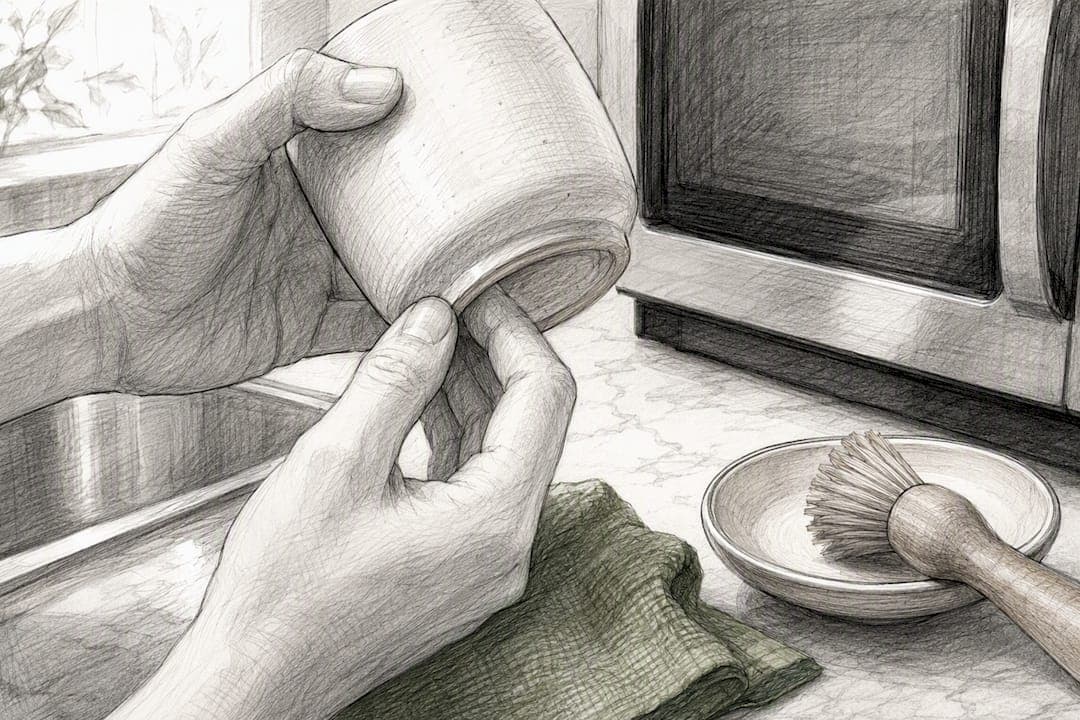
Rinse every mug the moment you finish drinking, wash it daily with warm water and mild soap, and hand-wash anything delicate, printed, or handmade rather than trusting it to a dishwasher cycle. Take lids and gaskets apart before washing and deep-clean the whole mug weekly. This kind of maker-focused care reflects how handmade and personalized drinkware actually holds up over time.
TL;DR:
- Regularly rinsing and hand-washing mugs with mild soap prevents bacterial buildup and extends their lifespan, especially for delicate or handmade pieces.
- Cleaning methods and precautions vary based on material, with gentle soaking and non-abrasive tools recommended to maintain finishes on ceramics, glass, steel, and enamel.
- Removing stains and odors involves simple, non-damaging solutions like baking soda, vinegar, or denture tablets, with thorough rinsing essential before reuse.
- Lids and gaskets require disassembly and targeted cleaning to prevent persistent odors, and replacement seals are inexpensive and often necessary for continued hygiene.
- Using a routine of immediate rinsing, air-drying, and proactive replacement of worn parts can significantly reduce damage and extend the useful life of any mug.
Table of Contents
- Daily Mug Washing Instructions That Actually Prevent Buildup
- How Should You Care for Different Mug Materials?
- Removing Stains and Odors Without Damaging the Finish
- How Do You Clean Mug Lids and Gaskets Properly?
- Protecting Printed and Handmade Mug Designs
- Preventing Cracks, Chips, and Odor Over Time
- Should You Repair or Replace a Damaged Mug?
- Can You Put Mugs in the Microwave or Freezer Safely?
- A Craft-Maker's Take on Mug Care
- Keep Your Custom Mugs Looking Like New
- Sources
Daily Mug Washing Instructions That Actually Prevent Buildup
Most mug damage and lingering smells trace back to skipped steps in the daily routine, not some rare cleaning disaster. A University of Arizona study cited in cleaning guides found a large share of office mugs harbor bacteria simply from irregular washing, which makes the routine below worth treating as non-negotiable rather than optional.
- Rinse the mug immediately after the last sip, before residue dries onto the glaze or lining.
- Wash with warm water, a few drops of mild dish soap, and a soft sponge or bottle brush. Skip anything abrasive.
- Pull lids and gaskets apart from the body and wash each piece separately. Coffee film and mold love to hide in that seam.
- Air-dry upside down on a rack instead of toweling it dry. Damp dish towels reintroduce bacteria faster than air does.
- If the manufacturer marks the mug dishwasher-safe, top-rack cycles are fine for everyday use. Save hand-washing for anything printed, painted, or handmade.
Rotate your drying towels every couple of days, too. A towel that smells faintly musty is doing more harm than good.
How Should You Care for Different Mug Materials?
Not every mug responds to the same cleaning method, and treating a hand-thrown ceramic piece like a stainless steel travel tumbler is how finishes get ruined. Material dictates almost everything about safe cleaning, from soak time to water temperature.
- Ceramic and glazed pottery: Soaking is generally safe, but skip anything abrasive. Check the glaze for crazing, the fine spiderweb of cracks that develops with age, since those tiny fissures trap bacteria and stain faster than intact glaze.
- Glass mugs: A gentle vinegar soak lifts tea and coffee film without scratching the surface. Inspect the rim and base for chips after each wash. A hairline chip in glass tends to spread under heat.
- Stainless steel: Skip bleach and chlorine cleaners; they can pit the metal over time. A baking soda paste handles most residue, and oxalic-based cleaners work on stubborn stains when used sparingly and rinsed thoroughly, as outlined in this stainless steel travel mug care guide.
- Enamel: Hand-wash only, and let a hot enamel mug cool before running it under cold water. Sudden temperature swings cause microcracks in enamel that mirror the crazing problem in ceramic, according to ceramic mug care research.
- Insulated and travel mugs: Hand-wash the body and keep any electronic components, charging rings, or battery bases completely dry. Ember's own care guidance warns against submerging the base of electronics-equipped mugs, and that rule applies to any smart mug on the market.
- Handmade and artist-glazed pottery: Use low heat and gentle soap. If the piece has an unglazed foot or any exposed clay, avoid long soaks. Porous spots absorb water and stain permanently.
The common thread across every material is the same: gentler cleaning almost always outlasts aggressive scrubbing.
Removing Stains and Odors Without Damaging the Finish
Coffee and tea leave tannin stains that daily washing won't touch, and odors tend to settle into microscopic surface pores rather than sitting on top where a sponge can reach them. A few tested methods handle both without resorting to anything harsh.
- Baking soda paste: Mix baking soda with a small amount of water into a paste, coat the stained areas, and let it sit for 10 to 15 minutes before scrubbing gently and rinsing.
- Vinegar and baking soda soak: Fill the mug with equal parts white vinegar and warm water, add a spoonful of baking soda, and let it sit for 20 to 30 minutes.
- Denture tablets or dishwasher pods: Drop one tablet into a water-filled mug and let it fizz for 15 to 20 minutes. This works particularly well for narrow-necked travel mugs where a brush can't reach.
- Oxalic-based cleaners (like Bar Keepers Friend): Effective on mineral buildup and rust spots on stainless steel, but avoid them on painted, printed, or delicate glazed surfaces since the mild abrasive can dull artwork.
| Method | Best for | Approximate soak time |
|---|---|---|
| Baking soda paste | Surface stains, light residue | 10–15 minutes |
| Vinegar and baking soda soak | Tannin buildup, tea rings | 20–30 minutes |
| Denture tablet soak | Narrow-neck travel mugs | 15–20 minutes |
| Oxalic cleaner | Stainless steel mineral spots | Per product label |
Pro Tip: Rinse any soak solution completely before the mug touches your mouth again. Baking soda and vinegar are food-safe, but leftover residue changes the taste of your next cup.
Lids deserve as much attention as the stain itself. Hygiene-focused cleaning research points to lid gaskets and hidden channels as the most common source of persistent mug odor, since coffee film collects in seams a sponge never touches during a quick daily wash.
How Do You Clean Mug Lids and Gaskets Properly?
Lids cause more hygiene complaints than mug bodies do, mostly because people wash the outside and skip the inner seal entirely.
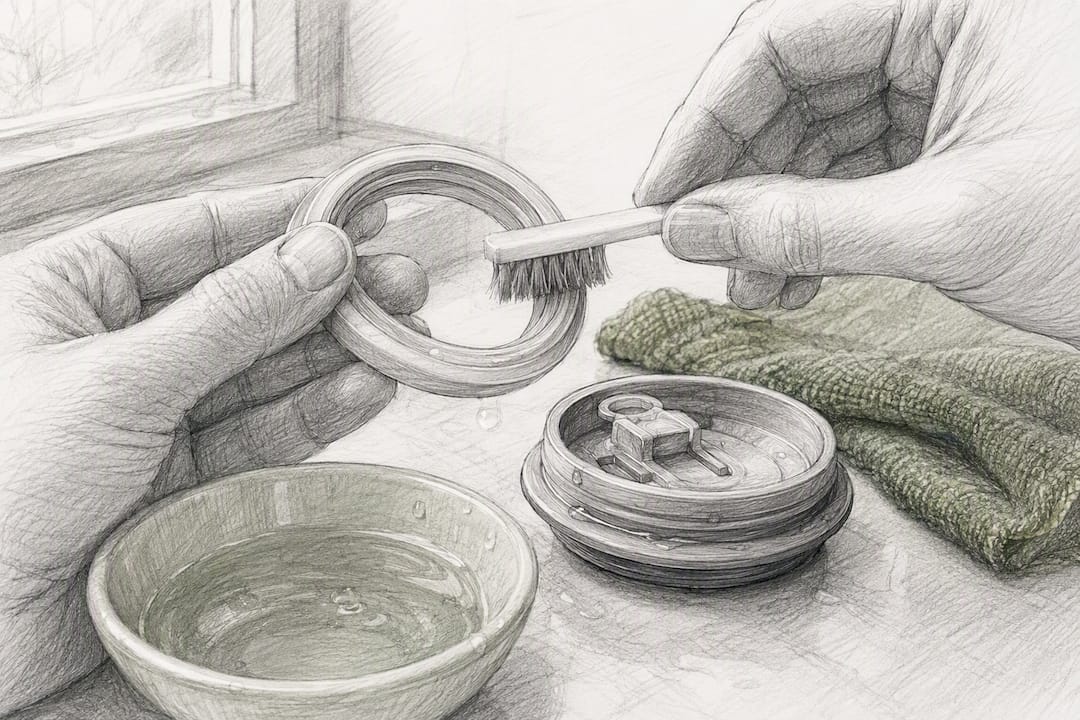
- Twist or pop the lid apart at every seam the manufacturer designed for disassembly. Most travel lids separate into two or three pieces.
- Pull the silicone gasket free and soak it in warm soapy water alongside the rest of the lid components.
- Use a thin bottle brush for wide channels and a pipe cleaner for narrow slots or straw openings that trap film.
- Let every piece air-dry fully before reassembly. Trapped moisture inside a closed lid is exactly what breeds odor between uses.
- Inspect the gasket for cracking or stretching once a month. A warped seal won't reseal, and that's when leaks start.
Pro Tip: If a gasket smells sour even after washing, it's usually past saving. Most brands sell replacement seals separately, and swapping one out costs far less than replacing the whole mug.
Protecting Printed and Handmade Mug Designs
Custom mugs are where the wrong cleaning routine does the most visible damage, since printed and sublimated designs sit right on the surface where scrubbing happens. Even mugs labeled dishwasher-safe often keep their color and finish longer with hand-washing, since industry care guidance and cleaning professionals both note that repeated dishwasher cycles and harsh detergents gradually fade prints and stress silicone seals.
- Hand-wash sublimated and printed mugs whenever possible, especially in the first few months after purchase while the finish is settling.
- Skip melamine sponges and anything textured near printed art. They're built to erase scuffs and will erase ink just as easily.
- If you're curious how a specific custom piece holds up to daily cycles, our own breakdown of sublimation mug dishwasher safety walks through what actually happens to the print over time.
- For handmade or enamel pieces, our enamel versus ceramic comparison covers which finish suits daily use versus display.
The custom mug collection favors finishes that tolerate gentle daily hand-washing without fading.
Preventing Cracks, Chips, and Odor Over Time
A little routine maintenance stretches a mug's life by years, and most of it takes seconds once it becomes habit.
- Run a full deep clean, using one of the soak methods above, once a week if you drink coffee or tea daily.
- Store mugs upside down on open racks rather than sealed cabinets, especially if they're not bone dry. Trapped moisture in a closed cabinet breeds mildew faster than open air ever will.
- Replace gaskets and lids proactively. Outdoor drinkware maintenance guidance suggests swapping seals every six to eighteen months for frequent users, well before they visibly fail.
- Keep a dedicated bottle brush and pipe cleaner on hand so cleaning the hard-to-reach spots doesn't become the step you skip.
- If your coffee maker itself is due for a cleaning, a well-maintained moka pot produces less oily residue that ends up staining your mug in the first place.
Should You Repair or Replace a Damaged Mug?
Visible cracks, a lid that leaks no matter how tightly it's sealed, or recurring mold in the same spot are your signals to stop repairing and start replacing. A worn gasket or cracked lid is usually a simple swap, not a reason to toss the whole mug. Hairline cracks in handmade or porous pottery are the exception. Once moisture gets into unglazed clay, no amount of cleaning fully removes what's trapped inside, and that piece belongs on a shelf, not in daily rotation.
Can You Put Mugs in the Microwave or Freezer Safely?
Check the base of any mug before it goes near a microwave. A stamped "microwave-safe" mark means the manufacturer tested it for heat cycling, but plenty of handmade and vintage mugs never carry that mark and shouldn't be assumed safe. Metallic paint, gold rims, and certain glazes can spark or scorch, and any mug with an unsealed crack risks trapping steam that cracks it further under heat.

Insulated and vacuum-sealed travel mugs should never go in a microwave at all. The double-wall construction traps heat unevenly and can warp the seal or damage the vacuum layer permanently.
Freezing is gentler but not risk-free. Ceramic and glass mugs can crack from rapid temperature swings the same way they do with thermal shock during washing, so avoid pulling a mug straight from a hot dishwasher into the freezer. If you're chilling a mug intentionally, let it come to room temperature first, then freeze gradually. Handmade pottery with any hairline crazing is especially vulnerable here since trapped moisture inside those tiny fissures expands as it freezes and widens the damage.
A Craft-Maker's Take on Mug Care
Most mug damage isn't dramatic. It's a hundred small shortcuts, like leaving a lid unrinsed overnight or tossing a hand-painted mug in a hot dishwasher out of habit. My own routine is boring on purpose: rinse right away, brush the lid seam every time, air-dry upside down. That's it. Handmade pieces reward that kind of patience more than any expensive cleaner ever will.
— Skye
Keep Your Custom Mugs Looking Like New
A gentle daily routine is what actually protects a printed or handmade mug; custom drinkware is designed around finishes that hold up to real hand-washing rather than fading after a few dishwasher cycles. If you're picking out a piece worth caring for, our custom mug collection lets you design something personal, and our drinkware shop covers everything from everyday ceramic to travel-ready styles.

Follow the routine in this guide, whichever mug you land on, and your prints and glazes will stay sharp for years instead of months. Browse the current custom mug designs and start one that's built to last.
Sources
- How to Clean Coffee Cups: The Complete Guide
- How to Care for Your Ember Mug
- The Ultimate Guide to Cleaning & Maintaining Stainless Steel Travel Mu