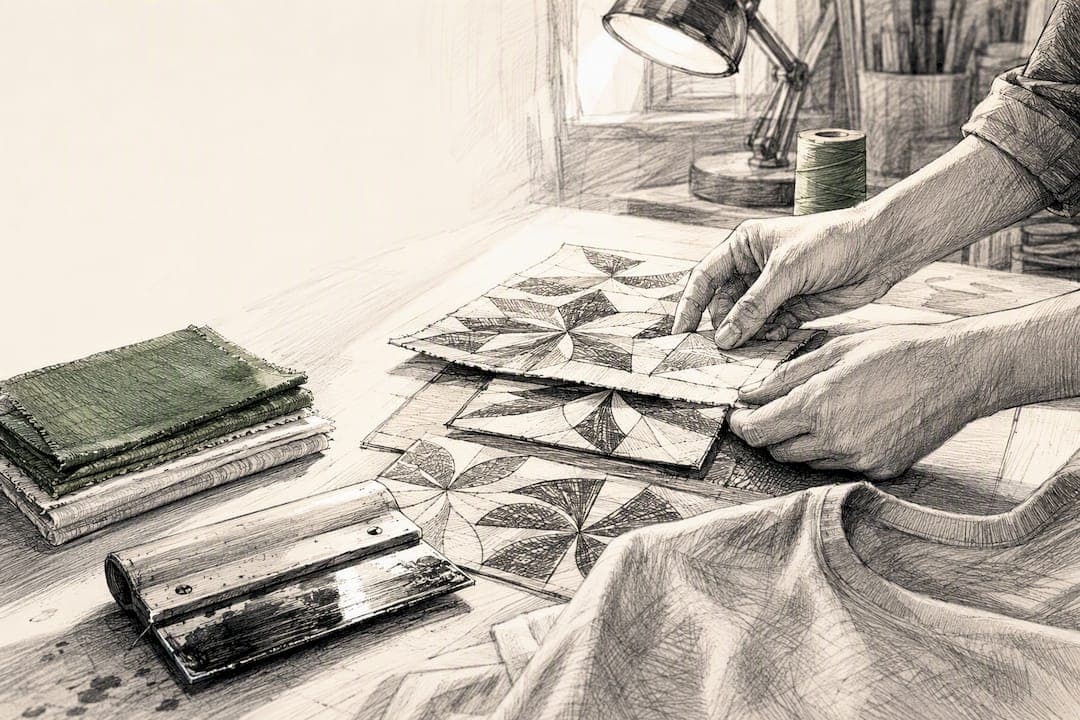
The best quilter shirt ideas fall into four buckets: funny sayings about fabric stashes and UFOs (unfinished objects), vintage-style craft art, tool and notion motifs like spools and thimbles, and guild or team shirts for group events. Pick a theme first, then choose a base that feels good against skin all day, like a v-neck or a relaxed unisex tee. Everything else, the slogans, the printing, the styling, comes after that one decision.
TL;DR:
- Keep slogans short and pair them with small icons to increase recognition and visual impact at a glance.
- Apply designs using DTG for detailed artwork, HTV for simple graphics, or embroidery for textured, heirloom quality, depending on the project's needs.
- Choose breathable cotton or tri-blend fabrics for comfort and better print retention, tailoring style to where the shirt will be worn.
- Stay within 10 to 12 inches of graphic width and place designs 2 to 3 inches below the collar to prevent stretching or looks that appear cheap.
- Favor muted, earthy tones and minimalist, retro typography for a more wearable and modern look aligned with current fashion trends.
Table of Contents
- 20+ Quilter Shirt Sayings and Slogan Prompts by Theme
- Design Formats and Print Considerations for Quilter Shirts
- Shirt Styles, Fabrics, and Comfort: Picking the Right Base
- How to Style and Gift Quilter Shirts
- DIY Customization: Simple Ways to Personalize a Quilter Shirt
- Current Trends in Quilter Shirt Designs
- Why I Design Craft-Themed Shirts This Way
- Where to Buy or Customize Your Quilter Shirt
- Sources
20+ Quilter Shirt Sayings and Slogan Prompts by Theme
Quilters have a language all their own, and the best shirt slogans lean into it instead of explaining it. A stranger might not know what a "UFO" is in this context, but every quilter in the room will laugh.
Funny quilter shirts tend to perform best because they're instantly shareable at guild meetings and quilt shows. Try these:
- "Warning: Fabric Stash Exceeds Storage Capacity"
- "I Have a UFO Problem" (with a small unfinished-block icon)
- "Will Trade Husband for Fat Quarters"
- "Quilters Gonna Quilt"
- "Sorry I'm Late, I Was Piecing"
- "My Happy Place Smells Like Starch"
- "Eat, Sleep, Quilt, Repeat"
Sentimental designs work well for gifts, memorials, or milestone pieces, and pair nicely with a softer script font:
- "Stitched With Love, One Block at a Time"
- "Every Quilt Tells a Story"
- "Made By Hand, Given With Heart"
- "Grandma's Hands, Grandma's Quilts"
Vintage and illustrative designs borrow from old-fashioned sewing notion catalogs and hand-drawn botanical styles. A crazy quilt aesthetic, with its irregular patchwork shapes and heavy embellishment, translates surprisingly well onto a shirt as a busy, textured print rather than a clean vector graphic:
- "Vintage Sewing Notions" with a retro thread spool illustration
- "Quilting Since [Year]" personalized with a founding date
- "Old Soul, New Fabric"
Tool and notion motifs give you room to get playful with icons alongside text:
- "Rotary Cutter Ninja"
- "Pins Are My Love Language"
- "Powered By Coffee and Cotton"
Guild and team shirts need to read well from across a room, so keep the text short and the guild name prominent:
- "[Guild Name] Quilt Guild, Est. [Year]"
- "Piecing It Together Since [Year]"
Seasonal shirts rotate well for retreats and swaps:
- "Autumn Blocks and Pumpkin Spice"
- "Sleigh Bells and Seam Rippers"
One insight worth stealing from successful designs: pairing a short, clever slogan with a single small icon, a needle, a spool, a thimble, tends to be more recognizable at a glance than a busy scene or a long paragraph of text. Keep the words tight and let one graphic element do the visual work. If you want more inspiration before committing to a design, 30 funny craft shirt sayings is worth a scroll, and for coordinated group orders, matching craft shirt ideas covers how to keep a guild batch looking unified instead of mismatched.
Design Formats and Print Considerations for Quilter Shirts
How a design gets onto the shirt matters as much as what the design says. Three main methods dominate craft-themed apparel, and each has real trade-offs worth knowing before you order.
DTG (direct-to-garment) prints ink straight onto the fabric like an inkjet printer, which makes it the right call for photo-like or gradient-heavy designs, think a detailed vintage illustration with shading. HTV (heat transfer vinyl) cuts a design from colored vinyl sheets and presses it on, which suits small, crisp graphics and one-off DIY projects but struggles with fine detail or many colors. Screen printing pushes ink through a stencil and holds up best for bulk runs, like a guild ordering 30 matching shirts, though it costs more to set up for a single shirt. Embroidery stitches the design directly into the fabric, giving quilter shirts a textured, heirloom feel that plastic-based prints can't match, but it's limited on very fine text or photographic detail.
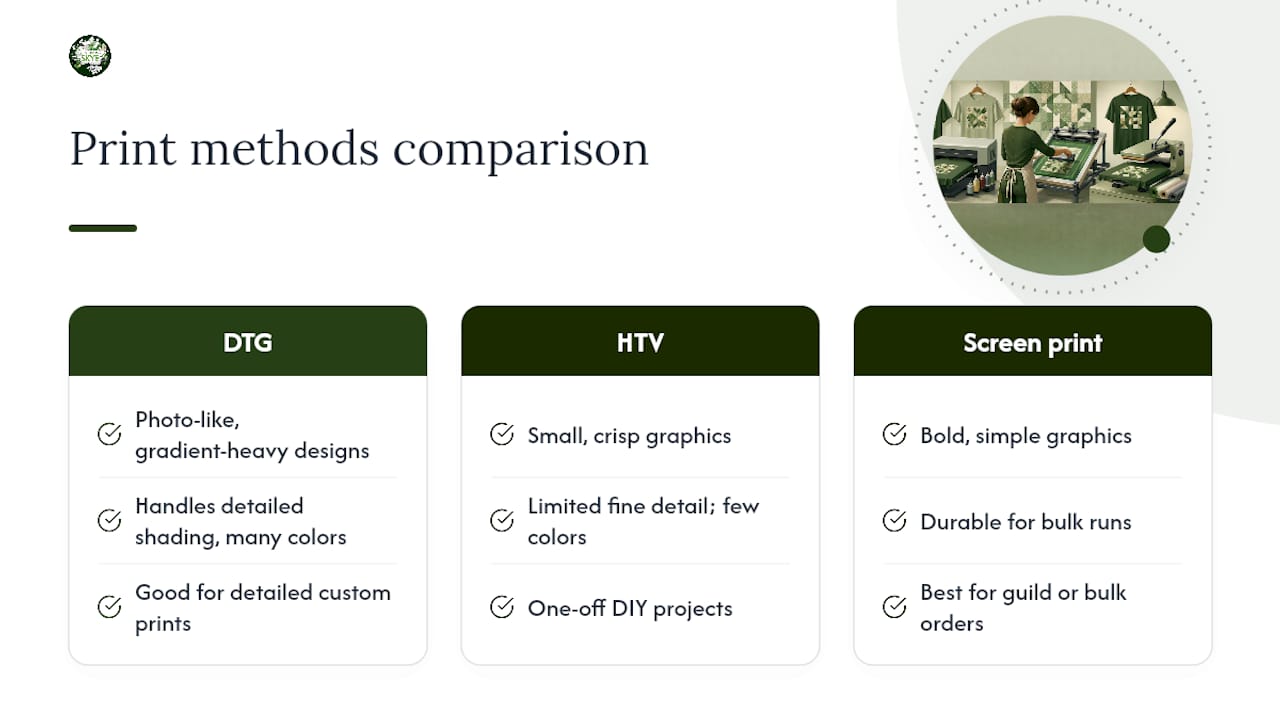
For placement, keep graphics centered and no wider than 10 to 12 inches across the chest, starting about 2 to 3 inches below the collar. A design that runs edge to edge on a small shirt looks stretched and cheap; a design with breathing room around it looks intentional.
Pro Tip: Press interfacing or transfers from the back of the fabric on medium heat, using a pressing cloth between the iron and the print. This keeps DTG and HTV graphics from melting or cracking over repeated wash cycles.
A shirt's print life depends almost entirely on how it's washed afterward. Turning shirts inside out, using cold water, and skipping the dryer's high heat setting all extend a graphic's life by years rather than months, a habit worth building before the first wash, not after the first crack. The full wash guide for graphic tees breaks down the exact settings that protect a print long term.
Shirt Styles, Fabrics, and Comfort: Picking the Right Base
The slogan matters, but the shirt underneath it decides whether someone actually wears it. Fabric choice affects both comfort and how sharp the print looks after a dozen washes.
Cotton is the standard for a reason: it breathes well, feels soft against skin during long studio sessions, and holds DTG ink better than synthetic blends because the fibers absorb the print rather than resisting it. Tri-blend fabric (a cotton, polyester, and rayon mix) drapes softer and fights wrinkles, a good pick for a shirt someone will wear out to a quilt show rather than just around the house. Performance polyester wicks moisture and suits an outdoor market booth in summer heat, though it needs HTV or dye-sublimation rather than DTG for a print to stick properly. Fleece and sweatshirt fabric extend the same designs into cooler months, ideal for retreat swag or holiday guild gifts.
Match the shirt style to where it'll actually get worn:
- Classic crew or v-neck tee: everyday studio wear and layering under an apron
- Raglan or 3/4 sleeve: market booths and craft fairs where a light layer helps
- Sweatshirt or hoodie: retreats, fall swaps, and gift-giving during colder months
For gift sizing, when in doubt, size up one from what the recipient normally wears. A slightly loose quilter shirt gets worn for years; a slightly tight one ends up in a donation pile. Lighter-weight fabrics also show fine print detail better, while heavier fleece is more forgiving of a bold, simple graphic than a delicate line drawing.
How to Style and Gift Quilter Shirts
A quilter shirt earns its spot in a wardrobe when it's easy to throw on and still looks put together. These pairings work for the moments quilters actually dress for.
- Studio day: pair a soft v-neck tee with leggings or worn-in jeans and a canvas apron over top, functional first, cute second.
- Quilt show or swap: layer a graphic tee under an open cardigan or denim jacket, and carry a coordinating tote bag for pattern books and fat quarters.
- Casual weekend: a sweatshirt with a bold slogan works alone with jeans, no styling required.
For gifting, a bundle beats a single item almost every time. A shirt paired with a matching tote, a coffee mug with a coordinating phrase, and a handwritten note tucked into simple kraft paper packaging feels considered without feeling elaborate. If the gift is headed to a guild swap, personalize it with the group's founding year or a nickname the group uses for itself, a private joke on a shirt lands better than a generic quote. One styling rule worth borrowing from quilt design itself: balance bold and quiet pieces rather than bundling three loud graphic statements together, the same principle that keeps a T-shirt quilt from looking chaotic applies to gift bundles too. For more bundle inspiration, gifts for sewing lovers has cozy pairing ideas beyond apparel alone.
DIY Customization: Simple Ways to Personalize a Quilter Shirt
Not every quilter shirt needs to come from a print shop. Some of the best ones start on a kitchen table with an iron and a stack of scrap fabric.
Iron-on transfers and HTV are the easiest entry point. Print or cut a design, position it, and press with firm, even heat, most home HTV sets in 20 to 30 seconds under a standard iron. The catch is the knit fabric underneath: t-shirt material stretches, and a design applied to stretched fabric will pucker once the shirt relaxes back to shape.
- Stabilize the area first with a lightweight woven fusible interfacing so the knit doesn't distort under the heat and pressure.
- If you're embroidering instead of pressing, use a lightweight tearaway stabilizer under the stitch area and a temporary adhesive to hold the knit flat while stitching.
- Small quilt scraps make excellent appliqué patches or sewn pocket accents, a low-risk way to use fabric that's too precious to throw out but too small for a quilt block.
Pro Tip: A walking foot feeds layered fabric evenly and prevents the puckering that plain sewing-machine feet often cause on stretchy knit shirts.
Multi-color embroidery, photo-realistic artwork, or anything requiring precise registration between layers is worth sending to a professional shop. DIY customization shines on simple, bold designs; it struggles with fine detail that a home machine or iron just can't reproduce cleanly.
Current Trends in Quilter Shirt Designs
Quilter apparel has moved away from busy, cluttered graphics toward one clean slogan paired with a single small icon, a shift that mirrors what's happening in graphic tees generally. Sage green, mustard yellow, and warm terracotta have become the dominant color palette, replacing the brighter primary colors that dominated craft merchandise a few years back. These muted tones read as more "wearable everyday shirt" and less "craft fair souvenir," which is exactly the shift quilters have been asking for.
Retro typography is having a real moment too: rounded, slightly bubbly lettering reminiscent of 1970s sewing pattern packaging shows up constantly in new designs. Puzzle-style or stained-glass layouts, which let a design keep its whole shape without heavy cropping, have also gained ground because they let quilters preserve sentimental graphics intact rather than chopping them into fragments.
Raglan sleeves and cropped, boxier cuts are showing up more in quilter fashion too, a departure from the strictly oversized, boxy tees that dominated craft merch for years. Sweatshirts with quarter-zip details are trending for retreat wear, functional enough for a chilly sewing room, stylish enough to wear out afterward. The overall direction: fewer loud, busy graphics, more quiet confidence in a single well-placed line.
Why I Design Craft-Themed Shirts This Way
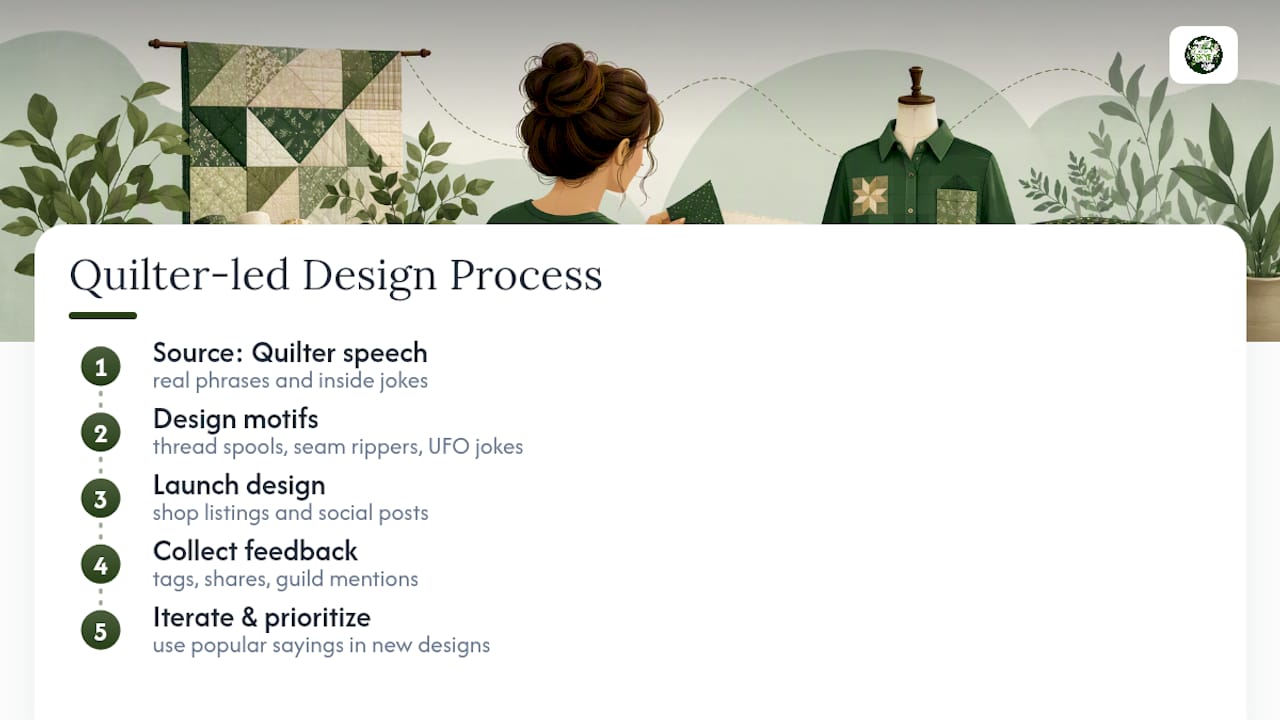
I build every Sincerely Skye design around what quilters actually say to each other, not what a marketing team thinks sounds clever. The phrases that perform best in this community aren't polished slogans, they're inside jokes about fabric stashes, deadline panic before a show, and the particular chaos of a cutting table mid-project. That's the well I draw from.
Community feedback shapes almost everything that comes after a design launches. If a phrase gets tagged and shared at guild meetings, that tells me more than any sales report. Motifs built around thread spools, seam rippers, and the eternal UFO joke keep resurfacing because they're specific enough to feel personal and universal enough that every quilter recognizes themselves in them. Explore the shop, follow along on social, and tell us which sayings actually make you laugh. That feedback loop is the whole design process.
— Skye
Where to Buy or Customize Your Quilter Shirt
Once you've settled on a theme, ordering shouldn't be complicated. Sincerelyskye carries pieces built specifically for studio days and gift-giving, so you're not stitching together separate options from a dozen tabs. The Craft Now, Clean Later V-Neck Tee covers the funny-saying bucket with a comfortable, breathable cut suited for long sewing sessions. If vintage-style illustrative designs are more your speed, browse the Ribbon Hoarders collection or the Antique Tee in red for a warmer, retro palette.
For seasonal or retreat gifting, the Sincerely Fall collection and the 'Tis the Season Vintage Santa Raglan round out a gift bundle nicely alongside a tote bag. Sizing runs true to standard unisex charts on most styles, and full collections are browsable through Sincerely Skye Gear if you want to compare cuts before buying. Pick a design, add it to your cart, and check the size chart on the product page before ordering, that's the whole process.
Sources
- The Quilt Show — What is sashing?
- Sewnikki — Best fusible interfacing for T-shirt/jersey quilts
- Vintage Singer Parts — When to use a walking foot