The best mug gift wrapping method depends entirely on how the mug is getting to its recipient. Handing it over in person? A tissue-and-cellophane bundle or a fabric wrap looks polished in five minutes. Want it standing pretty on a table? Roll it into a paper cylinder. Shipping it? Skip the delicate paper entirely and build a padded box, like a 6x6x6-inch carton, that protects the handle and keeps the mug from shifting.
TL;DR:
- Use a padded box measuring around 6x6x6 inches for shipping an 11-ounce mug to prevent breakage during transit.
- For hand delivery, tissue and cellophane bundles or fabric wraps are quick, attractive, but offer minimal protection for rough handling.
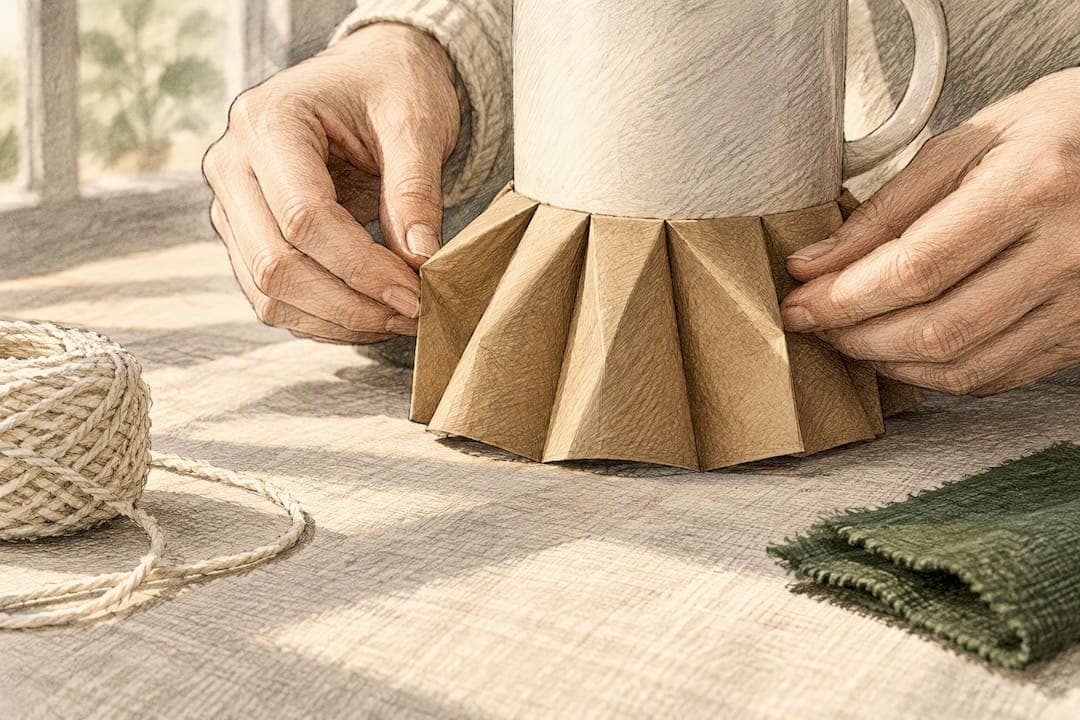
- A paper cylinder with a pleated base can be made by measuring the paper width as roughly four times the mug's width plus one inch, and the height as twice the mug's height plus its depth.
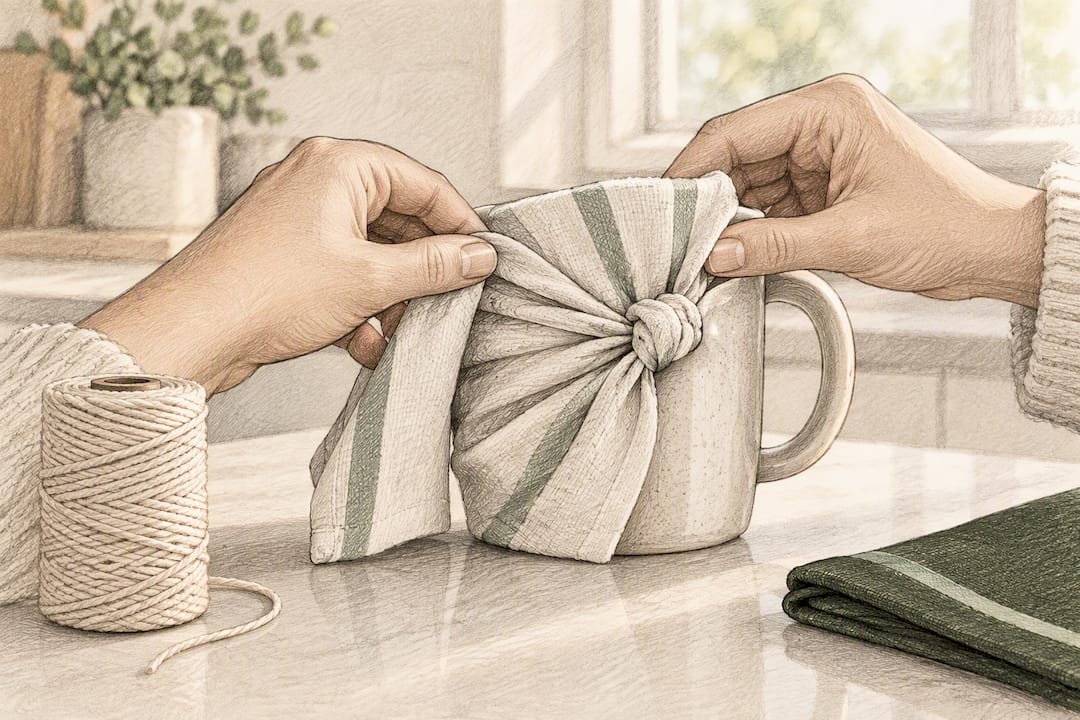
- Fabric wrapping, such as a tea towel or scarf, transforms the wrapping into a reusable gift and suits eco-friendly gifting.
- Incorporate small touches like themed charms, personalized tags, or textured ribbons to elevate the presentation and add a personalized feel.
Table of Contents
- What's the Best Way to Wrap a Mug as a Gift?
- How Do You Make a Paper Cylinder Wrap With a Pleated Base?
- Is the Tissue and Cellophane Bundle Method Fast Enough for Last-Minute Gifts?
- Can You Wrap a Mug in Fabric Instead of Paper?
- What Size Box Should You Use to Ship a Wrapped Mug?
- What Supplies and Finishing Touches Make a Wrap Look Professional?
- Craft Perspective and Quick Workflows From Sincerely Skye
- How Do You Follow a Mug-Wrapping Tutorial Without Getting Lost?
- What Are Some Creative Ways to Decorate a Wrapped Mug?
- How Can You Wrap a Mug Using Eco-Friendly Materials?
- What Mistakes Ruin an Otherwise Nice Mug Wrap?
- How Do You Wrap Oversized or Oddly Shaped Mugs?
- Beauty vs. Protection: How Do You Choose the Right Wrap?
- Where to Find Gift-Ready Mugs for Your Next Wrap
- Sources
- FAQ
What's the Best Way to Wrap a Mug as a Gift?
Every mug-wrapping method trades off between looks and protection, so the right pick depends on what happens to the mug between your hands and the recipient's.
- Tissue + cellophane bundle: Fast, no tools required, looks great for a hand-delivered gift or a gift-table display. It offers almost no cushioning, so it's the wrong pick for mailing.
- Paper-cylinder wrap: A pleated base lets the mug stand upright like a mini gift tower, which makes it the most photogenic option for creative mug wrapping. It takes more patience to get the pleats even.
- Fabric or Furoshiki wrap: A tea towel or cloth napkin turns into a bonus gift, and it's the most eco-friendly choice of the four. It won't survive rough handling any better than paper does.
- Boxed method: The only option built for real transit. It's the least "pretty" straight out of the box, but you can dress it up with ribbon on the outside once it's sealed.
If you're mailing the mug to another city, jump straight to the boxed method below. Everyone else has three good-looking options to choose from.
How Do You Make a Paper Cylinder Wrap With a Pleated Base?
This is the technique that makes a wrapped mug look like it came from a boutique, not a kitchen table. The trick is getting the paper size right before you start rolling.
Measure the paper so the width equals roughly four times the mug's width plus 1 inch, and the height equals about twice the mug's height plus its depth, a rule that comes from tutorials built specifically around wrapping cylindrical objects in paper. Cutting to that formula, instead of eyeballing it, is what keeps you from running short mid-roll.
- Lay the paper flat, pattern-side down, and set the mug on its side at one edge.
- Roll the mug across the paper until it's fully wrapped, keeping the roll snug but not tight.
- Overlap the seam where the paper meets and run a strip of double-sided tape underneath so no tape shows.
- Push in the excess paper at the open (base) end, then fold it into small, even pleats around the circle.
- Tape the pleated base flat so the mug can stand upright on it.
- Stuff a bit of tissue inside the open top, then cinch it with ribbon and trim the ends.
Pro Tip: Small, tight pleats look tailored; a few big folds look bulky. Take an extra minute to fold six or eight small pleats instead of four large ones.
Is the Tissue and Cellophane Bundle Method Fast Enough for Last-Minute Gifts?
Yes, and it's the method most people already know instinctively; it just benefits from a couple of small upgrades. Layer two to three sheets of tissue paper, stand the mug upright in the center, then pull all four corners up and gather them just above the rim, a sequence wikiHow's mug-wrapping guide walks through step by step. Secure the gathered top with a rubber band first, then hide the rubber band under ribbon.
A layer of cellophane over the tissue adds shine and a genuine second layer of protection, which matters if the mug will ride in a tote bag or purse on the way to the party.
- Drop a few wrapped chocolates or a folded card inside the mug before gathering the tissue. It adds weight, so the bundle sits better, and gives the unwrapping a little surprise.
- Tie the ribbon just below the handle, not above it, so the bundle doesn't tip sideways.
- Tuck a gift tag under the bow instead of taping it to the side. It keeps the top of the bundle from flopping open when it's carried.
This method takes under five minutes once you've done it twice, which makes it the default answer to "how do I wrap a mug I forgot about until this morning."
Can You Wrap a Mug in Fabric Instead of Paper?
Fabric wrapping, often called Furoshiki after the Japanese cloth-wrapping tradition, turns the wrapping itself into a second gift. Pick a piece of fabric roughly twice the mug's diameter and twice its height. A standard cotton tea towel is close to perfect for an average 11-ounce mug.
- Center the mug on the fabric, then bring two opposite corners up and tie them in a knot or bow above the rim.
- Take the remaining two corners and tie them the same way, snugging the fabric against the mug's sides as you go.
- Trim any long, floppy corner ends so the finished wrap doesn't look sloppy.
- Slide a sprig of dried lavender or a strand of twine under the knot for a finished, boutique look.
The fabric choice sets the whole tone. A waffle-weave kitchen towel reads casual and practical; a printed cloth napkin or scarf reads dressier and works well for hostess gifts. Either way, the recipient gets a towel or napkin they'll actually use again, which is more than paper wrap can offer.
Pro Tip: If the fabric keeps sliding off a rounded mug, tie the first knot a little tighter than feels natural. The fabric relaxes once the mug settles, so a tight first knot prevents sag later.
What Size Box Should You Use to Ship a Wrapped Mug?
For an 11-ounce mug, a 6x6x6-inch outer box gives enough room for cushioning on every side. That recommendation comes from a mug measuring roughly 3.85 inches tall by 5.5 inches wide by 3.35 inches deep including the handle, according to packaging sizing guidance for mugs, and the extra inches of clearance are what actually keep it from arriving in pieces.
Decorative tissue and cellophane wraps are not shipping protection on their own. A corrugated box with real cushioning is the only reliable way to send a mug through a carrier's sorting system, where it gets tossed, stacked, and occasionally dropped.
- Wrap the handle first, on its own, with a layer of tissue or a strip of bubble wrap. The handle is the single most likely breakage point.
- Fill the box bottom with 1 to 2 inches of crumpled paper or void fill before setting the mug down.
- Position the mug so the handle faces the box's center, not its wall, so it never takes a direct hit if the box gets bumped.
- Pack void fill around all four sides and over the top until the mug can't shift when you shake the box gently.
- Mark the outside "Fragile" and tape all seams, not just the top flaps.
If you're shipping several mugs in one order, a print partner that handles custom packaging and box design can build a branded outer box that protects as well as it presents, which is worth considering if you sell mugs regularly rather than gifting a one-off.
What Supplies and Finishing Touches Make a Wrap Look Professional?
A short supply list covers nearly every method above: wrapping paper or a fabric square, two to three tissue sheets, cellophane, double-sided tape, sharp scissors, ribbon, a small box (for boxed gifts), and bubble wrap or void fill for anything that's shipping.
Two rules govern almost every measurement question. First, cut paper to the width and height formulas covered in the cylinder-wrap section above rather than guessing. Second, smooth the paper flat against the mug before you tighten any ribbon; wrinkles that get sealed under a tight ribbon are impossible to fix afterward, a detail Martha Stewart's gift-wrapping guide calls out as one of the small differences between a homemade look and a shop-quality one.
- Use double-sided tape on every seam. Visible tape reads as unfinished no matter how nice the paper is.
- Hide any closure, seam, or rubber band under a tag, sticker, or bow.
- Carry the finished gift from its base, not its top wrap, so nothing loosens on the way out the door.
- Trim ribbon ends at a clean diagonal instead of leaving them square or frayed.
Pro Tip: Keep a roll of double-sided tape in your wrapping kit specifically for seams. Regular tape shows through most wrapping paper; double-sided doesn't.
Craft Perspective and Quick Workflows From Sincerely Skye
Sincerely Skye's whole catalog runs on small handmade details, so mug wrapping gets treated the same way here: pick a technique, then pair it with two or three finishing touches that show intention.
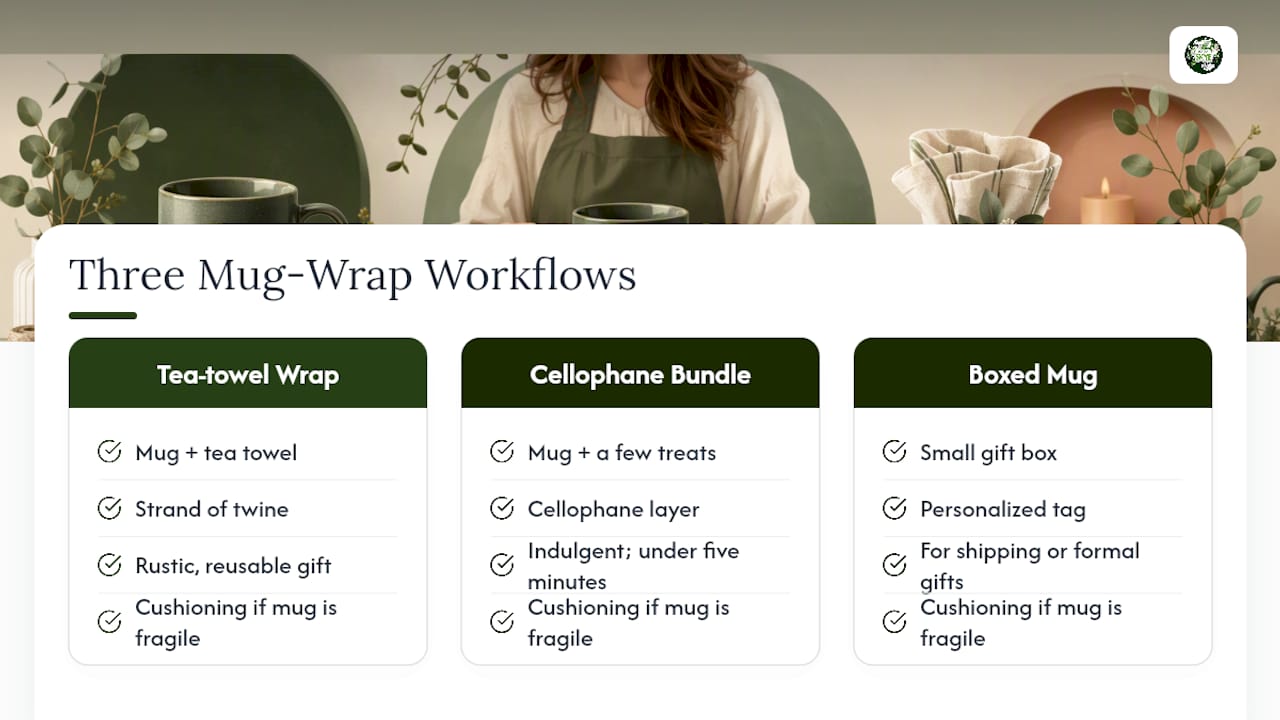
Three workflows worth keeping on hand: mug plus tea towel plus a strand of twine for a rustic, reusable gift; mug plus a few treats plus a cellophane layer for something that feels indulgent in under five minutes; and mug in a small gift box with a personalized tag for anything shipped or given at a formal occasion.
If the mug itself is a fragile handmade piece rather than a factory mug, treat cushioning as non-negotiable regardless of which wrap you choose, and check a mug care guide before packing anything with hand-applied glaze or paint. For readers who want a gift-ready mug to wrap in the first place, a custom mug built around the recipient's name or a craft-themed saying gives the wrapping something worth showing off.
How Do You Follow a Mug-Wrapping Tutorial Without Getting Lost?
Written steps work fine for the boxed method, where the sequence is mostly mechanical. Paper-cylinder wrapping and pleated bases are different. Watching hands fold six small pleats around a curved base in real time clears up in ten seconds what a paragraph of instructions takes three reads to explain.
Look for tutorials that show the pleat step in close-up, not just the finished result. The moment that trips people up isn't rolling the paper. It's the transition from flat excess fabric at the base to a neat, folded circle that lets the mug stand upright. A photo sequence that captures each fold, rather than just "before" and "after" shots, teaches that transition far better than text alone.
For the fabric wrap method, video helps even more, since the knot-tying sequence depends on tension you can't fully describe in writing. Watching someone tie the first knot snug, then adjust the second pair of corners around it, shows you exactly how tight is too tight.
If you're teaching a kid or a first-timer to wrap a mug, break the process into three checkpoints instead of one long demo: wrapping around the mug, forming the base or knot, and finishing with ribbon or twine. Confirming each checkpoint before moving to the next keeps mistakes small and fixable, instead of discovering a rolling error only after the base is already pleated shut.
Whichever format you follow, keep the mug itself nearby while you watch or read. Dry-running a fold on a spare piece of paper first, before committing your good wrapping paper, saves more sheets than any amount of careful reading does.
What Are Some Creative Ways to Decorate a Wrapped Mug?
The wrap itself is only half the presentation. What you add on top is what makes a mug gift look considered rather than grabbed off a shelf on the way to a party.
Themed embellishments work best when they echo something about the mug or the occasion. A coffee-bean charm or a small cinnamon stick tucked under the ribbon signals "coffee lover" before the recipient even unwraps it. A sprig of dried eucalyptus or lavender does the same for a spa-day or self-care gift. For holiday mugs, a mini ornament tied into the ribbon doubles as a keepsake once the wrapping comes off.
Personalized tags outperform generic gift tags every time, and they cost almost nothing extra. Handwrite the recipient's name and a one-line note directly on kraft paper cut into a tag shape, or stamp it with a small rubber stamp if you make gifts often enough to justify one. A tag that references an inside joke or the specific reason for the gift gets kept; a blank "To/From" tag gets thrown away with the wrapping.
Texture mixing is an easy upgrade most people skip. Pairing smooth cellophane with a rough jute or twine tie, or glossy wrapping paper with a matte fabric ribbon, gives the eye something to notice beyond just color. If the mug itself has a printed saying or design, let that guide your ribbon and tag colors instead of defaulting to whatever's in the drawer.
For gift-giving occasions that repeat, like a coworker's birthday or a holiday exchange, keeping two or three embellishment options on hand (dried herbs, mini charms, a stash of pre-cut tags) means you're never stuck wrapping a mug in bare paper with nothing on top.
How Can You Wrap a Mug Using Eco-Friendly Materials?
Fabric wrapping is the single biggest sustainability upgrade available for mug gifts, since a reusable cloth wrap becomes a second gift instead of trash the moment the mug comes out. A tea towel, a cloth napkin, or even a scarf all work, and the recipient keeps using the fabric long after the mug is empty.
If paper is your preferred look, recycled kraft paper decorated with stamps, drawn designs, or pressed leaves gives you the polished cylinder-wrap presentation without relying on glossy, laminated paper that can't be recycled easily. Save ribbon and twine from gifts you receive; cotton twine in particular can be reused two or three times before it frays past usefulness.
Skip cellophane if the mug is being hand-delivered rather than carried any real distance. It adds shine, but it's the one material in this whole guide with no reuse value and no recycling path in most areas. For a shipped mug, swap plastic bubble wrap for crumpled brown paper or shredded paper void fill. It cushions just as well for a lightweight mug and breaks down instead of sitting in a landfill.
Stuffing the mug itself with a small edible gift, like loose tea or a wrapped chocolate bar, also cuts down on separate packaging. You're using the mug's own interior as part of the wrap instead of adding another box or bag to the pile.
What Mistakes Ruin an Otherwise Nice Mug Wrap?
The most common mistake is treating a pretty wrap as adequate protection for shipping. Tissue, cellophane, and fabric all look wonderful and offer close to zero cushioning against a mug getting knocked around in a delivery truck. If it's going in the mail, it needs a box, full stop.
Skipping the handle is the second big one. The handle is the thinnest, weakest point on almost every mug, and it's also the part most people forget to protect specifically, wrapping the whole mug as one shape instead of giving the handle its own layer first.
Guessing at paper size instead of measuring wastes more paper than it saves. Cutting a piece too small forces an awkward, visible seam; cutting one too large means bunching and folding that never lays flat. The width-times-four-plus-one-inch formula covered earlier takes thirty extra seconds and prevents both problems.
Visible tape is a smaller mistake, but it's the one that most reads as unfinished at a glance. Regular tape shows through most wrapping paper as a shiny strip; double-sided tape hides the seam entirely for close to the same cost.
Overtightening ribbon before smoothing the paper underneath locks wrinkles in permanently. Smooth first, then tighten, in that order every time.
Finally, wrapping in a rush without a dry run on scrap paper is how good wrapping paper ends up cut wrong on the first and only try. A thirty-second practice fold on a spare sheet catches sizing mistakes before they cost you your good paper.
How Do You Wrap Oversized or Oddly Shaped Mugs?
Extra-large mugs, novelty shapes, and double-walled travel mugs all break the standard measuring formulas because they're wider, taller, or simply not a clean cylinder. For an oversized mug, add a couple of extra inches to both the width and height calculations from the paper-cylinder section, then do a dry test roll before committing scissors to your good paper.
Novelty mugs with unusual handles, wide bases, or asymmetric shapes (think animal-shaped mugs or ones with sculptural handles) usually wrap better in fabric or a box than in fitted paper. Fabric flexes around odd bumps and handles in a way that stiff wrapping paper can't; a box just needs enough void fill to hold the shape steady regardless of what that shape is.
For very tall mugs, like 20-ounce travel tumblers, the pleated paper base can get bulky if you try to force the same pleat count as a standard mug. Cut the base pleats slightly larger and fewer in number for a tall, narrow shape. It keeps the base flat without adding excess bulk at the bottom.
If a mug is simply too large or unusually shaped for any wrap to sit cleanly, the boxed method becomes the most forgiving default. Void fill adapts to any shape a paper cylinder or fabric knot can't accommodate, and a slightly oversized box costs you nothing but a little extra tissue paper.
Beauty vs. Protection: How Do You Choose the Right Wrap?
Run through four questions before you pick a method: who's receiving it, how far it's traveling, what the occasion calls for, and whether reusability matters to you. Hand delivery to someone nearby favors tissue and cellophane or fabric. Anything going in the mail needs the box, no exceptions.
For last-minute gifts, default to the tissue-and-cellophane bundle. It's the fastest method that still looks intentional. And if sustainability matters to you, a fabric wrap beats every paper option, since it doubles as a second gift the recipient actually keeps using.
— Skye
Where to Find Gift-Ready Mugs for Your Next Wrap
Once you've got the wrapping technique down, the mug itself is what sets the tone for the whole gift. Sincerely Skye's catalog leans into the same craft-forward, handmade-feeling aesthetic that a well-pleated paper cylinder or a tea-towel wrap is going for, so the two pair naturally instead of competing for attention.
The custom mug lets you design around the recipient specifically, which turns any of the wrapping methods above into something that reads as personal rather than store-bought. If the occasion is seasonal, the Sincerely Christmas collection and the wider shop carry gift-ready drinkware and craft-themed pieces built for exactly this kind of wrapped presentation. Short on time to pick something? An e-gift card starting at $25 lets the recipient choose their own mug while you still get to wrap something physical, like a printed card tucked into a tissue bundle, to hand over in the meantime. Browse the custom mug page now and match it to whichever wrap style fits your occasion.
Sources
- How to Wrap Mugs: 9 Steps (with Pictures) - wikiHow
- DIY gift bag/wrapping paper measurements (BestProducts)
- What size box for mugs? (WhatBoxSize)
- How to wrap gifts (Martha Stewart)
FAQ
What Does Giving a Mug as a Gift Symbolize?
A mug is one of the most personal everyday-use gifts you can give, since it gets picked up daily and often reflects the recipient's habits, humor, or interests. Custom or handmade mugs push that further, turning a functional object into something that signals you thought specifically about the person rather than grabbing something generic.
What Size Wrap Do You Need for an 11-Ounce Mug?
For paper-cylinder wrapping, cut paper with a width around four times the mug's width plus 1 inch, and a height around twice the mug's height plus its depth, following the measurement formula from BestProducts. For tissue or fabric bundling, two to three sheets of standard tissue paper or a single tea towel comfortably covers a mug this size.
What Size Gift Box Should You Use for a Mug?
A 6x6x6-inch box is the recommended size for shipping an 11-ounce mug, since it leaves enough room on all sides for proper cushioning material. For hand-delivered gifts that don't need shipping-grade protection, a smaller decorative box sized just slightly larger than the mug works fine.
What Are Some Creative Ways to Wrap a Mug as a Gift?
Beyond standard paper, try a fabric Furoshiki wrap tied in a knot above the rim, a stand-up paper cylinder with a pleated base, or a tissue bundle stuffed with treats before gathering. Adding a themed charm, a personalized tag, or dried botanicals under the ribbon turns any of these into a more memorable presentation.
Can You Reuse Wrapping Materials for Mug Gifts?
Yes, fabric wraps like tea towels or cloth napkins are the most reusable option since the recipient keeps and uses the fabric long after unwrapping. Ribbon and twine can also be saved and reused for future gifts as long as they aren't cut too short the first time.