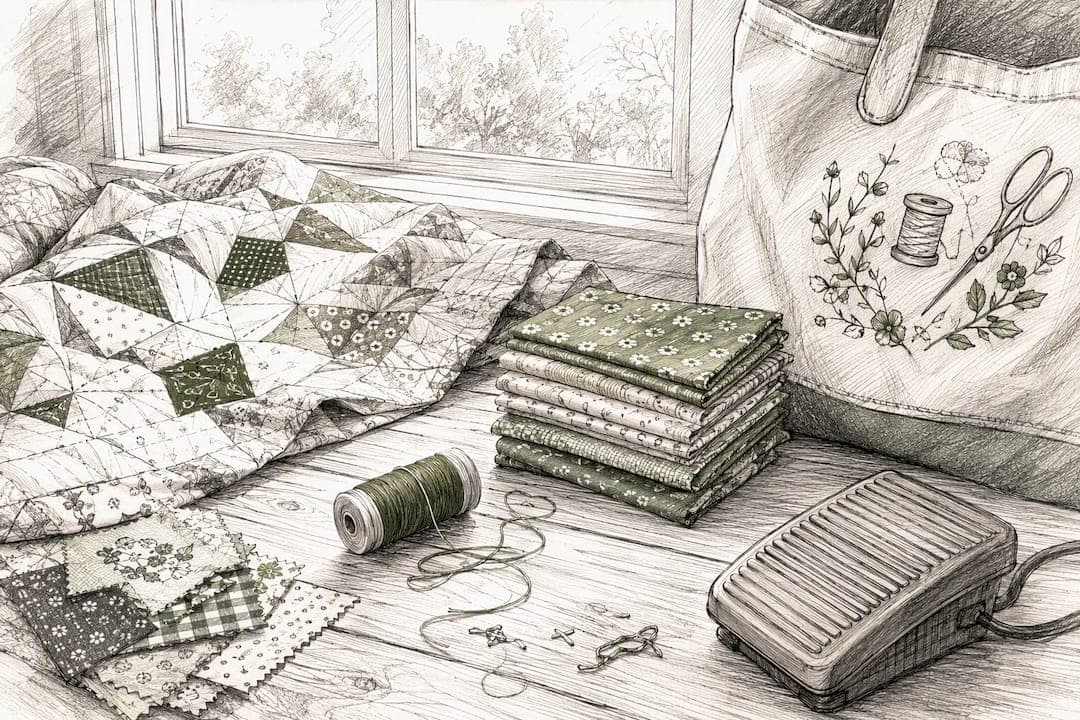
Pack your sewing machine and cords, a power strip, cutting mat and rotary cutter, labeled project bags, spare needles and blades, and your personal comfort items (pillow, slippers, meds), and you've covered most of what any retreat requires. Everything else below fills in the gaps that trip up even seasoned retreaters.
- Machine, case, cord, foot pedal
- Power strip or extension cord
- Cutting mat, rulers, rotary cutter
- Two to four labeled project bags
- Spare needles, blades, bobbins
- Pillow, slippers, meds, snacks
Pro Tip: Grab the printable one-page checklist and project-sheet template near the end of this guide before you pack a single bag. Fill in the project sheet first; it tells you exactly what to load into each project bag.
Category-by-category detail, packing strategy, and the venue questions worth asking before you leave follow below.
Key Takeaways
A complete maker retreat packing list succeeds when machine readiness, project organization, and personal comfort are each planned separately instead of thrown into one general bag.
| Point | Details |
|---|---|
| Machine gets its own checklist | Pack the machine, cord, pedal, extra needles, and pre-wound bobbins as a self-contained unit. |
| Power planning prevents outlet fights | Bring your own power strip since venue outlets are often limited or shared. |
| Pre-cut projects before you leave | Pre-cutting and labeling bags cuts decision time once you're at the table. |
| Confirm venue provisions ahead | Ask about outlets, table size, and shared irons before packing duplicates. |
| Sincerelyskye covers comfort gear | Craft-themed tees, sweatshirts, and totes fit the personal comfort category of any retreat list. |
Table of Contents
- Sewing Machine and Core Supplies to Pack
- Setting Up Your Personal Sewing Station
- Notions and Small Tools Every Maker Forgets
- How Should You Choose and Prepare Projects?
- Clothing, Toiletries, and Comfort Items to Bring
- Packing and Transport Strategies for Heavy Gear
- What Do Retreat Venues Usually Provide?
- Spare Parts and Quick Fixes for Machine Trouble
- Your Printable Maker Retreat Packing List
- Sources
Sewing Machine and Core Supplies to Pack
Your machine is the one item you truly cannot improvise, so give it a checklist of its own: the machine, its case, power cord, foot pedal, an extension table if you use one, the printed manual, and whatever specialty feet your current project needs. Sewing bloggers who pack for retreats regularly list this exact combination, plus a travel iron and wool pressing mat as near-essentials once you're away from your home setup.
Consumables matter as much as hardware. Pack extra needles in a couple of sizes, several pre-wound bobbins, thread in a neutral color plus whatever your project calls for, and your bobbin case or holder so a dropped bobbin doesn't turn into a search party. If you're documenting your work, bring a phone charger and any camera gear separately from your sewing kit so it doesn't get buried.
- Machine, case, cord, pedal, extension table, manual
- Extra needles, pre-wound bobbins, matching and neutral thread
- Small screwdriver, lint brush, cleaning oil
- Phone charger and camera gear, packed separately
Pro Tip: Test-run your machine the night before you leave. A skipped stitch at home is an easy fix; the same problem three hours into a retreat, with no manual and no toolkit, eats your whole afternoon.
Setting Up Your Personal Sewing Station
A good station comes down to light, surface space, and pressing tools you can reach without standing up. Bring a cutting mat, at least one ruler, a task lamp or clip light, and a small pressing mat with a travel iron so you're not walking across the room every few minutes.
Power planning matters more than most packing lists admit. A sewing machine, a lamp, and a travel iron running off one shared outlet strip is common at retreats, and portable power setups built for gear-heavy hobbies typically plan around several hundred watt-hours of capacity when multiple devices run at once. You won't need a power station for a weekend retreat, but the same logic applies at a smaller scale: bring your own power strip rather than assume the venue has enough outlets for everyone at your table.
- Cutting mat, ruler, task lamp
- Small pressing mat and travel iron
- Power strip, short extension cord, cable ties
- Chair cushion, small waste bin
Notions and Small Tools Every Maker Forgets
These are the items that don't make anyone's highlight reel but stop your whole project cold when they're missing. Pack a rotary cutter with two or three spare blades, fabric scissors, and a separate pair for paper templates so you're not dulling your good blades on cardstock.
Add rulers, a seam gauge, marking tools, and a measuring tape for anything that needs precision. For fastening and holding, bring pins, clips, safety pins, wonder clips, extra bobbins, and binding clips. Round it out with a seam ripper, tweezers, small pliers, a lint roller, and a thread catcher for cleanup.
- Rotary cutter, spare blades, fabric and paper scissors
- Rulers, seam gauge, marking tools, tape measure
- Pins, wonder clips, binding clips, spare bobbins
- Seam ripper, tweezers, small pliers, lint roller
Pro Tip: Keep all of this in one clear zip pouch year-round. When a retreat comes up, you grab one bag instead of hunting through drawers for twenty small items.
How Should You Choose and Prepare Projects?
Bring two to four projects, mixing at least one quick win with something longer, so you don't burn out on a single stalled piece. Experienced quilters build this into their retreat packing routine by organizing each project in its own clear bin and pre-checking supplies before they ever leave home.
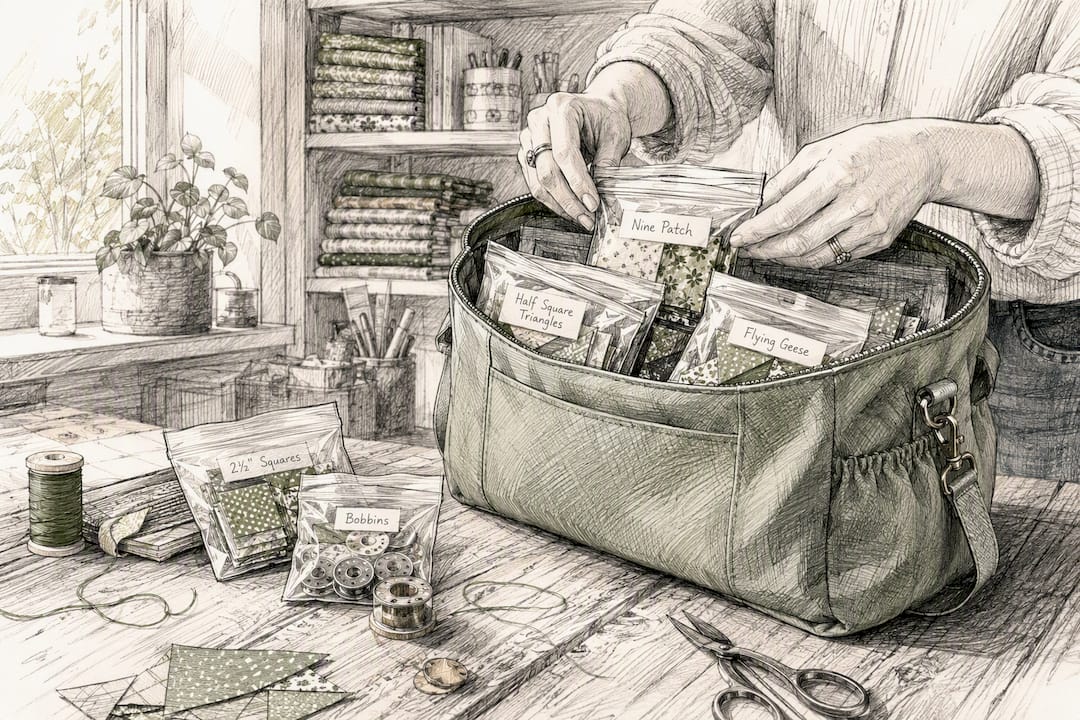
Do the boring work in advance: pre-cut your pieces, print your patterns, pre-wind your bobbins, and label each bag with a simple step list so you know exactly where you left off. A quick project-sheet template listing supplies and next steps saves real time once you're at the table.
- Bring 2 to 4 projects, mixing quick and longer pieces
- Pre-cut fabric and pack backing and batting together
- Print patterns and pre-wind bobbins ahead of time
- Label each bag with fabric, thread, notions, and next steps
Clothing, Toiletries, and Comfort Items to Bring
Comfortable layers matter more at a retreat than a full wardrobe, since you'll spend most of your time seated in one room that's either too warm or too cold. Pack a workshop apron, comfortable shoes, pajamas, and slippers or flip-flops for padding around the venue after hours.
Bring basic toiletries, any prescriptions, allergy medication, and a small first-aid kit along with hand sanitizer. A travel period-care kit is worth building once and reusing for every trip, not just quilting ones. Round things out with a travel pillow, a refillable water bottle, earplugs, an eye mask, and a favorite mug.
- Comfortable layers, apron, shoes, pajamas, slippers
- Toiletries, prescriptions, allergy meds, first-aid kit
- Travel pillow, water bottle, earplugs, eye mask
- Shareable snacks
Packing and Transport Strategies for Heavy Gear
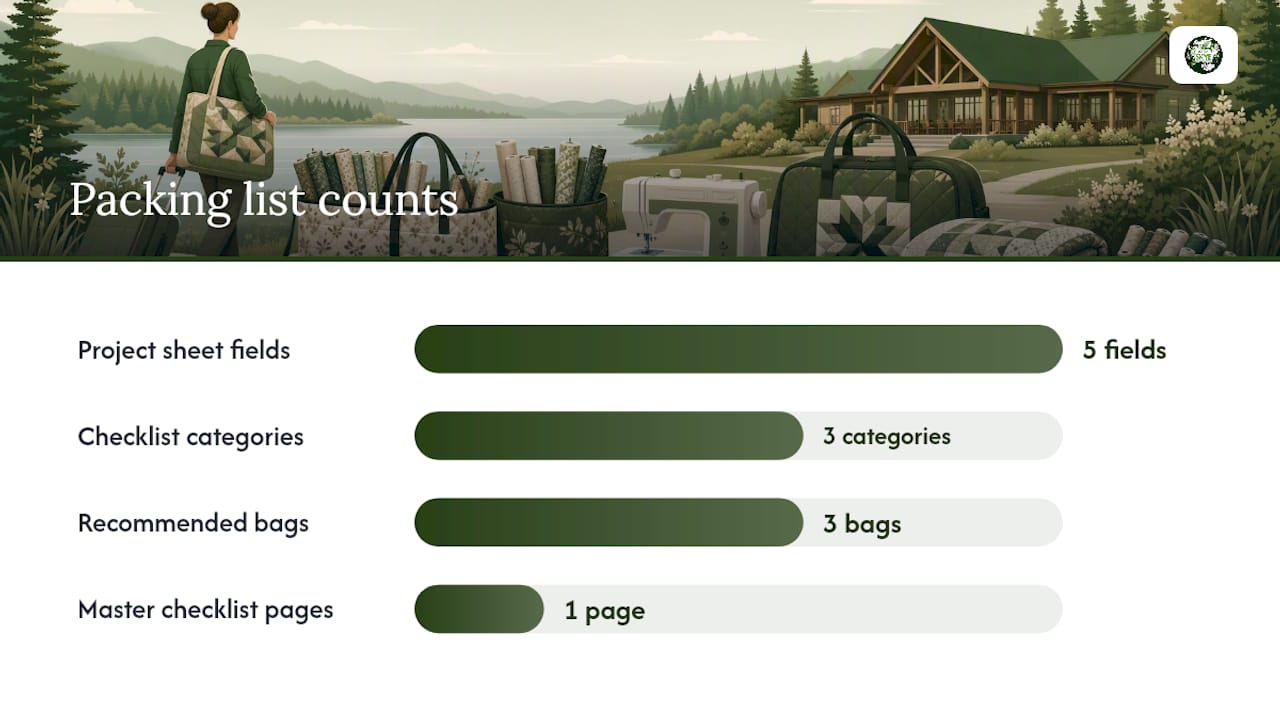
Adapting a system used by portable maker kits, split your load into three bags: one for the machine and its tools, one for projects and patterns, and one for power and consumables like thread and batteries. This keeps you from digging through one giant tote every time you need a bobbin.
Use packing cubes, zip pouches, and labeled project bins to keep everything findable. A rolling craft bag or luggage with built in straps beats a duffel for anything heavier than a few pounds, and padding around your machine protects it from a rough ride in the trunk.
- Machine bag, project bag, power and consumables bag
- Packing cubes and labeled zip pouches
- Rolling bag or luggage with straps
- Padding for the machine, secured sharp tools
Pro Tip: Pack everything the night before and run through your list one final time in the morning. Last-minute packing is where chargers, meds, and phone cables get left on the counter.
What Do Retreat Venues Usually Provide?
Provisions vary widely, but many venues supply irons and ironing boards, a handful of shared cutting mats, limited extension cords, and occasional task lamps. Small venues will often list what's available but still recommend attendees bring their preferred tools rather than count on shared equipment.
Confirm outlet availability, table size, whether bedding and towels are included, meal plans, and parking or loading access before you go. Coordinate with your roommates or group to split bulky items like an extra iron or power strip.
- How many outlets are at each table?
- What size is my work surface?
- Are bedding, towels, and meals included?
- What's the loading and parking situation?
Spare Parts and Quick Fixes for Machine Trouble
Pack extra needles, spare blades, several bobbins, a spare fuse if your machine uses one, and neutral thread. These small machine specific spares solve most problems that pop up mid retreat without needing a repair shop.
If something goes wrong, work through it in order: check the power cord and pedal connections, rethread the machine completely, swap the needle, then clean out the bobbin area. If none of that fixes it, ask the organizer before assuming you need a new machine part.
- Noisy machine: clean and oil the bobbin area
- Skipped stitches: swap the needle and rethread
- Won't power on: check cord, pedal, and outlet
Your Printable Maker Retreat Packing List
The printable version groups everything above into one page: machine, station, notions, projects, personal items, and spares, matching the categories covered in this guide. It's meant to be checked off the morning you pack, not read start to finish.
The project sheet template covers five fields: project name, required yardage or parts, thread color, special tools needed, and a next-step checklist for what's already done. Print both single sided, slip them into a clipboard or plastic sleeve, and you've got a reusable packing system for every future retreat.
- Print the master checklist single-page, front only
- Print one project sheet per project you're bringing
- Laminate or use a clipboard for durability
- Check items off as you load your car, not before
Prose claim: A maker retreat packing list works best when it separates machine readiness, project prep, and personal comfort into three distinct categories rather than one long list.
| Point | Details |
|---|---|
| Test your machine early | Run a test stitch the night before so problems surface at home, not at the retreat table. |
| Pack three separate bags | Split gear into machine, project, and power/consumables bags for faster setup. |
| Pre-cut and label projects | Prep pieces and bobbins ahead of time, and label each bag with its next step. |
| Confirm venue provisions | Ask about outlets, table size, and shared equipment before duplicating what's already there. |
| Shop retreat ready comfort gear | Sincerelyskye's craft-themed apparel and totes cover the comfort side of the checklist. |
Set an Intention, Not Just a Checklist
Long-time retreat organizers say your mindset matters more than any single tool, and being ready to adapt when a machine hiccups or a project stalls shapes the whole trip. Pro Tip: Pack one easy, low-stakes project as a backup for downtime.
A Note From Skye
I've packed for enough retreats to know the checklist matters less than having one at all. This guide came from watching makers scramble for extension cords and forgotten bobbins more times than I can count. Sincerelyskye grew out of that same love for the maker lifestyle: comfort and craft, side by side.
Comfortable Gear Worth Packing Alongside Your Tools
A retreat is long hours in one chair, so what you wear matters as much as what you sew with. The Craft Now, Clean Later tee works as an easy layer for daytime sewing, and a roomy Sincerely Comfort piece covers you for the cooler venue evenings most retreats bring.

If you need a bigger bag for hauling extra fabric or a spare project, the Spooky Ribbon Hoarders Club Tote doubles as a project bag with room to spare. Browse the full Sincerely Skye store to pick out something comfortable before your next trip.
Sources
- Quilting Retreat Checklist | Sew Much Moore
- What should I pack on a sewing retreat? – Dinkydoo Fabrics
- Craft Retreat Packing List | Night Owl Craft Retreat
- Retreat packing checklist | Shipshewana Quilt Retreat
- How-todo