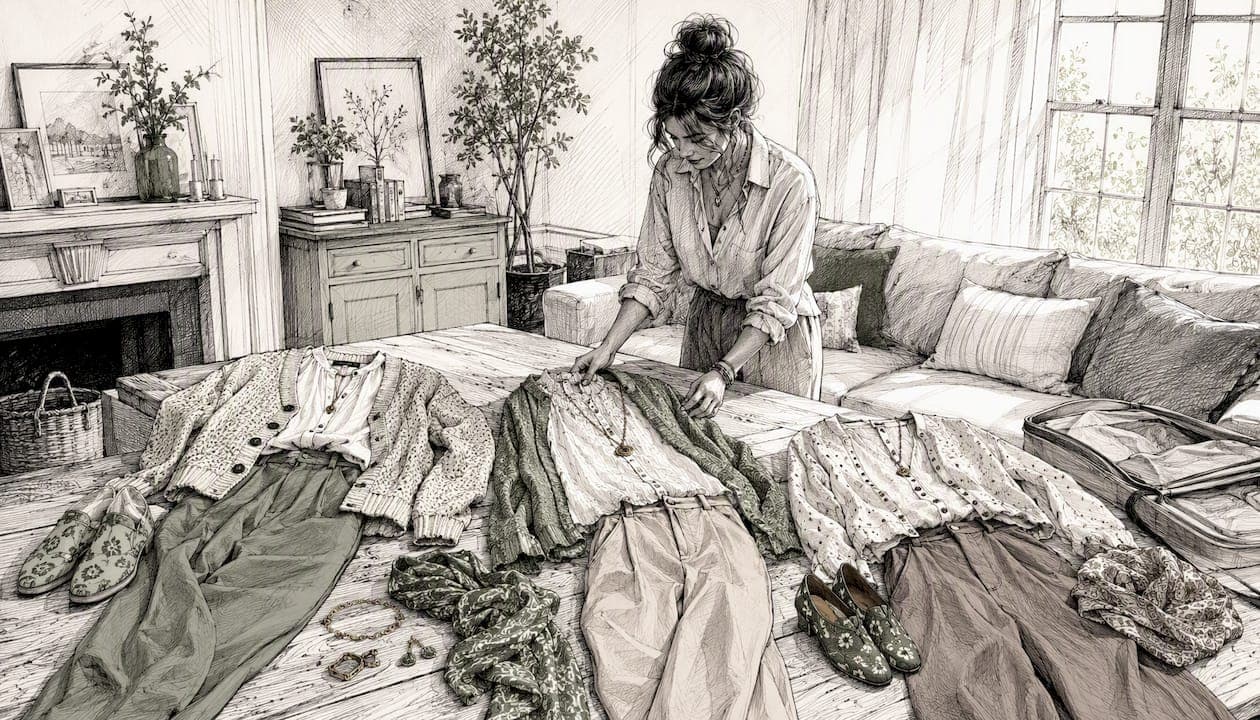
Bring 3–5 complete outfits to your branding session. The minimum is three, and each one should serve a specific purpose: one Relatable look (how you actually show up day-to-day), one Aspirational look (polished, elevated, the version of you clients are hiring), and one Working Uniform (you in action, doing the thing you do). That three-outfit strategy maps directly to the images you'll use most: homepage hero, social content, and sales pages.
Before you leave the house:
- Relatable look: casual but intentional, worn for behind-the-scenes and Instagram lifestyle shots
- Aspirational look: your most polished outfit, reserved for the website hero and LinkedIn
- Working Uniform: what you actually wear while doing your craft or service, used for action shots and email headers
- Packing tip: hang every look on its own hanger with shoes and accessories clipped or bagged alongside it. Steam everything the night before.
Key Takeaways
Bring 3–5 complete outfits to your branding session, built around the Relatable, Aspirational, and Working Uniform framework, in solid mid-range colors that photograph cleanly across every platform.
| Point | Details |
|---|---|
| Use the 3-outfit framework | Pack a Relatable, Aspirational, and Working Uniform look mapped to specific image use-cases. |
| Stick to solid mid-range colors | Navy, charcoal, cream, and warm neutrals avoid moiré, blown highlights, and color casts. |
| Fit and layers multiply your looks | The plus-one rule and one layering piece can turn three outfits into five distinct images. |
| Test every outfit on your phone camera | A quick phone-test before shoot day catches fit issues, reflections, and color problems. |
| Sincerelyskye for maker brands | The Sincerelyskye gear collection offers camera-friendly, craft-inspired pieces for working-uniform and relatable shots. |
Table of Contents
- How to choose your branding photo outfits using the 3–5 outfit system
- What colors and patterns actually photograph well
- Fit, tailoring, and layering for a flattering look on camera
- Accessories, shoes, and grooming details that matter on camera
- Practical outfit formulas by role you can copy directly
- What not to wear to a branding photoshoot
- How to plan and pack for shoot day
- What photographers consistently see succeed and fail
- How to align your outfits with your brand personality and message
- How to coordinate your outfits with the shoot location and background
- Seasonality and weather for outdoor branding shoots
- Hair and makeup coordination for cohesive branding images
- The wardrobe rule most people ignore until it's too late
- Branding photo outfits from Sincerelyskye
- Sources
How to choose your branding photo outfits using the 3–5 outfit system
The three-outfit framework works because it forces you to think about where each image will live before you pack a single thing. Your Relatable look lands on Instagram Stories and behind-the-scenes reels. Your Aspirational look becomes the homepage hero and LinkedIn banner. Your Working Uniform fills the sales page, the email header, and any "process" shots your audience actually wants to see.
Solid colors, subtle textures, and layered looks give you the most versatility across all three categories. A navy blazer over a cream blouse reads aspirational. The same cream blouse untucked with jeans becomes relatable. That's two looks from two pieces.
Plan your outfits at least two weeks before the session. If anything needs tailoring, that window is non-negotiable. Order online pieces with enough time for returns. Lay each complete look out on a bed or hang it as a unit: top, bottom or dress, shoes, and every accessory it needs. Photographers call this a "complete outfit" for a reason. Swapping looks on set goes faster when nothing is missing.
Comfort matters more than you think. Photographers consistently find that clients who feel comfortable in their clothes hold more open body language, and that shows in every frame. If an outfit makes you self-conscious, leave it home.
What colors and patterns actually photograph well
Camera sensors are not forgiving with certain colors and patterns. The rules photographers use are straightforward once you know the technical reason behind them.
Colors that work:
- Navy, charcoal, deep burgundy, cream, and warm beige sit in the mid-range of the tonal scale. They avoid the blown-out highlights that pure white creates near the face and the flattening effect of solid black.
- Dusty rose, sage green, and warm terracotta read beautifully on most skin tones and hold detail under studio lighting.
Colors to avoid:
- Neon shades reflect onto skin and cast an unflattering color wash in the final image.
- Pure white near the face blows out highlights and competes with your features.
- Pure black without texture flattens the body and loses detail in shadows.
Solid mid-range colors photograph best, and small busy patterns can produce moiré, a digital shimmer that makes fabric look like it's vibrating on screen. Thin stripes, tiny checks, and micro-houndstooth are the most common offenders. If you love pattern, go large-scale: a bold plaid, a wide stripe, or a clean floral with clear spacing between elements.
Fabric choices: Natural fibers and textured weaves photograph with depth. Wool, linen, silk, and textured knits catch light in a way that adds dimension. Shiny synthetics and satin-finish fabrics do the opposite: they reflect studio lights and create hot spots that draw the eye away from your face.
| Camera consideration | What photographers see | Outfit implication |
|---|---|---|
| Moiré effect on fine patterns | Thin stripes and micro-checks vibrate on digital sensors | Choose solids or large-scale patterns only |
| Color-first impressions | Mid-range tones hold detail across platforms | Build your palette around navy, charcoal, cream, and warm neutrals |
Fit, tailoring, and layering for a flattering look on camera
Fit is the single variable that separates a polished image from an awkward one. A well-tailored mid-price outfit photographs better than an expensive one that pulls across the shoulders or bunches at the waist.
Photographers recommend dressing one level above your daily wear, a rule sometimes called the "plus-one" rule. If you normally work in jeans and a tee, wear tailored trousers and a structured blouse. If you already dress business casual, step up to a blazer or a polished dress. The goal is credibility, not costume.
Fit checklist before you pack:
- Shoulder seams sit exactly at the edge of your shoulder, not drooping down your arm
- Sleeves end at the wrist bone, not mid-forearm
- No pulling across the chest or back when you button up
- No bunching at the waist or hips when you sit down
Layers are your best friend for getting more looks from fewer pieces. A structured blazer over a solid tee becomes a different outfit entirely when the blazer comes off. A cardigan, vest, or denim jacket does the same work. Photographers can reframe a shot from waist-up to full-length, and a layer change reads as a completely new look in the final gallery.
Pro Tip: Pack a small emergency kit: double-sided fashion tape, temporary hem clips, and a lint roller. Fabric tape fixes a gaping button placket in thirty seconds and keeps a neckline exactly where you want it during a headshot.
Accessories, shoes, and grooming details that matter on camera
Small details read large in a final image, especially when a photographer delivers full-length and three-quarter shots alongside headshots.
Bring to every session:
- Two pairs of polished shoes: one formal, one casual, both clean and scuff-free
- Simple jewelry in one metal tone (mixing gold and silver in the same outfit rarely photographs cleanly)
- A backup pair of glasses if you wear them, plus a lens cloth
- A belt that matches your shoe tone for any high-waisted or tucked look
- A lint roller and a small fabric brush
Shoes matter even when you assume they'll be cropped out. Action shots, full-length poses, and environmental images almost always include feet. A scuffed sneaker or a shoe that doesn't match the outfit's formality level pulls the whole image down.
On-set kit to pack separately:
- Safety pins in multiple sizes
- Double-sided fashion tape
- A small travel sewing kit
- Blotting papers and pressed powder for shine control
- Breath mints (for comfort, not camera reasons, but comfort matters)
- A small mirror
Grooming coordination is just as deliberate as outfit selection. Hair and makeup should be camera-ready before you arrive, which usually means slightly more than your everyday look. Camera lenses compress features and flatten dimension, so a touch more definition in brows, a slightly bolder lip, or a more structured blowout reads as "normal" on screen.
Practical outfit formulas by role you can copy directly
Wardrobe is a communication tool. The textures and silhouettes you choose signal your positioning before a single word of copy appears on screen. Choosing textures and colors to match your brand positioning is something photographers actively recommend: handmade brands lean into warm textures, while high-end consultants reach for structured lines.
-
Consultant or coach: Tailored blazer in charcoal or navy over a silk blouse, slim trousers, leather loafers. Aspirational shot: blazer on. Relatable shot: blazer off, sleeves rolled. Working shot: seated at a desk with a notebook. Formality level: business professional to business casual.
-
Creative founder: A textured midi dress in a warm neutral or a linen wide-leg trouser with a fitted knit top. Bring a denim jacket for the relatable layer. Working shot: at a desk, sketchbook open, natural light. Formality level: smart casual. For artisan entrepreneurs who sell at markets, practical vendor looks translate well into working-uniform shots.
-
Tech founder: Clean, minimal pieces: a well-fitted crewneck in charcoal or slate, dark slim trousers, white leather sneakers or Chelsea boots. The working shot works well at a standing desk or with a laptop. Avoid anything with a large logo. Formality level: elevated casual.
-
Artisan or maker: Warm textures are your signal: a linen apron over a solid tee, a chunky knit cardigan, or a chambray shirt. Working shots in your studio or at your craft table. Relatable look: the apron off, the knit cardigan on. Aspirational look: a clean, pressed version of your maker aesthetic, no visible wear or stains. Formality level: casual to smart casual.
-
Healthcare or clinical professional: Scrubs in a solid mid-tone (navy, sage, or burgundy) for working shots, a white coat layered over a solid blouse for aspirational shots. Keep jewelry minimal and hair pulled back for clinical images. Formality level: professional.
-
Food or hospitality entrepreneur: A clean apron over a solid, camera-safe color for working shots. Aspirational look: a structured blouse or button-down in a warm neutral, no apron. Relatable look: casual but intentional, perhaps a linen shirt in a warm tone. Formality level: casual to smart casual.
Map each formula into the three-outfit system: your role-specific working look fills the Working Uniform slot, your most polished version of that role fills Aspirational, and your everyday version fills Relatable.
What not to wear to a branding photoshoot
- Neon or fluorescent colors: They reflect onto skin and create color casts that are difficult to correct in editing.
- Tiny, busy patterns: Thin stripes, micro-checks, and small houndstooth cause moiré on digital sensors, making fabric appear to shimmer or vibrate.
- Large visible logos: A brand logo on your chest competes with your own brand and dates the image quickly.
- Wrinkled or unsteamed clothes: Wrinkles read as careless in a still image in a way they never do in person.
- Overly trendy statement pieces as your primary look: Trend-driven outfits date a gallery fast. Save the statement piece for an accent, not the hero shot.
- Extremely shiny or reflective fabrics: Satin, patent leather, and high-sheen synthetics create hot spots under studio lights that pull focus away from your face.
- Outfits that don't feel like you: This is the most common mistake photographers see. Dressing to "look like a business owner" rather than an elevated version of yourself shows up in body language. Stiff, uncomfortable clothes produce stiff, uncomfortable images.
How to plan and pack for shoot day
Start two weeks out. Order anything new immediately and schedule any tailoring appointments within the first few days. By one week before, every look should be assembled and hanging as a complete unit.
The night before, steam every piece and lay out each outfit with its shoes and accessories. Take a phone photo of each complete look so you can reference it on set without digging through a bag.
On shoot day, pack outfits on hangers in a garment bag if possible. Folding introduces wrinkles that a travel steamer can fix, but it's easier to arrive wrinkle-free. Bring your on-set kit in a separate pouch.
Pre-shoot test routine: Put on each outfit and take a few phone photos in natural light. Sit down, stand up, and walk across the room. Check that nothing pulls, gaps, or rides up. Hold your arms out and check the neckline from the front. If a look fails the phone test, swap it before you leave.
Complete packing checklist: 3–5 complete looks on hangers, matching shoes for each, all accessories bagged by outfit, a travel steamer, lint roller, fashion tape, safety pins, blotting papers, a small mirror, and a phone charger.
What photographers consistently see succeed and fail
The patterns are consistent across sessions. Clients who arrive with complete, pre-tested looks and a clear sense of which outfit goes where finish sessions faster and leave with more usable images. Clients who pack loose extras and decide on set spend session time problem-solving instead of shooting.
Photographers recommend using brand colors as accents rather than exact matches across all outfits. If your brand palette is sage green and cream, wearing head-to-toe sage green causes you to blend into your own website background. A sage green accessory or a cream blouse as the base keeps contrast and readability intact.
| Photographer observation | Documented source | Practical implication |
|---|---|---|
| Clients who feel comfortable hold more open body language | Eddie Judd Photography | Choose outfits you've worn before and tested on camera |
| Brand color exact-matching reduces image readability | Gaby Clark Photography | Use brand tones in accessories or one layer only |
Pro Tip: Before your session, photograph each outfit against a white wall in your phone camera. Zoom in on the fabric. If you see shimmer, pattern distortion, or color that looks off on a small screen, it will look worse on a large monitor. Swap it now.
Testing outfits on a phone camera before shoot day is one of the most practical steps photographers recommend. A quick phone-test for each outfit catches fit issues, reflections, and color problems that are invisible to the naked eye in a mirror.
How to align your outfits with your brand personality and message
Your wardrobe is brand communication before anyone reads your website. A structured blazer signals authority. A linen shirt in a warm neutral signals approachability. A textured knit signals warmth and craft. None of these is better than the others; the right choice depends on what your brand is actually saying.
Start by writing down three words that describe your brand personality. If those words are "warm, handmade, and personal," your outfits should lean into texture, natural fibers, and earthy tones. If they are "sharp, expert, and results-driven," structured lines and a tighter color palette serve you better. The outfit should feel like a visual extension of your brand voice, not a departure from it.
Avoid the trap of dressing for the industry average rather than your specific positioning. A financial advisor who built a brand around approachability and plain-language advice will undercut that message by showing up in a stiff three-piece suit. Dress for the client you want, not the stereotype of your field.
How to coordinate your outfits with the shoot location and background
Location and background color are outfit variables most people forget until they're on set. A cream blouse disappears against a white brick wall. A charcoal blazer vanishes against a dark wood background. The fix is simple: know your locations before you finalize your looks.
Ask your photographer for the planned backgrounds and their dominant colors before you pack. If you're shooting in a light, airy studio, mid-tones and deeper colors give you contrast. If you're shooting in a moody, dark-toned space, lighter neutrals and warm tones pop. Outdoor locations with green foliage call for colors that don't compete: burgundy, cream, navy, and warm terracotta all read clearly against greenery.
The same logic applies to patterned or textured backgrounds. A busy brick wall or a heavily textured surface already has a lot going on visually. A solid outfit in a clear, mid-range color lets you stand out rather than blend in.
Seasonality and weather for outdoor branding shoots
Outdoor sessions add a layer of planning that indoor studio work doesn't require. Temperature, wind, and light quality all affect what you can realistically wear and how it photographs.
In summer, natural linen and lightweight cotton breathe and photograph with a relaxed, warm-weather texture. Avoid anything that shows sweat easily: light gray and pale blue are the worst offenders. Bring a small fan or cooling spray to manage shine between shots.
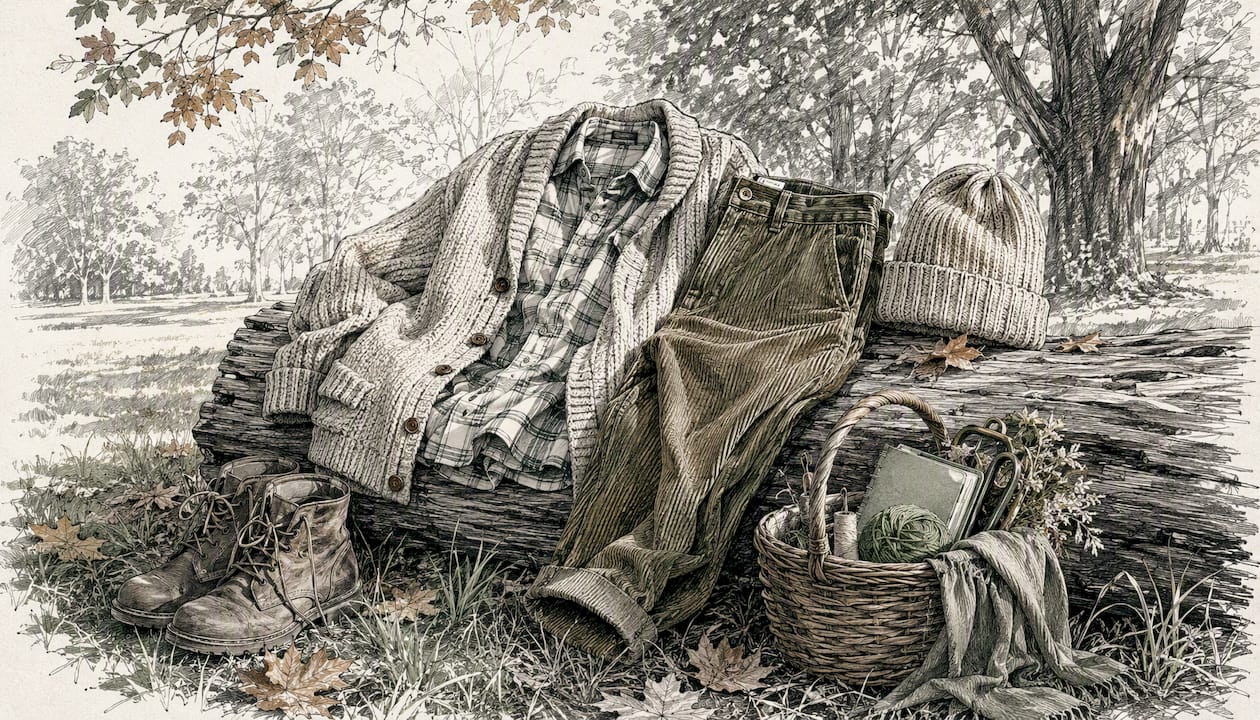
Fall and spring are the most forgiving seasons for outdoor shoots. Layering is natural and expected, which works perfectly with the blazer-off, blazer-on approach. Textures like wool, tweed, and chunky knits look intentional rather than bundled-up.
Winter outdoor sessions require planning for both warmth and appearance. A structured coat or a tailored wool wrap can serve as an outfit layer rather than just outerwear. Avoid bulky puffer jackets as primary looks: they read as shapeless on camera. Schedule winter outdoor sessions for midday when light is warmest and temperatures are most manageable.
Hair and makeup coordination for cohesive branding images
Hair and makeup should be planned with the same intentionality as your outfits. The goal is cohesion: your overall look should feel like one deliberate visual statement, not three separate decisions that happened to end up in the same frame.
Camera lenses compress and flatten features, so a "natural" makeup look in person often reads as no makeup on screen. Plan for slightly more definition than your everyday: filled brows, a lip color with some pigment, and foundation or tinted moisturizer that matches your skin tone without oxidizing orange under warm lights. Matte finishes photograph more cleanly than dewy or luminous formulas, which can create shine in the same way reflective fabrics do.
Hair should be styled and set before you arrive. Wind, humidity, and the physical activity of a shoot will test any style, so choose something that holds. If you're shooting multiple looks, consider whether a hair change between outfits is realistic. A simple updo for the aspirational look and hair down for the relatable look is a manageable switch that adds visual variety without requiring a full restyle.
Match the formality of your hair and makeup to the formality of each outfit. A polished blowout pairs with the aspirational look. Loose waves or a casual updo fits the relatable look. Consistency within each outfit keeps the images feeling intentional rather than mismatched.
The wardrobe rule most people ignore until it's too late
Most branding session advice focuses on what to wear. The more useful question is what your wardrobe is communicating, and whether that matches what you're actually selling.
Photographers see this gap constantly. A client arrives in a carefully assembled "professional" outfit that has nothing to do with their actual brand voice. The images look polished but generic, and they don't convert because they don't feel like the person the audience already knows online.
The outfit that photographs best is almost never the most expensive one or the most on-trend one. It's the one that feels like an elevated version of how you already show up. Comfort reads as confidence on camera, and confidence is what your audience is actually buying. Dressing one level above your daily wear, in colors and textures that match your brand's tone, is a more reliable formula than chasing a look that doesn't belong to you.
One more thing worth saying plainly: your branding photos will be used for one to three years. Trend-driven statement pieces date a gallery fast. Timeless basics in camera-safe colors, worn with one or two intentional accessories, age far better and give you more usable images per session.
Branding photo outfits from Sincerelyskye
If your brand lives in the maker and creative space, your working-uniform shot deserves an outfit that actually reflects that world.
Sincerelyskye makes cozy, craft-inspired apparel designed for exactly this kind of shoot: comfortable enough to wear while you work, intentional enough to photograph well. The In My Cozy Craft Era women's cotton V-neck is a solid, camera-friendly piece with a whimsical graphic that reads clearly on screen without competing with your face. Pair it with a neutral cardigan for your relatable look, swap the cardigan for a linen apron for your working shot, and you have two looks from one base piece. Browse the full Sincerelyskye gear collection to find pieces that fit your maker brand and photograph with the warmth and personality your audience already expects from you.
Sources
- Headshot wardrobe guide | PhotographyShark
- What to wear for professional headshots | Capturely
- What to wear for your brand photography session | Gaby Clark Photography
- What to wear for brand photos | Marmalade Media
- What to Wear for a Brand Photography Session: A simple 3-outfit strategy | Amber Langerud
- How To Choose Timeless Outfits For Your Branding Shoot | Eddie Judd Photography